Maturity and Sugar
Lees Aging & Dosage
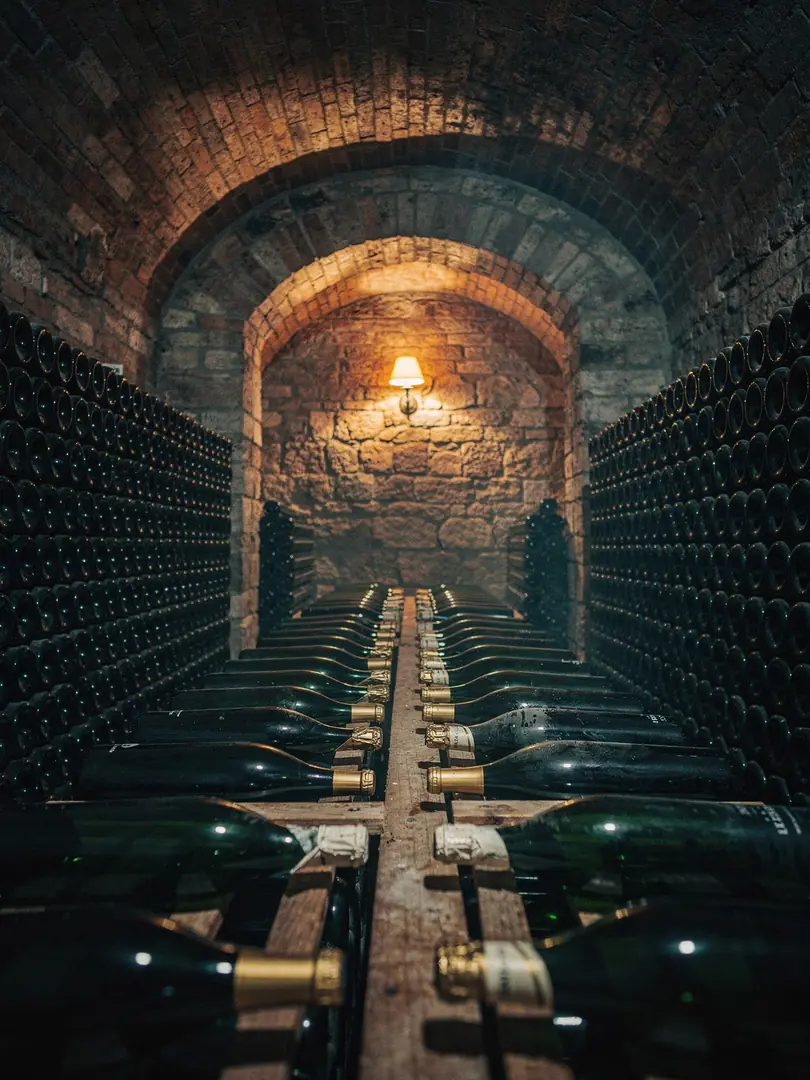
How long must Franciacorta rest on the lees? At least 18 months for non-vintage, at least 30 as Millesimato, and at least 60 as Riserva. Satèn rests for at least 24 months. Many producers in Erbusco and Adro voluntarily wait even longer before releasing their bottles.
During this time, hidden in the dark, the flavor takes shape. The dead yeast cells slowly break down and release proteins and other compounds into the wine, a process experts call autolysis. This creates notes of brioche, almond and fresh bread, and the bubbles become finer and longer-lasting.
At the end of aging, the yeast must be removed again. The bottles go onto riddling racks or into large riddling machines and are turned a bit further and tilted steeper day by day, until the sediment collects in the neck of the bottle. During disgorgement, the neck is briefly frozen, the crown cap is removed, and the pressure shoots the yeast plug out.
Then comes the dosage, a dash of wine with sugar that tops up the loss and rounds off the flavor. Franciacorta uses the same sweetness levels as Champagne, from Pas Dosé with no addition through Extra Brut and Brut up to Extra Dry, Sec and Demi-Sec. Brut means: under twelve grams of sugar per liter, so dry, but not harsh.
Satèn may only be released as Brut; sweeter levels aren't permitted for it. Its softness therefore comes not from added sugar but from pressure, grape varieties and yeast. This is exactly what makes it a wine for people who like Brut but prefer a gentler glass.