Seven levels
Sweetness levels of sparkling wine and Champagne in g/l
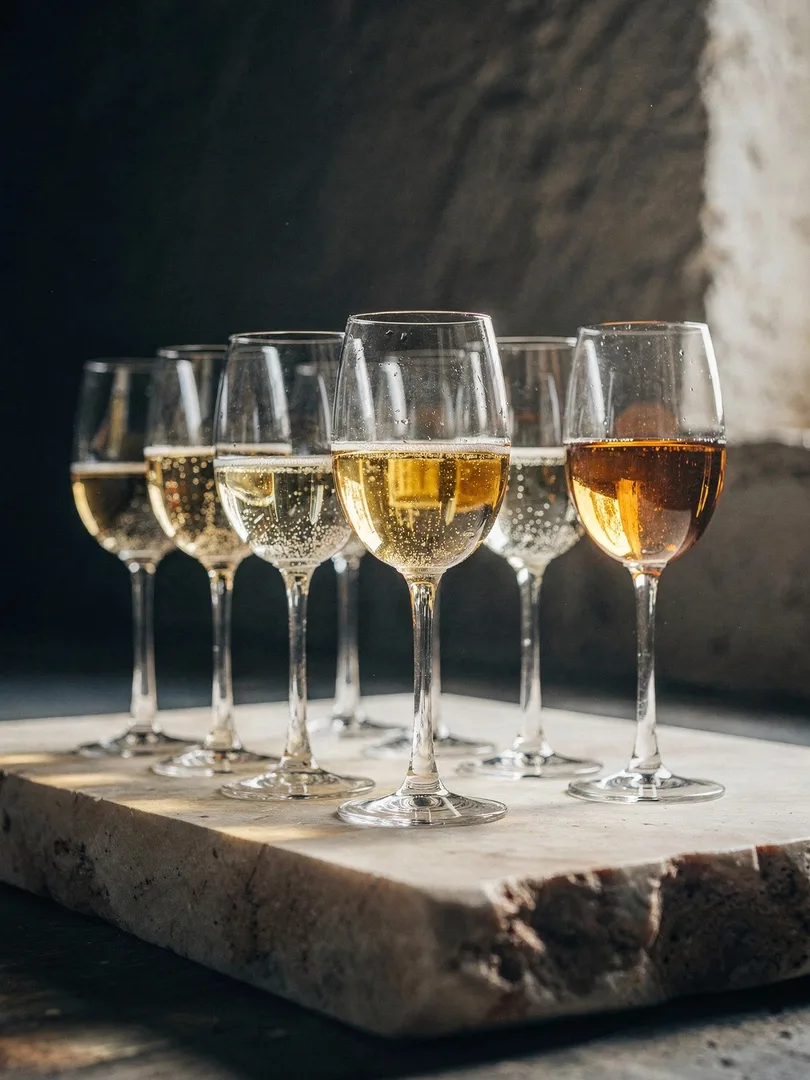
Sparkling wine has seven legally defined sweetness levels: Brut Nature under 3 g/l sugar, Extra Brut 0 to 6, Brut under 12, Extra Dry 12 to 17, Sec (Dry) 17 to 32, Demi-Sec (Medium Dry) 32 to 50, and Doux (Sweet) over 50 grams per liter. One of these terms must appear on every label.
Sparkling wine sweetness levels: the EU scale
Whether it's Champagne from Reims, Cava from the Penedès, or Sekt from the Mosel, the sweetness on the label follows the same scale throughout the EU. It's set out in Delegated Regulation (EU) 2019/33, Annex III Part A. It's measured in grams of sugar per liter, in the finished wine. This includes the natural residual sugar from the grapes as well as the sugar the cellar master adds after lees aging via the dosage, the small sugar solution added just before corking.
From dry to sweet, the levels run as follows: brut nature (also called pas dosé or dosage zéro) under 3 g/l, extra brut between 0 and 6 g/l, brut under 12 g/l. Next come extra dry with 12 to 17 g/l, sec (dry) with 17 to 32 g/l, demi-sec (medium dry) with 32 to 50 g/l, and doux (sweet) with over 50 g/l. An additional condition applies to brut nature: no sugar may be added to the wine after the second fermentation.
In everyday use, people often write "Brut up to 12 g/l." Legally, the regulation states "under 12 g/l," while the other levels are defined as falling "between" two values. For practical purposes, a rule of thumb suffices: the threshold of 12 separates the driest levels from everything labeled dry or Extra Dry.
Overlap: when two sweetness levels both apply
The ranges don't sit neatly side by side. Extra Brut spans 0 to 6 grams, Brut spans 0 to just under 12. A sparkling wine with 2 grams of sugar therefore technically qualifies for three levels at once: Brut Nature, Extra Brut, and Brut, provided nothing was added after the second fermentation. Article 47, Paragraph 2 of the regulation addresses this case: the producer may only choose one of the applicable terms.
This has practical consequences. Two bottles with nearly identical sugar content can carry different labels. One producer with 5 grams writes Extra Brut to emphasize dryness. Another sticks with Brut because customers recognize the term. The label therefore indicates a permitted range, not an exact value.
Brut isn't always Brut: ranges rather than fixed values
Within a single level, the difference can be substantial. A Brut with 3 grams tastes taut and lean, while one with 11 grams feels rounder and fruitier. Both carry the same word on the shelf. Anyone wanting precise figures should check the back label: some producers voluntarily print the exact sugar content or dosage in grams, though this isn't required.
Acidity plays a role too. A Riesling sparkling wine with pronounced acidity can taste drier at 10 grams of sugar than a low-acid sparkling wine with just 6 grams. The number on paper and the impression on the tongue are two different things. The sweetness level describes the former; the latter is only decided in the glass.
House style also shapes the choice. Major Champagne houses keep their Brut at a similar level year after year using reserve wines from older vintages, ensuring consistent taste. Smaller producers tend to adjust the dosage to each individual vintage. Both approaches can result in the same label designation but very different wines in the glass. How the cellar determines the amount is explained in Station 5.
Mandatory label information and where the scale doesn't apply
For sparkling wine, stating the sugar level is mandatory. It's among the details required on every bottle under Article 47 of Regulation 2019/33 in conjunction with the EU Common Market Organisation. This applies equally to Champagne, Sekt, Cava, Crémant, Prosecco Spumante, and sparkling wine with added carbon dioxide.
The scale doesn't apply to semi-sparkling wine, however. Semi-sparkling wine has only 1 to 2.5 bar of pressure; Prosecco Frizzante or Secco falls into this category. It follows the scale for still wine, with its own thresholds for dry, medium dry, medium sweet, and sweet. Comparing semi-sparkling and sparkling wine therefore means comparing identical words with different meanings. The example of "dry" in Station 3 shows just how large this gap can be.
Once you understand the scale, you can place any bottle from the EU, regardless of country of origin. A Cava Brut and a Sekt labeled herb fall within the same framework as a Champagne Brut. Differences in taste then stem from grape variety, method, and lees aging, not from a different way of calculating sugar.