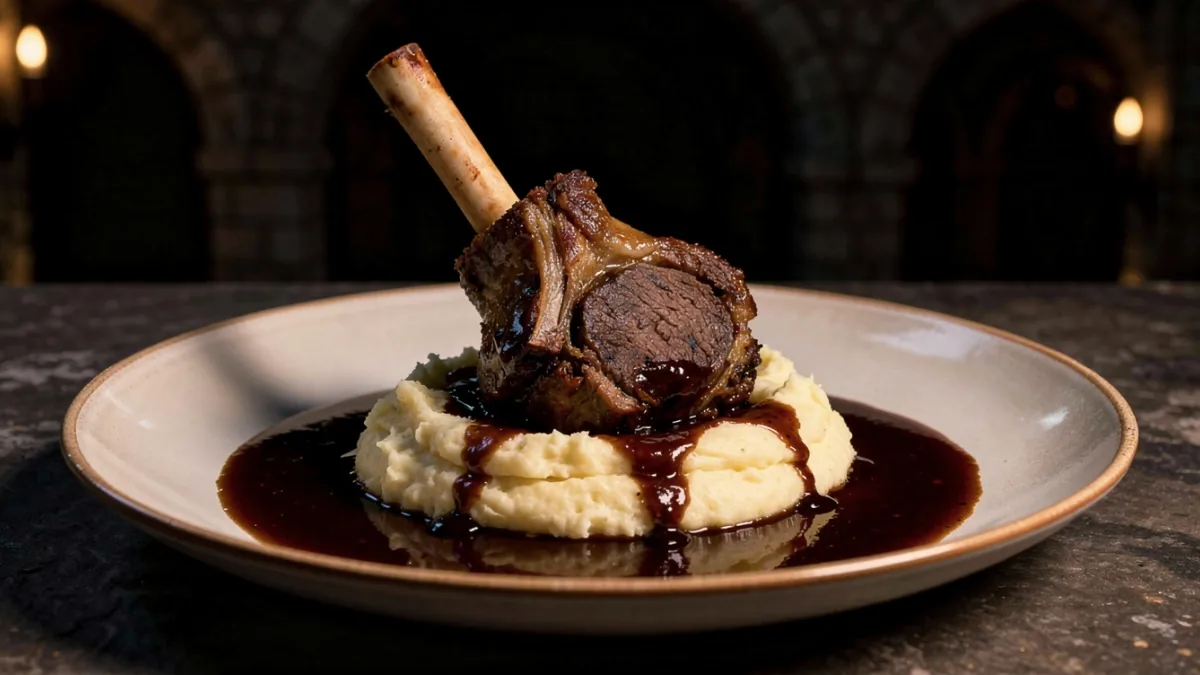
Preparation
- Preheat the oven to 180 °C (conventional). Pat the lamb shanks dry and rub with salt and pepper.
- Heat 2 tbsp olive oil in a large ovenproof pot over a high heat and brown the shanks well all over in batches, about 10 minutes in total. Remove and pour off the excess fat.
- Reduce the heat, add the remaining oil and sweat the onion and garlic for 2 minutes. Add the carrot and celery and cook for about 5 minutes until the onion is translucent.
- Stir in the red wine, tomatoes, tomato purée, stock, thyme, bay leaves and rosemary. Return the shanks to the pot so that they are mostly covered, bring to the boil and place in the oven, covered.
- Braise, covered, for 2 hours, then remove the lid and cook for another 30 minutes. The meat should be very tender but still hold on the bone; if not, keep cooking, covered.
- Remove the shanks and keep them warm, and discard the herbs. Push the sauce through a sieve, pressing the vegetables well. If it is too thin, reduce it in the pot to a syrupy consistency until glossy, and season with salt and pepper.
- Serve the shanks with plenty of sauce on mashed potato, polenta or cauliflower purée.
Drink with it
Red wine · excellent match
Syrah (e.g. Northern Rhône)
The peppery spice and dark fruit of the Syrah mirror the red wine sauce, and the lamb fat keeps the tannins soft.
Which wine pairs with food? A simple approach to choosingRed wine · excellent match
Cabernet Sauvignon or Bordeaux blend
The herbal notes and structure of the Cabernet suit the thyme, rosemary and the robust braising liquid; the same wine in the glass as in the sauce builds a bridge.
Dark beer · good match
Dubbel or dark Bock
Caramel and roasted malt pick up the roasted flavours from the browning and the sweetness of the tomato.
Which beer goes with food? More than just pils with barbecue