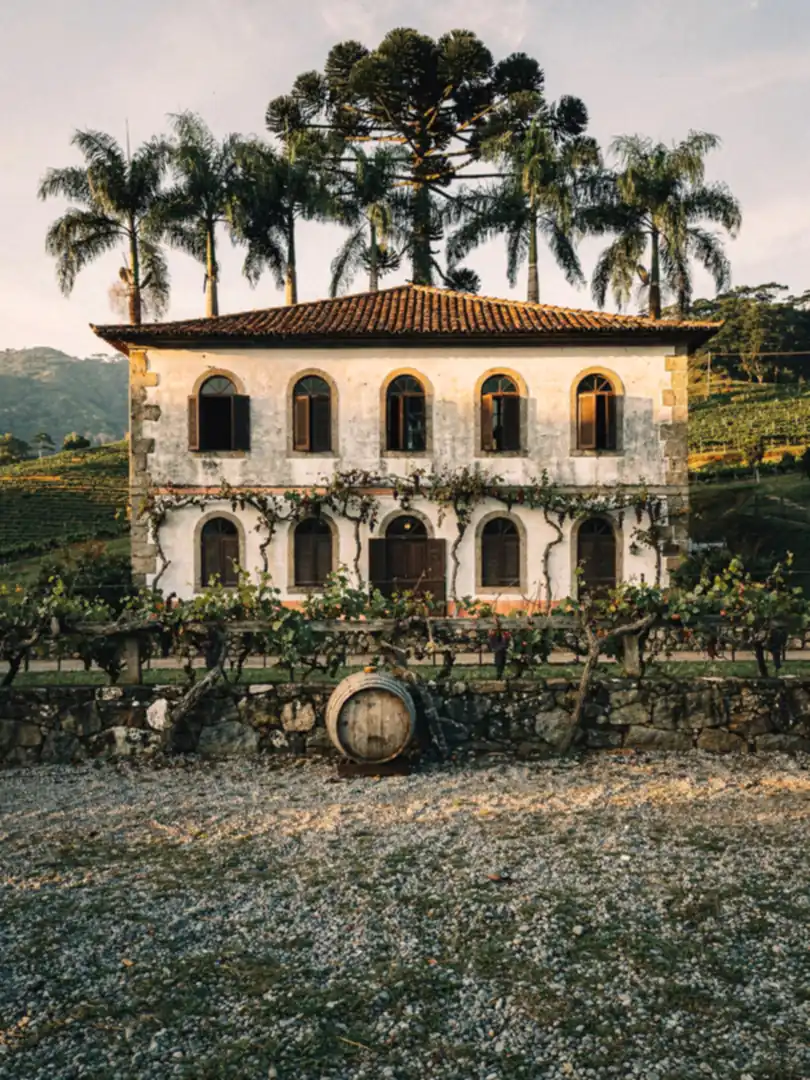
Immigrants and Espumante
Region & History
Brazilian sparkling wine is called Espumante, and a large share of it comes from the Serra Gaúcha in the south of the country. Italian immigrants settled the mountains of Rio Grande do Sul from 1875 onward. Garibaldi, then still known as Colônia Conde d'Eu, was the first settlement core in the mountains and has carried its current name since 1900.
The settlers brought vines and cellar knowledge from northern Italy with them. The birth of sparkling wine is dated in Garibaldi to the year 1913: at the region's first grape exhibition, Manoel Peterlongo Filho is said to have presented Brazil's first sparkling wine. The Peterlongo winery cites 1915 as its founding year and is still based in Garibaldi today. Since 1973, Chandon do Brasil has also made sparkling wine there, an offshoot of Moët & Chandon that, according to LVMH, aimed to combine Champagne expertise with the climate of the Serra.
Protected status came in stages. The Vale dos Vinhedos, a valley between Bento Gonçalves, Garibaldi and Monte Belo do Sul, became Brazil's first area with a protected geographical indication in 2002, and gained the stricter Denominação de Origem, or DO, in 2012. On November 29, 2022, the official gazette of the patent office INPI published recognition of the DO Altos de Pinto Bandeira. It is considered the first New World appellation devoted solely to sparkling wine.
The area covers roughly 65 square kilometers. A good three-quarters lie within the municipality of Pinto Bandeira, the rest in Farroupilha and Bento Gonçalves. A sparkling wine may only carry the name if the grapes were hand-harvested there and the wine underwent bottle fermentation.
In Brazil, Espumante is the umbrella term for sparkling wine of any style, from tank-fermented to bottle-fermented. The two DOs single out bottle fermentation specifically.