Yeast, Time, Sugar
Lees Aging & Dosage
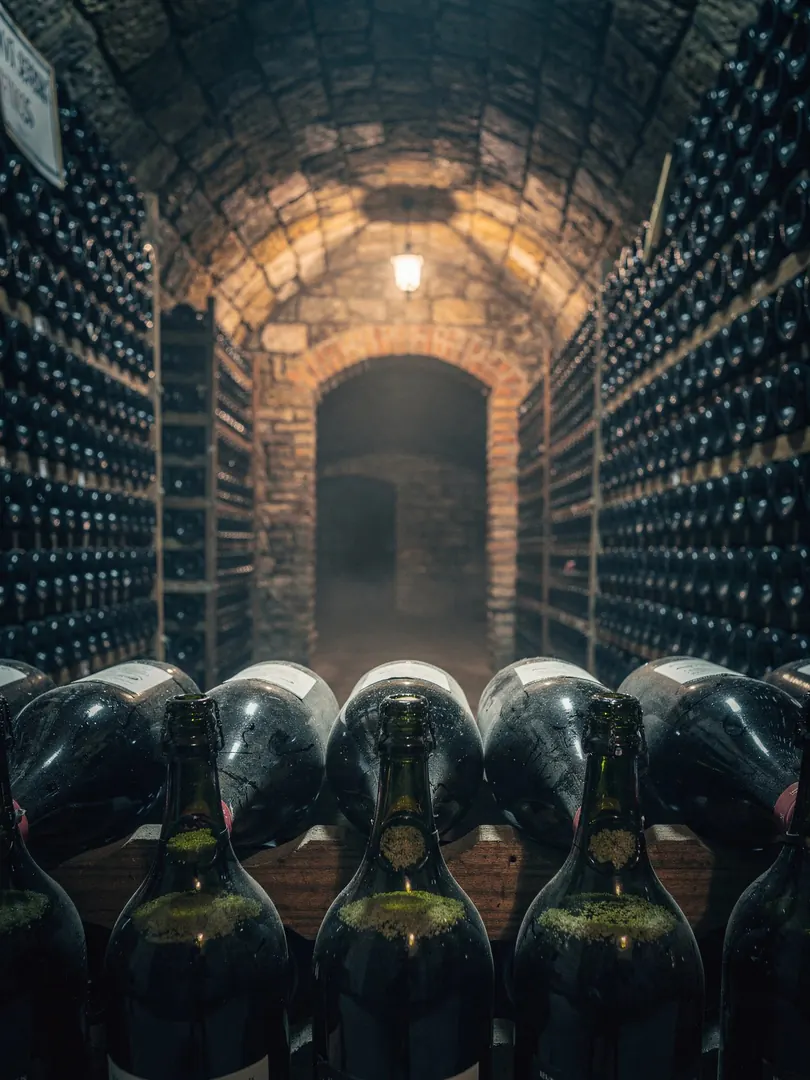
After tirage, the Sekt rests on its lees. For bottle fermentation, EU law requires a minimum production time of nine months, including at least 90 days of lees contact. In tank, six months suffices, and with stirring equipment, just 30 days of lees contact is enough. A house like Schloss Vaux, which focuses on Riesling, can choose to let its Sekt rest longer than required.
On the lees, the yeast cells die off and break down, a process called autolysis. In doing so, they release aromas of bread, brioche, and nuts and give the Sekt a creamier texture on the palate. A taut Riesling in particular benefits from this, as its citrus freshness gains a soft counterpoint.
Then the yeast has to come back out. During riddling (remuage), the bottle is gradually tilted more steeply and turned until the yeast collects in the neck. Today, machines handle this in many cellars. For disgorgement, the neck of the bottle is dipped into a brine solution at around minus 20 degrees Celsius, the crown cap is removed, and the frozen yeast plug shoots out, driven by the pressure inside.
Next comes the dosage, an addition of sugar solution in wine that sets the sweetness level. Brut stays under 12 grams of sugar per liter, Extra Brut sits between zero and 6, Brut Nature under 3. At 12 to 17 grams, Extra Dry is sweeter than Brut, and for Sekt, "trocken" (dry) means 17 to 32 grams. The dosage may not add more than 0.5 percent alcohol.
Thanks to its acidity, a Rheingau Riesling Sekt handles a dosage in the Brut range, or even drier, very well. After that, the bottle receives its mushroom-shaped cork along with the agraffe, the wire cage, as required by § 33a of the Wine Ordinance for Sekt b.A.