Spundekäs and Carnival
Food & Occasion
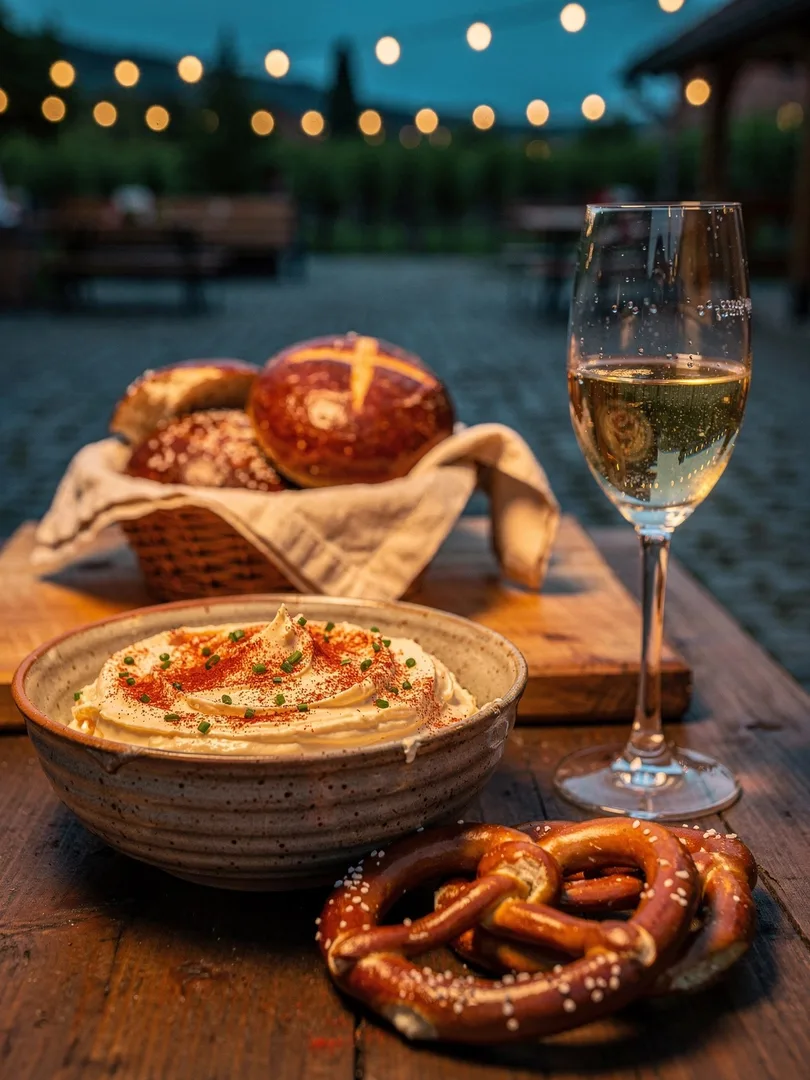
Spundekäs belongs to Mainz just as much as Carnival does, and it pairs well with Sekt. It comes from the Mainz area and is made from cream cheese, quark, butter, paprika powder, and garlic. The name is said to derive from the Spund, the bung used to seal a barrel, which cellar masters once used to shape the cheese. It's served with pretzels or lye rolls.
Why does Spundekäs pair so well with Sekt? The spread is creamy, salty, and mildly spicy. The carbonation and acidity cut through the fat and refresh the palate. A dry Sekt with a touch of sweetness brings out the paprika's spice even better, while a very austere Brut Nature can sometimes emphasize the heat.
In Mainz, it's said that salt and pepper don't belong in Spundekäs—the saltiness comes from the pretzel. The mixture is best left to rest overnight, which rounds out the flavor. Above all, though, it's a dish meant for sharing: a bowl is placed on the table, and everyone digs in.
Asparagus is also closely tied to Rheinhessen. In spring, light, acid-driven Sekts with little dosage—such as a Weissburgunder Brut—pair well with its delicate bitterness. With dishes featuring smoked fish or eggs, Sekts with more lees aging bring the needed richness.
Mainz Carnival is the region's great occasion, with parades on Rosenmontag and countless events leading up to it. It calls for Sekt glasses, pretzels, and Spundekäs—but so do many other celebrations throughout the year: weddings, birthdays, wine festivals, and toasting in the New Year. As always, Sekt is best enjoyed in moderation, with the occasion—not the glass—taking center stage.