Yeast and Time
Lees Aging & Dosage
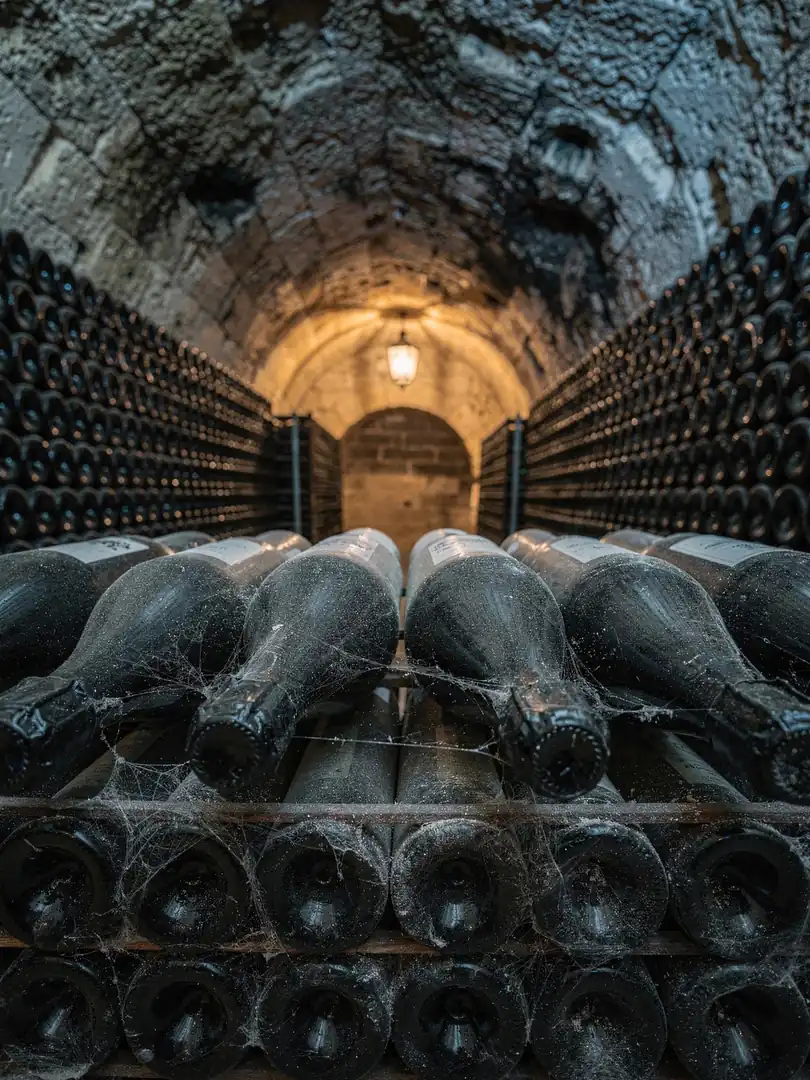
After tirage, the bottles rest horizontally in the cellar — in some places in cool tunnels beneath Saint-Émilion — while the yeast does its work. The name Crémant requires at least nine months, specifically on the lees, the spent yeast cells, without interruption and at the same estate.
What happens during this time is called autolysis: the yeast cells slowly break down, releasing compounds into the wine that make it rounder and creamier and bring notes of bread and pastry. Nine months is a short time for this; if that's all the aging it gets, fruit remains front and center. The aroma shifts from fresh fruit toward honey and nut the longer the aging continues.
Eventually, the yeast has to come out of the bottle. It's gradually worked down into the neck through riddling, either by hand on a riddling rack or mechanically in a gyropalette. The neck is then chilled so the yeast forms a solid plug, which shoots out under pressure when the bottle is opened. This is disgorgement.
After that comes the dosage, the shipping liqueur: the wine receives a dash of sugar and wine before the final cork goes in. Crémant must contain less than 50 grams of sugar per liter, so the sweetest category, "mild," is ruled out. Common levels are brut with under 12 grams, extra brut with up to 6 grams, and the slightly sweeter extra dry with 12 to 17 grams.
In Gaillac, lees aging is a minor concern: in many bottles, the yeast stays in the wine and leaves it slightly hazy, while other winemakers do disgorge. A dosage is usually skipped, with sweetness instead coming from residual sugar in the grapes. If you want a clearer wine, stand the bottle upright for a few hours beforehand so the yeast settles to the bottom.