Twice or Once
The Second Fermentation
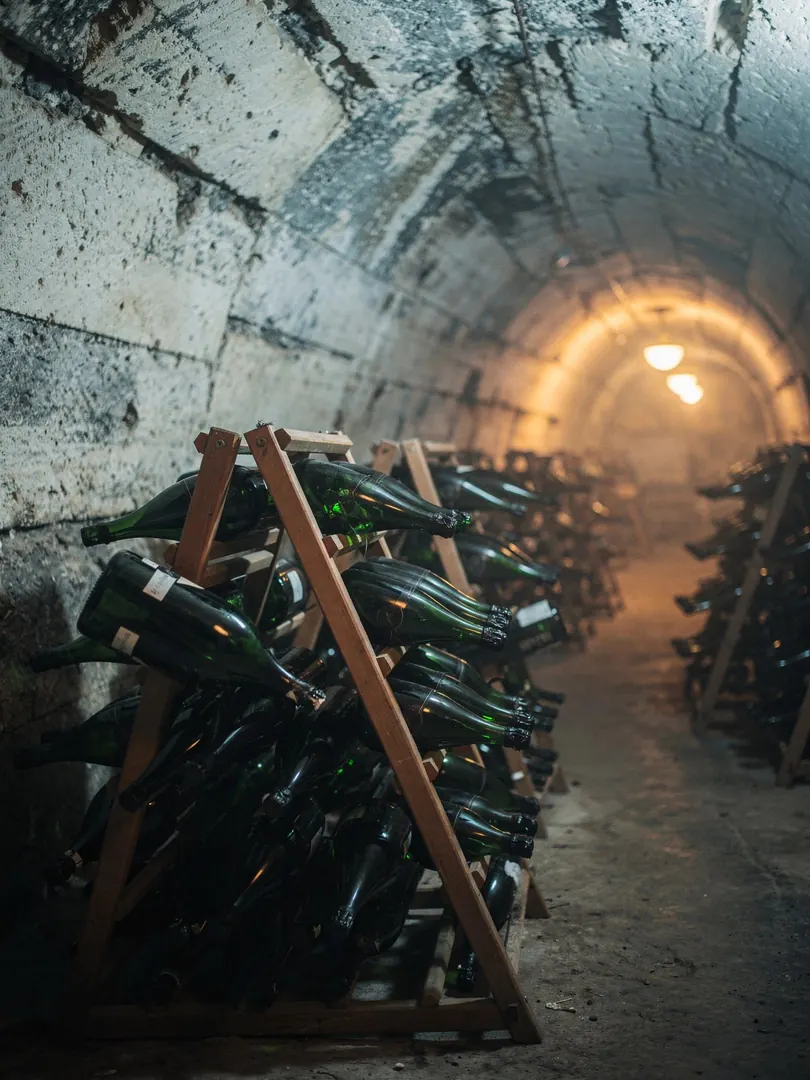
The second fermentation is what turns still wine into sparkling wine. For Crémant de Bordeaux, the finished base wine is given a mixture of sugar and yeast, known as the tirage liqueur, then bottled and sealed. The sugar converts into alcohol and carbon dioxide, and the gas stays trapped inside the sealed bottle.
That's what the rules for the name Crémant require: second fermentation in the bottle, at least nine months uninterrupted on the lees at the same estate, and disgorgement — removing the yeast — from that very same bottle. There's no transferring to another bottle. So when you buy a Crémant from Lateyron or Calvet, you're always getting the sparkling wine from the very bottle it aged in.
The pressure inside the bottle for a quality sparkling wine must be at least 3.5 bar at 20 degrees Celsius. That's enough for the fine, creamy foam the name Crémant alludes to. For Crémant de Bordeaux Rosé, the process is identical, except the base wine comes from red grapes.
Gaillac takes the older, simpler route. The méthode ancestrale involves just a single fermentation. The must is bottled while sugar is still present, and the yeast finishes its work inside the sealed bottle. The appellation allows the label to carry the term "méthode ancestrale."
The term Pét-Nat, short for pétillant naturel, isn't a legally protected term. Depending on pressure, such a wine counts as a semi-sparkling wine at 1 to 2.5 bar or as a sparkling wine from 3 bar upward. In the glass, you notice the difference mainly in the fizz: wine from Gaillac often has a gentler sparkle than a Crémant that's undergone a second fermentation in the bottle.
Crémant de Bordeaux BrutBottle fermentation · Sémillon, Sauvignon blanc, Muscadelle, and others
- Time on lees
- 9–18 Months
- Sugar
- 0–12 g/l
- Alcohol
- 11.5–12.5 % vol
Pale fruit from apple to peach, a fine mousse, crisp acidity.