No Lees Aging
Lees Aging & Dosage
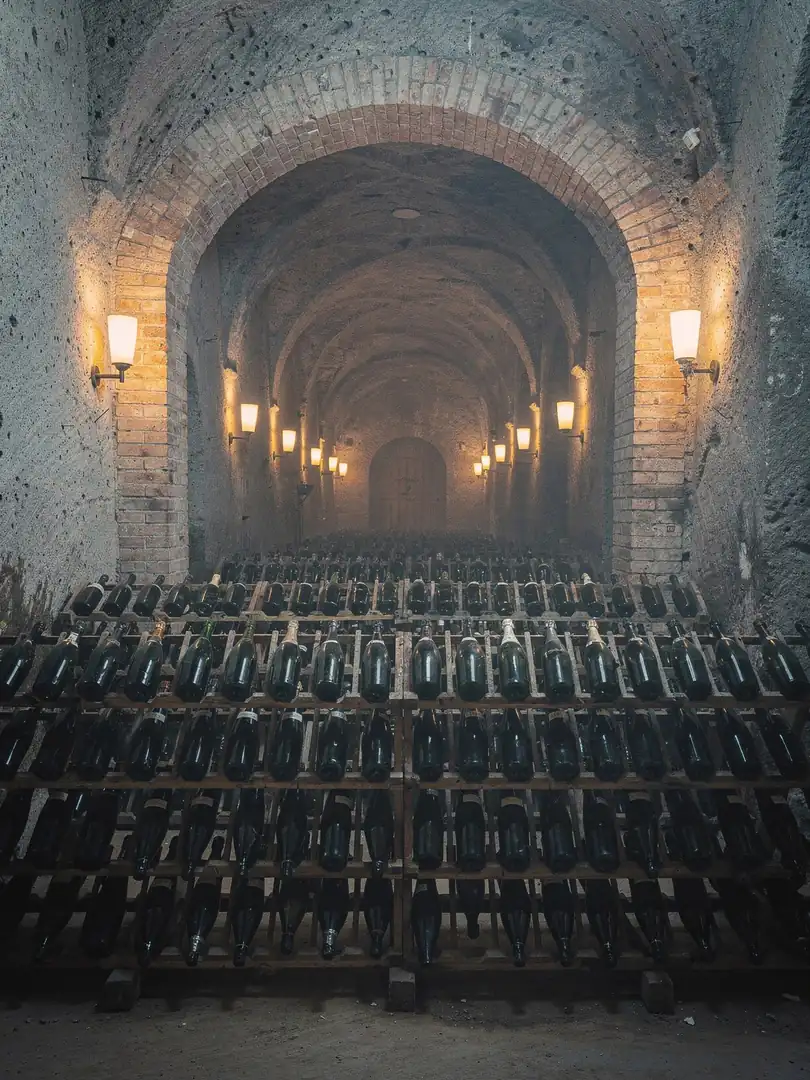
Asti is never aged on the lees, which makes it the opposite of Champagne. Once fermentation is stopped, the yeast is filtered out. There's no riddling, no disgorgement, and no brioche aroma, because the wine is meant to smell of grape, not of yeasty bread.
The legal requirement is minimal: at least one month passes between fermentation and bottling. This applies because Asti is classified as an aromatic quality sparkling wine; an ordinary tank-fermented quality sparkling wine would require six months. The wine is then chilled, sterile-filtered, and bottled under counter-pressure to prevent the carbon dioxide from escaping. Since no yeast remains in the wine, the bottle cannot undergo secondary fermentation either.
There's no dosage either. With Champagne, a final liqueur of wine and sugar is added to the bottle; with Asti, this step is skipped entirely. The sweetness is natural residual sugar, meaning sugar from the grape that the yeast was never allowed to finish converting. How much remains depends solely on the moment fermentation is stopped.
This is why the sweetness levels familiar from Champagne and Sekt don't apply here. You won't find Brut or Extra Dry on a classic Asti label, as it is sweet, or dolce in Italian. The regulations now also allow for Asti Secco, with 12 to under 50 grams of sugar per liter and 11.5 to 13.5 percent alcohol, labeled as secco, demi-sec, or extra-sec. It has more alcohol because the yeast was allowed to work longer.
These bottles aren't meant to age. The aroma of Moscato fades over the years, which is why Asti and Moscato d'Asti are sold young. They keep best stored cool and dark, and an opened bottle quickly loses its sparkle.