One Fermentation, Interrupted
The Second Fermentation
Asti has no second fermentation, and this is what sets it apart from Champagne, Sekt, and Cava. The Moscato must ferments only once, in a sealed pressure tank, and this fermentation is halted midway through. This is known as the Metodo Asti. It sounds like a small detail, but it determines everything that follows: sweetness, alcohol, pressure, and aroma.
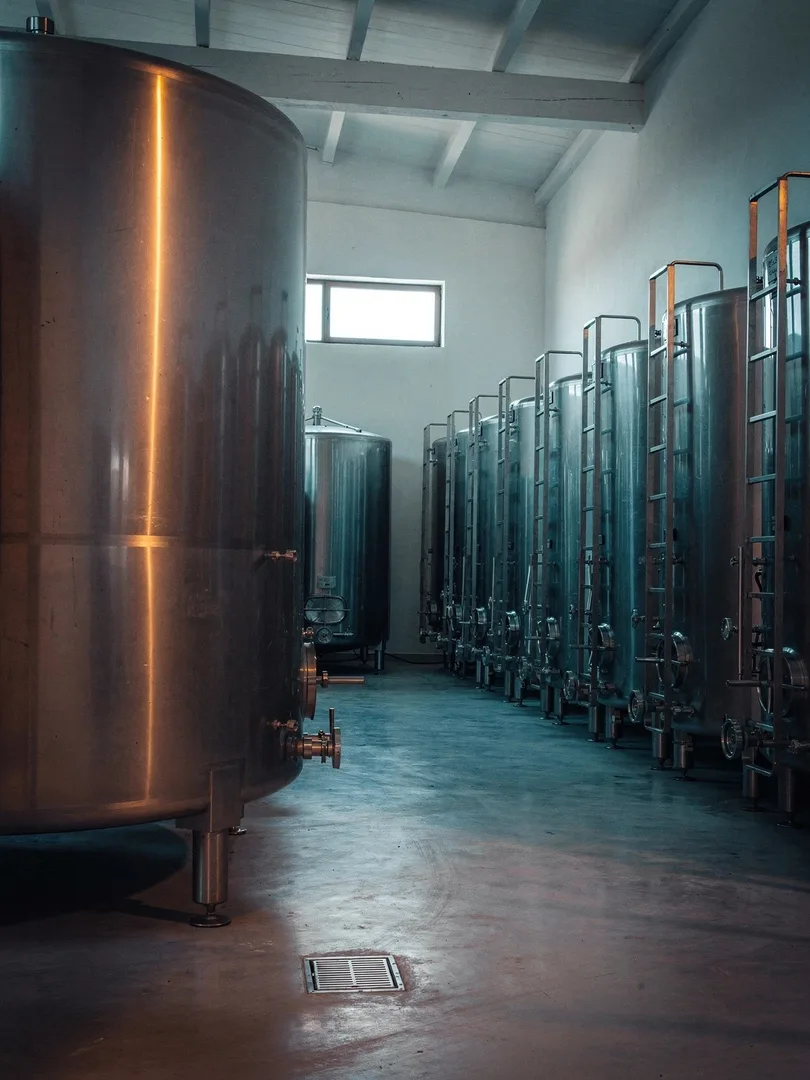
Here's how it works: the chilled must goes into the tank, the yeast begins converting sugar into alcohol and carbon dioxide, and because the tank is sealed, the gas cannot escape. Pressure builds. Once pressure and alcohol content reach the right levels, the tank is cooled down sharply, the yeast stops working, and it is filtered out. The sugar it hadn't yet converted remains in the wine.
The regulations set out a simple rule here: fermentation is controlled solely by temperature, and there is no dosage added before shipping. Adding sugar for sweetness isn't necessary anyway, since the grape itself provides plenty. A minimum production time of one month is required, and Asti needs at least three bar of pressure. Moscato d'Asti stays below that, under two and a half bar, and is therefore classified as a semi-sparkling wine, or frizzante in Italian.
The moment fermentation is stopped determines the character. For Moscato d'Asti, it's halted early, at around 5.5 percent alcohol, leaving plenty of sugar behind. Asti itself has at least 7 percent, typically 7 to 9.5, with somewhat less sweetness and a more vigorous sparkle.
Martinotti had invented the tank for the second fermentation; Asti uses it for the first. In a tank, pressure can be precisely monitored and controlled, which isn't possible in a bottle, and it preserves the fresh grape aroma that long bottle aging would otherwise alter. Alongside this, the appellation rules also recognize an Asti Metodo Classico, made in the bottle just like Champagne.
AstiTank fermentation · Moscato bianco
- Time on lees
- 1 Months
- Sugar
- 0 g/l
- Alcohol
- 7–9.5 % vol
Sweet sparkle, grape and peach, low acidity, from 3 bar of pressure.