Cuvée and Reserve
Base Wine & Cuvée
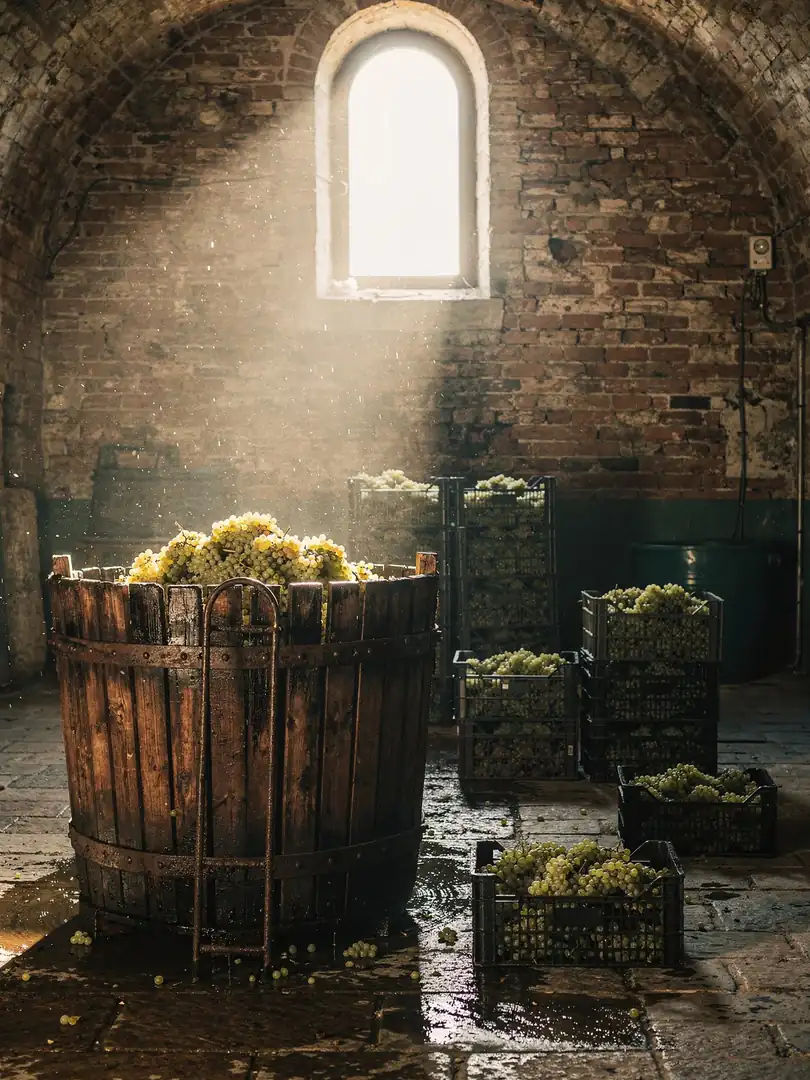
Franciacorta begins in August. While summer heat still lingers elsewhere, pickers in the vineyards around Erbusco and Corte Franca cut the first grapes, so the sugar doesn't climb too high and the acidity doesn't drop too low. Harvesting is done by hand, in small crates, so the berries stay whole and the juice stays clear.
Pressing is done gently. First comes the cuvée, the finest and most acid-driven part of the must, followed by the taille with more tannin and color. The producers decide how much of each goes into the base wine. Usually each variety and each parcel is fermented separately first, in steel tank or in wood.
Then begins the art of blending. The cellar master tastes many individual wines, varietal and from different sites, and assembles the cuvée from them. For non-vintage Franciacorta, reserve wines from earlier harvests are added, so the house shows the same signature style every year, even if a summer was too wet or too hot.
Vintage sparkling wine, called "Millesimato" in Italian, by contrast comes predominantly from a single year, at least 85 percent under EU law, and must rest on the lees for at least 30 months. It reveals what a given year achieved, and so it doesn't taste the same every time. The Cuvée Annamaria Clementi from Ca' del Bosco is a well-known example of a wine made only in good years.
Some styles are already determined by the base wine. Satèn consists of white grapes only, making it a Blanc de Blancs of Chardonnay and Pinot Bianco. For Rosé the rule is: at least 35 percent Pinot Nero.