Yeast and Time
Lees Aging & Dosage
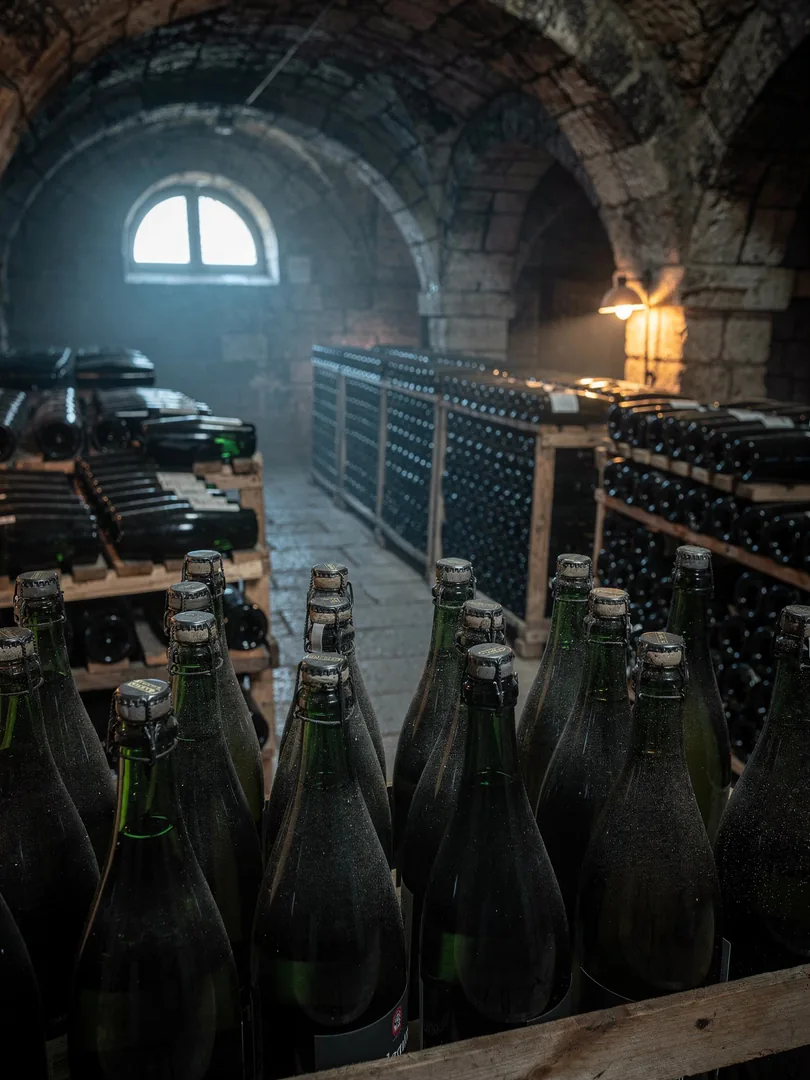
How long must Oltrepò Pavese Metodo Classico rest on the lees? The DOCG requires at least 15 months, and for the vintage wine, the Millesimato, at least 24 months. That's considerably more than the nine-month minimum the EU requires for sparkling wine made by traditional bottle fermentation.
During this time, something crucial happens in the darkness of the cellar. The yeast cells gradually die off and break down, a process experts call autolysis. In doing so, they release protein building blocks and sugar compounds into the wine, giving it a creamier texture and bringing aromas of brioche, bread crust, and nuts.
By the end of aging, the yeast settles as sediment in the neck of the bottle. To gather it there, the bottles are placed at an angle in riddling racks, turned regularly, and gradually tilted further until they're almost upside down. Today, machines often handle this step.
During disgorgement, the bottle is opened upside down, and its own pressure shoots out the plug of yeast sediment. This leaves a small gap, which is topped up with the dosage.
This dosage, the liqueur d'expédition, is a mixture of wine and sugar that gives the sparkling wine its final polish. By law, it may raise the alcohol content by no more than 0.5 percent by volume. How sweet the wine ends up is indicated on the label by a sweetness level: Brut Nature has under 3 grams of sugar per liter, Extra Brut 0 to 6, Brut under 12. Extra Dry, with 12 to 17 grams, is sweeter than Brut.
Even in Cruasé, Pinot Nero with long lees aging often needs little dosage, since it already brings plenty of richness. The longer the time on the lees, the less the dosage has to compensate.