Yeast and Sugar
The Second Fermentation
How do the bubbles get into Oltrepò Pavese Metodo Classico? Through a second fermentation that takes place in the very bottle the wine is later sold in. The designation "Metodo Classico" under the DOCG refers to this traditional method of bottle fermentation.
First, the finished base wine, the cuvée, rests in tank. Then it receives the liqueur de tirage: a mixture of sugar and yeast that kicks off the second fermentation. By law, this may raise the alcohol content of the cuvée by no more than 1.5 percent by volume.
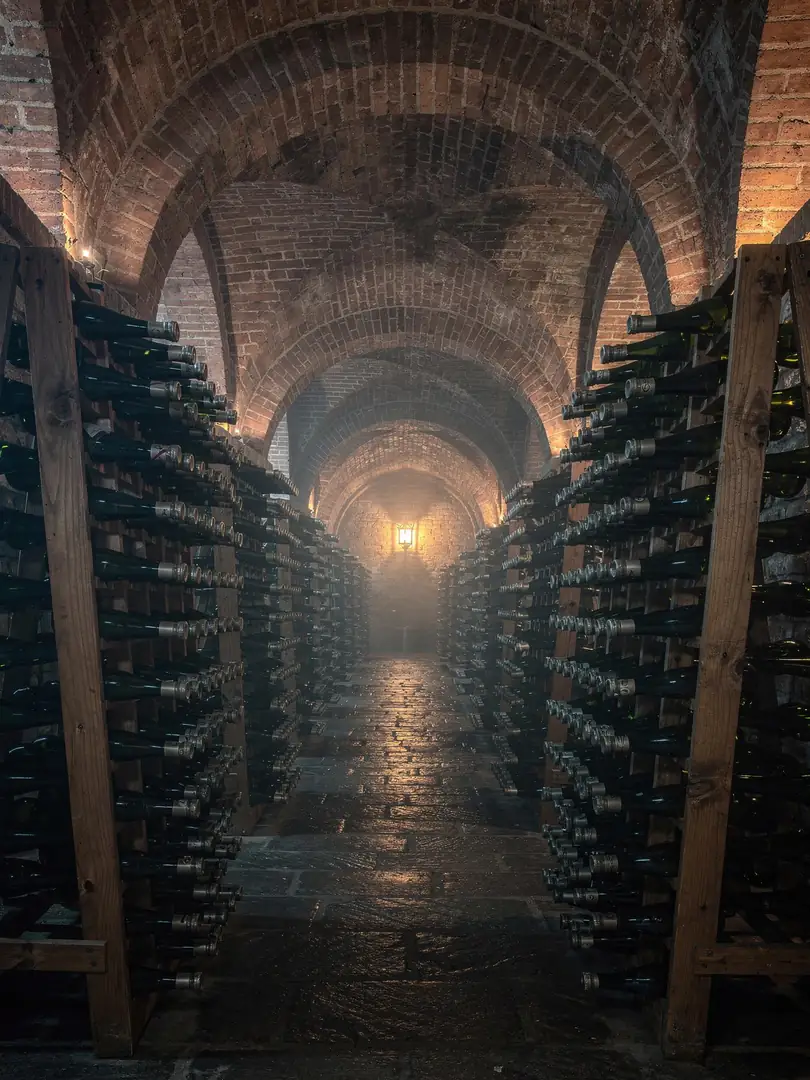
The wine is bottled, each bottle is sealed with a crown cap, and it then rests horizontally in the cellar. This stage is called tirage. The yeast consumes the sugar, producing alcohol and carbon dioxide. The crown cap keeps the gas contained, and it dissolves into the wine.
As a rule of thumb, about four grams of sugar per liter produce one bar of pressure. A quality sparkling wine must reach at least 3.5 bar by the end; Champagne typically reaches around six bar, a figure useful for comparison.
Fermentation in large pressurized tanks, known as the Charmat method and common for Prosecco, has no place here. In this method, each bottle ferments on its own, and the yeast stays inside it.
The second fermentation proceeds slowly and coolly, over weeks. The calmer it unfolds, the finer the bubbles become. This benefits Pinot Nero, including in Cruasé: its acidity and body can carry the long aging on the lees that follows.
Oltrepò Pavese Metodo ClassicoBottle fermentation · Pinot Nero at 70% or more, Chardonnay, Pinot Bianco, Pinot Grigio
- Time on lees
- 15–24 Months
- Sugar
- 0–12 g/l
- Alcohol
- 12–12.5 % vol
Fine perlage, red fruit and bread crust, taut acidity from the limestone soil.