Brief Lees Contact
Lees Aging & Dosage
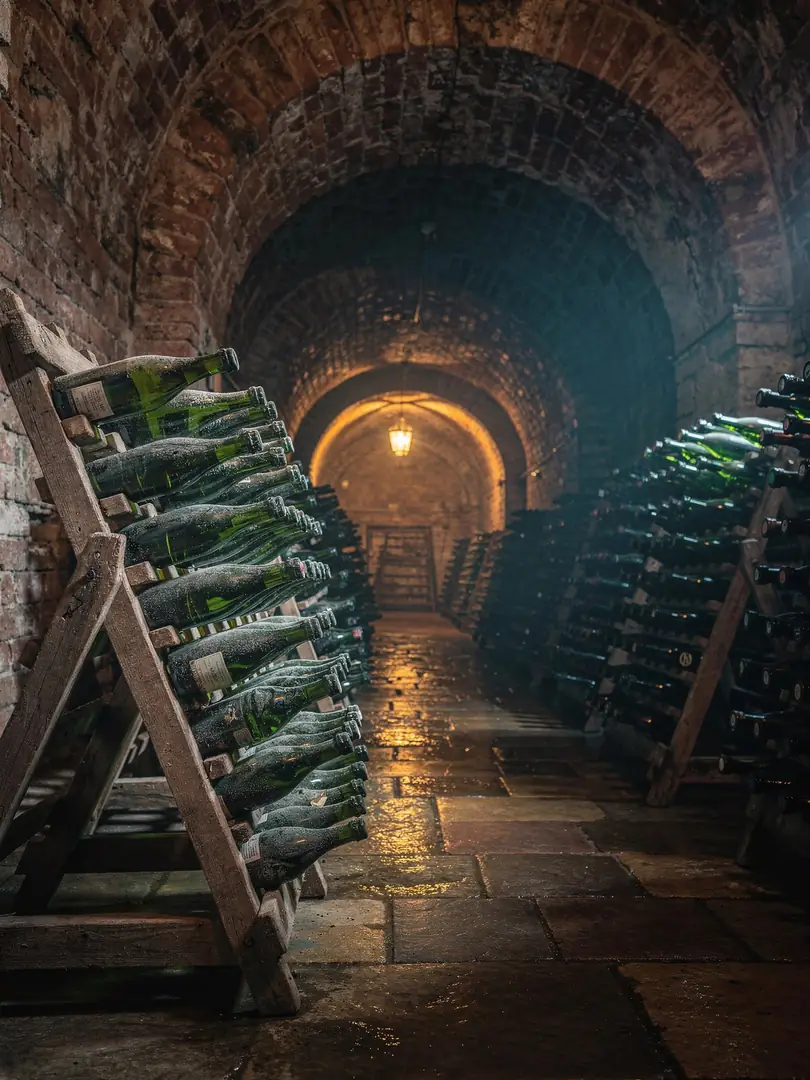
Lees aging in the Champagne sense barely exists in Prosecco. After the second fermentation, the wine stays in the tank a while longer, weeks or a few months, then is cold-stabilized, filtered and bottled under counter-pressure. Riddling and disgorgement are unnecessary, since the yeast leaves the tank through the filter rather than through the neck of the bottle. Some labels carry the designation Treviso, which the specification allows.
Autolysis, the breakdown of yeast cells that brings brioche and nutty notes into the wine, is therefore absent or only faintly present. That's intentional. Prosecco is meant to taste of fruit and blossom, not of pastry. Some producers extend tank aging to gain more roundness. Even then, the character remains fruity.
The dosage is therefore decisive for the flavor. According to the consortium, the DOC recognizes six sweetness levels, from Brut Nature to Demi-Sec. These are Brut Nature, Extra Brut, Brut, Extra Dry, Dry and Demi-Sec.
The limits are set by EU law. The levels range from Brut Nature with under 3 grams of sugar per liter, through Extra Brut between 0 and 6, and Brut under 12, up to Extra Dry with 12 to 17, Dry with 17 to 32, and Demi-Sec with 32 to 50 grams. The label may deviate by 3 grams from the actual content.
This leads to a common misconception. Extra Dry sounds dry, but is sweeter than Brut, and Dry is sweeter still than Extra Dry. Only Brut Nature, Extra Brut and Brut are genuinely dry. Because Prosecco is naturally fruity and rather light, Extra Dry has long been a common level for a Spumante.
The dosage rounds off the acidity and carries the fruit. Anyone who tastes a Brut and an Extra Dry side by side notices the difference in roundness immediately.