Apple, Blossom, Citrus
Tasting
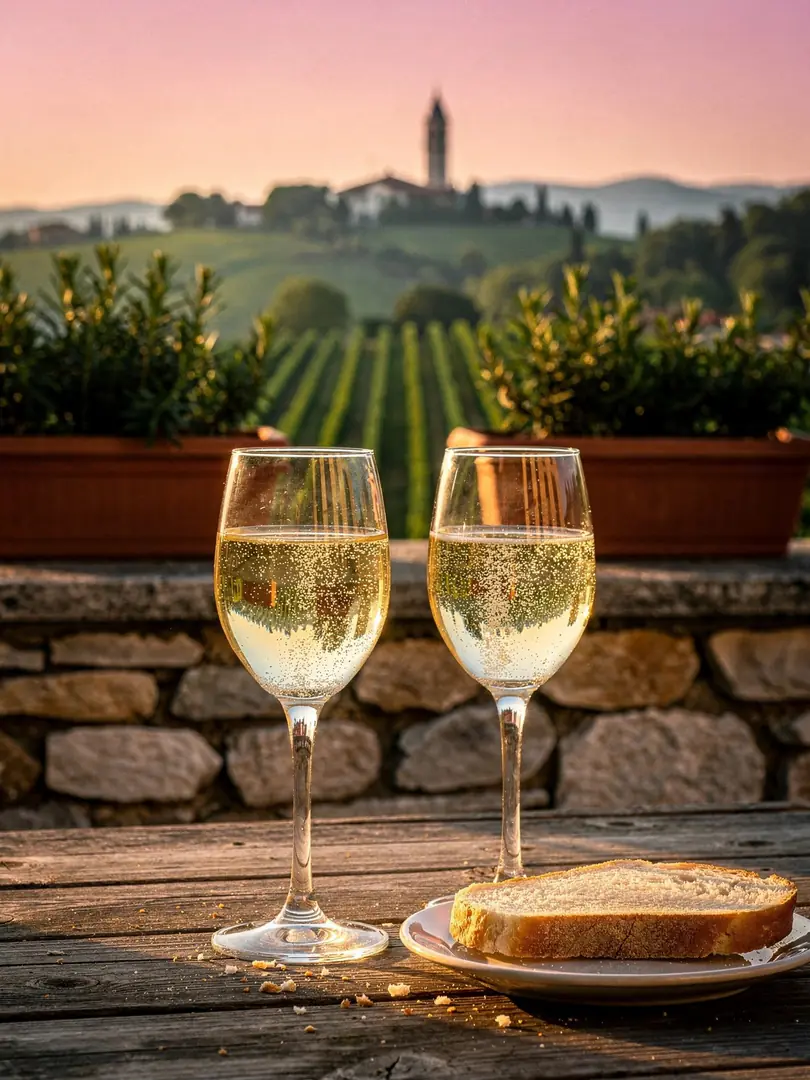
What does Prosecco taste like? Young, fruity and light: green apple, ripe pear, citrus zest, plus blossoms like acacia or elderflower. The bubbles are lively, the foam rises quickly and settles just as fast. Yeast, brioche or toasty notes are absent; those belong to other sparkling wines. The Rosé has a subtle aroma of red berries.
Three houses serve as flavor examples. A Spumante Extra Dry from Mionetto shows the classic style of the big brands. Villa Sandi from Crocetta del Montello represents wines from the core area of Treviso province. And anyone wanting to get to know Asolo can taste Asolo Prosecco Superiore from Montelvini on Montello, where the hills leave their signature.
The right glass is a white wine glass or a tulip shape. A flat coupe lets aroma and carbonation escape quickly, while the tulip shape concentrates the aromas. For a wine as subtle as Prosecco, this really pays off. When pouring, tilt the glass until the foam settles, and fill it only two-thirds full so the aroma has room.
The wine shows best well chilled, at around 6 to 8 degrees Celsius (roughly 43 to 46°F). If it's too cold, the fruit stays closed; if too warm, the foam turns coarse and the wine feels heavy. Half an hour in the fridge or fifteen minutes in an ice bath is usually enough. Store the rest of the bottle chilled and well sealed, ideally with a sparkling wine stopper.
When opening, hold the cork firmly and turn the bottle, not the cork. It should hiss, not pop. For a Frizzante with a spago, first cut the string while holding the cork with your thumb. The pressure is lower, but the stopper can still fly off.