Brief Lees Contact
Lees Aging & Dosage
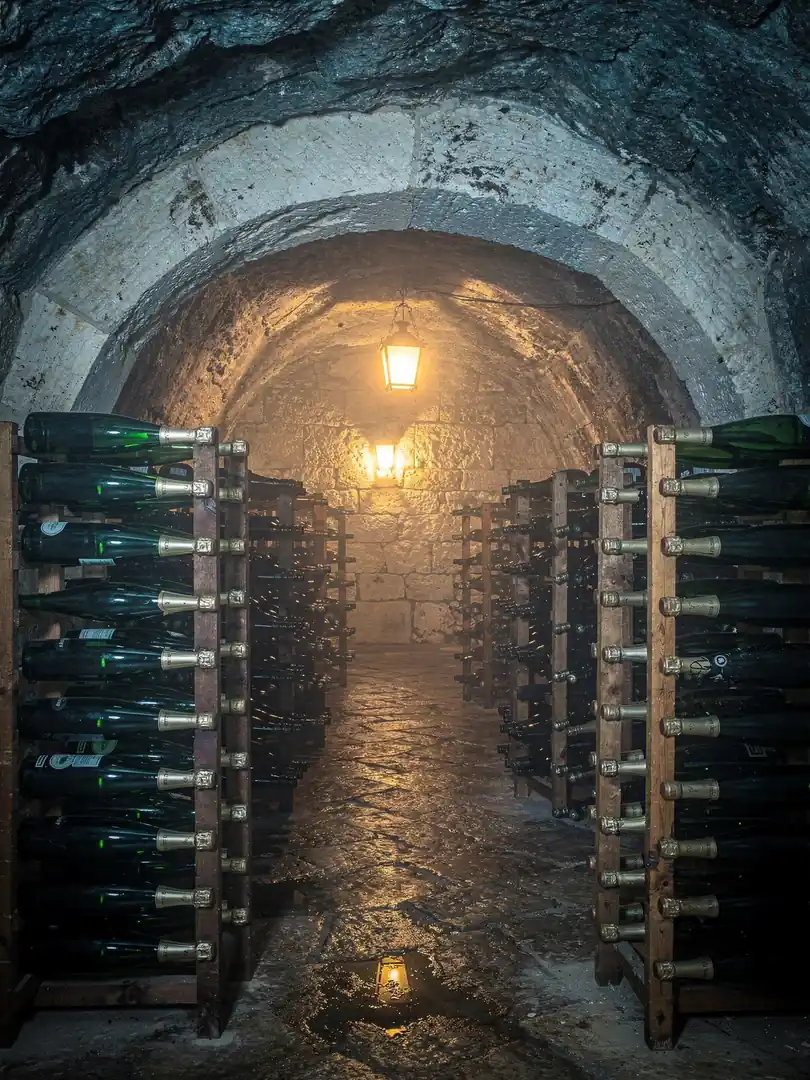
Anyone hoping to find brioche and almond pastry notes in the glass will rarely find them in Prosecco. This is due to the short time spent on the lees. For a tank-made sparkling wine with protected designation of origin, EU law generally requires a minimum production period of six months; for aromatic sparkling wines, one month suffices. Which category a producer uses isn't stated on the label.
In practice, most wines spend a few weeks to several months in tank. Some houses around Prata di Pordenone cite three months on fine lees. Those who leave the wine on the lees even longer speak of Charmat lungo, yet even then no autolysis develops as it would in a chalk cellar in Champagne. The lees give the wine a touch more body, nothing more.
There's no riddling or disgorgement here, since the lees are filtered out after fermentation. The wine is blended by style and vintage, filtered, and then bottled with its dosage. The dosage is the small addition of wine and sugar that determines the sweetness of the finished sparkling wine.
According to the consortium's data sheet, the Prosecco DOC recognizes six sweetness levels, from Brut Nature to Demi-Sec. Brut Nature means under 3 grams of sugar per liter, Extra Brut up to 6 grams, and Brut under 12 grams. Extra Dry falls between 12 and 17 grams—sweeter than Brut—while Demi-Sec ranges from 32 to 50 grams.
As sugar changes, so does the impression: the less there is in the wine, the sharper the grape's acidity and bitterness come through. With Extra Dry and Demi-Sec, by contrast, it rounds out the acidity and carries the fruity aromas. Anyone paying attention to the gram count when choosing will find their preferred style faster than by relying on the name alone.