Spain's bottle fermentation
What is Cava? Does it only come from Catalonia?
Cava is a Spanish sparkling wine with protected origin made exclusively using traditional bottle fermentation. Around 95 percent comes from Catalonia, from the Comtats de Barcelona zone. Since the 2020 reorganization, however, areas along the Ebro and in Extremadura also belong to the designation.
Does Cava only come from Catalonia?
Since a ministerial decree of February 27, 1986, the name Cava has been protected; the word simply means cellar. Unlike most appellations, the DO Cava, the protected designation of origin, long failed to form a contiguous area. Approved municipalities are scattered across several regions of Spain, even far outside Catalonia.
In 2020, the DO restructured its origins. The largest zone is called Comtats de Barcelona and supplies around 95 percent of all Cava, centered in the Penedès around Sant Sadurní d'Anoia. Added to this are Valle del Ebro, with the sub-zones Alto Ebro and Valle del Cierzo, covering parts of Rioja, Navarra, Aragón, and Álava, as well as Viñedos de Almendralejo in Extremadura. The 2020 announcement from the DO also mentions Altos de Levante near Valencia, though a later DO text lists only three zones.
In 2025, 190.01 million bottles of Cava were sold, nearly 13 percent less than the previous year; the DO cites drought and scarce grapes as the reason. Around 60 percent is exported, with Belgium as the largest export market.
Macabeo, Xarel·lo, Parellada: which grapes go into Cava?
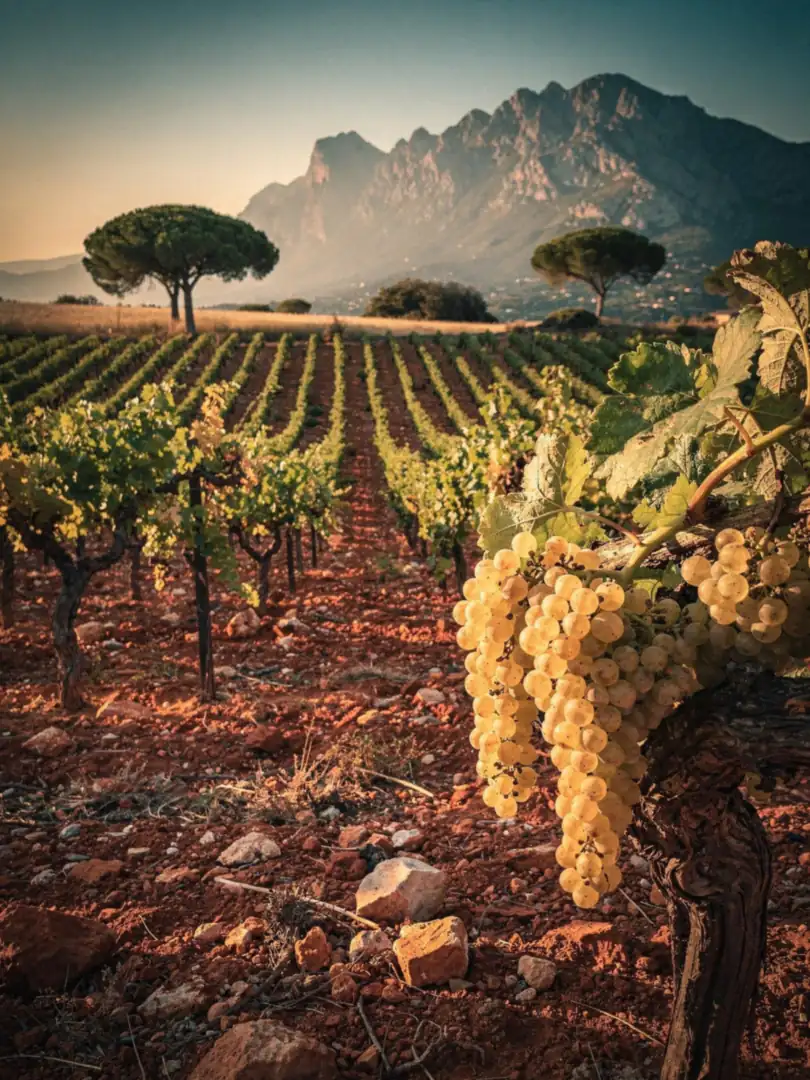
Cava tastes different from Champagne because it's made from different grapes. Three native white varieties together cover around 82 percent of the vineyard area: Macabeo at 36.5 percent, Xarel·lo at 26, and Parellada at 19.2 percent. Xarel·lo is considered the backbone, providing body and acidity, Macabeo brings fruit, and Parellada contributes delicate floral notes.
Also permitted are Chardonnay, covering 6.7 percent of the area, Pinot noir, Garnacha, Trepat, Monastrell, and Subirat Parent. The red varieties matter mainly for Rosado, the rosé Cava. The total vineyard area in 2025 was exactly 37,299 hectares. In the glass, Cava often shows citrus, green apple, and almond, along with a slightly earthy, spicy note that sets it apart from sparkling wines from cooler regions.
Cava de Guarda, Reserva, Gran Reserva: how long does Cava age?
Cava always ferments in the bottle; tank fermentation is excluded. The 2020 reform, visible on bottles since January 1, 2022, restructured the aging tiers. The base tier is called Cava de Guarda and spends at least nine months on the lees. This matches the EU minimum for traditional bottle fermentation.
Above that sits Cava de Guarda Superior with three tiers: Reserva from 18 months, Gran Reserva from 30 months, and Cava de Paraje Calificado, a Cava from a single designated vineyard site, from 36 months. These wines carry a vintage, come from vines older than ten years, and since 2025 come entirely from organic viticulture. Gran Reserva and Paraje are only available in the dry tiers Brut Nature, Extra Brut, and Brut.
Corpinnat and Clàssic Penedès: Penedès sparkling wine without the Cava name
Not every sparkling wine from the Penedès is called Cava. In 2019, a group of producers left the DO and have since marketed their wines as Corpinnat. This isn't an official designation of origin but a private collective brand. Their rules require, among other things, organic viticulture, hand-harvesting, at least 18 months on the lees, and winemaking carried out on-site. Founding members include Gramona, Recaredo, and Llopart.
The DO Penedès also has its own sparkling wine category, Clàssic Penedès. If the word Cava is missing from a label from Sant Sadurní, there's often a deliberate choice behind it, favoring different, sometimes stricter rules. A useful rule of thumb for shopping: Cava is the large, protected designation of origin, while Corpinnat is a producers' association with its own mark.