Patience instead of haste
Production
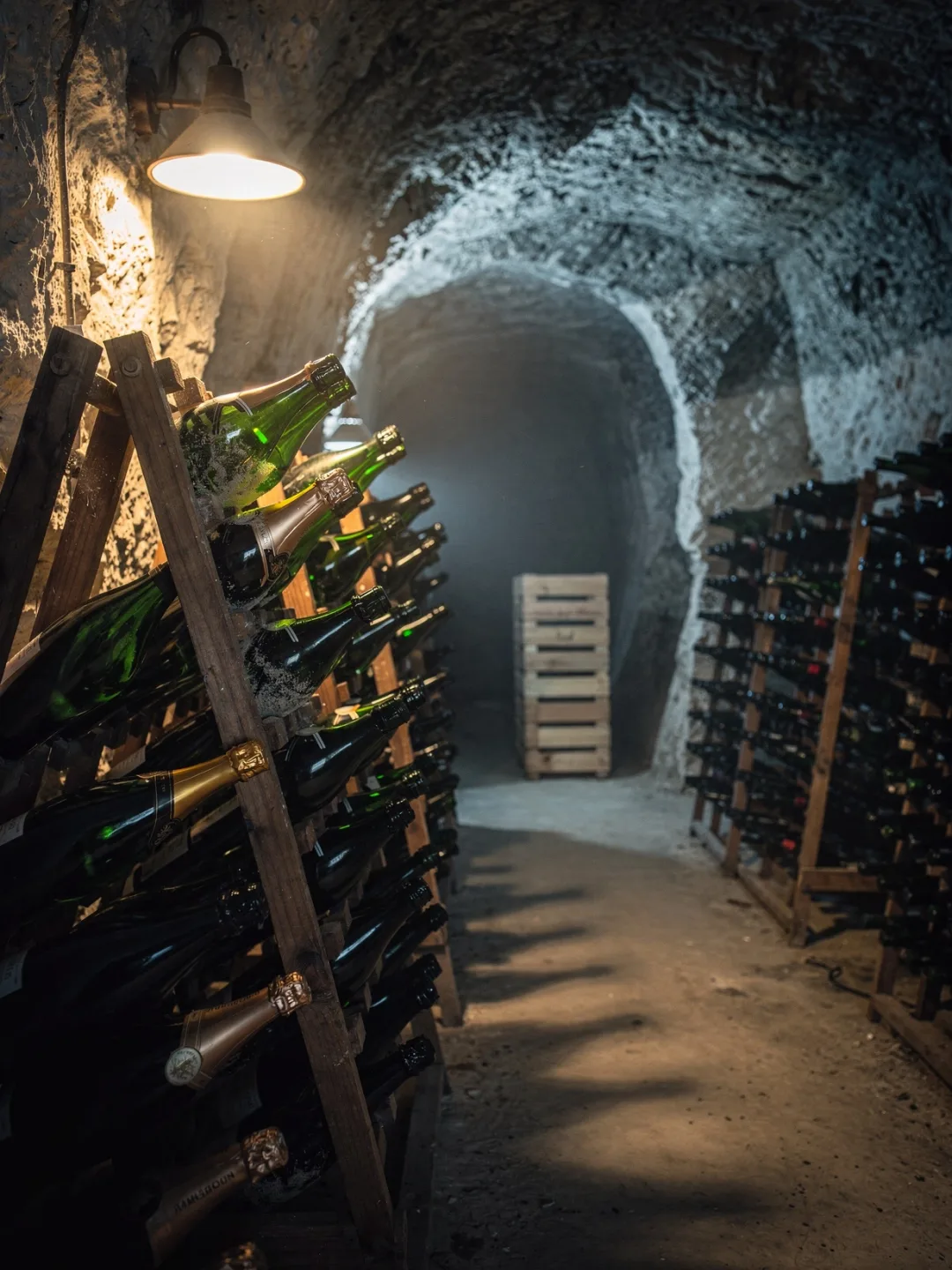
Kentish sparkling wine is made exactly like Champagne: through a second fermentation right in the bottle. Winemakers first press a dry, highly acidic base wine from Chardonnay, Pinot Noir and Pinot Meunier. Yeast and a little sugar are then added, the bottle is sealed, and a second, much slower fermentation begins in the cool of the cellar. This is what creates the carbon dioxide that later rises as a fine perlage.
By law, nine months on the lees is enough for the English designation of origin. The county's more ambitious producers laugh at that figure. Gusbourne in Appledore leaves its sparkling wine on the lees for at least 36 months. The Blanc de Blancs ages for as long as 39 months, and a late-disgorged Brut Reserve bottling from the 2013 vintage ultimately spent 7.5 years on the lees. During this time, the dead yeast cells slowly break down from within. This is exactly what produces the scent of brioche and roasted bread you'd search for in vain in a young sparkling wine.
At some point the yeast has to come back out. For that, the bottle goes neck-down into a riddling rack, a wooden frame with slanted holes. There it's slowly turned and tilted ever steeper over several weeks until the sediment collects in the neck of the bottle. At Squerryes on the North Downs, this riddling now mostly runs on computer-controlled gyropalettes rather than by hand. During disgorgement, this plug is briefly frozen and shot out the moment the bottle is opened, and whatever's missing afterward is topped up with what's called the dosage: a small amount of wine with sugar, the level of which ultimately decides whether the label reads Brut or Extra Dry.
When it comes to designations of origin, Kent, despite its size, loses out. Sussex secured its own protected designation of origin in 2022, the first English region to do so. Its own name has appeared on the label ever since. Kent, the country's largest winegrowing county, still bottles its sparkling wine under the general English designation, without its own county name. Several producers are working on an application of their own, so far without success.