From Tirage to Disgorgement
Production
Sussex makes its sparkling wine by almost exactly the same method as Champagne: bottle fermentation. A first, usually quite acidic base wine finishes fermenting in spring after the harvest, often blended from several parcels. For non-vintage cuvées like Ridgeview's Bloomsbury, several vintages are blended in as well. This keeps the house style consistent across changing years.
For the second fermentation, yeast and sugar go into the bottle, which is then sealed with a crown cap. Inside this bottle, carbonation develops, and the yeast slowly dies off once its work is done. Almost all the sugar disappears in the process, converted into alcohol and carbon dioxide. It's this very process, autolysis, that later gives the wine its bready, toasted notes.
By law, English quality sparkling wines must rest on this lees for at least nine months before they may be sold. The most ambitious houses go far beyond that: Ridgeview ages its Bloomsbury for eighteen months on average. Nyetimber gives its Classic Cuvée at least thirty-six months, and the top cuvée 1086 matures for nearly a decade before it's even disgorged.
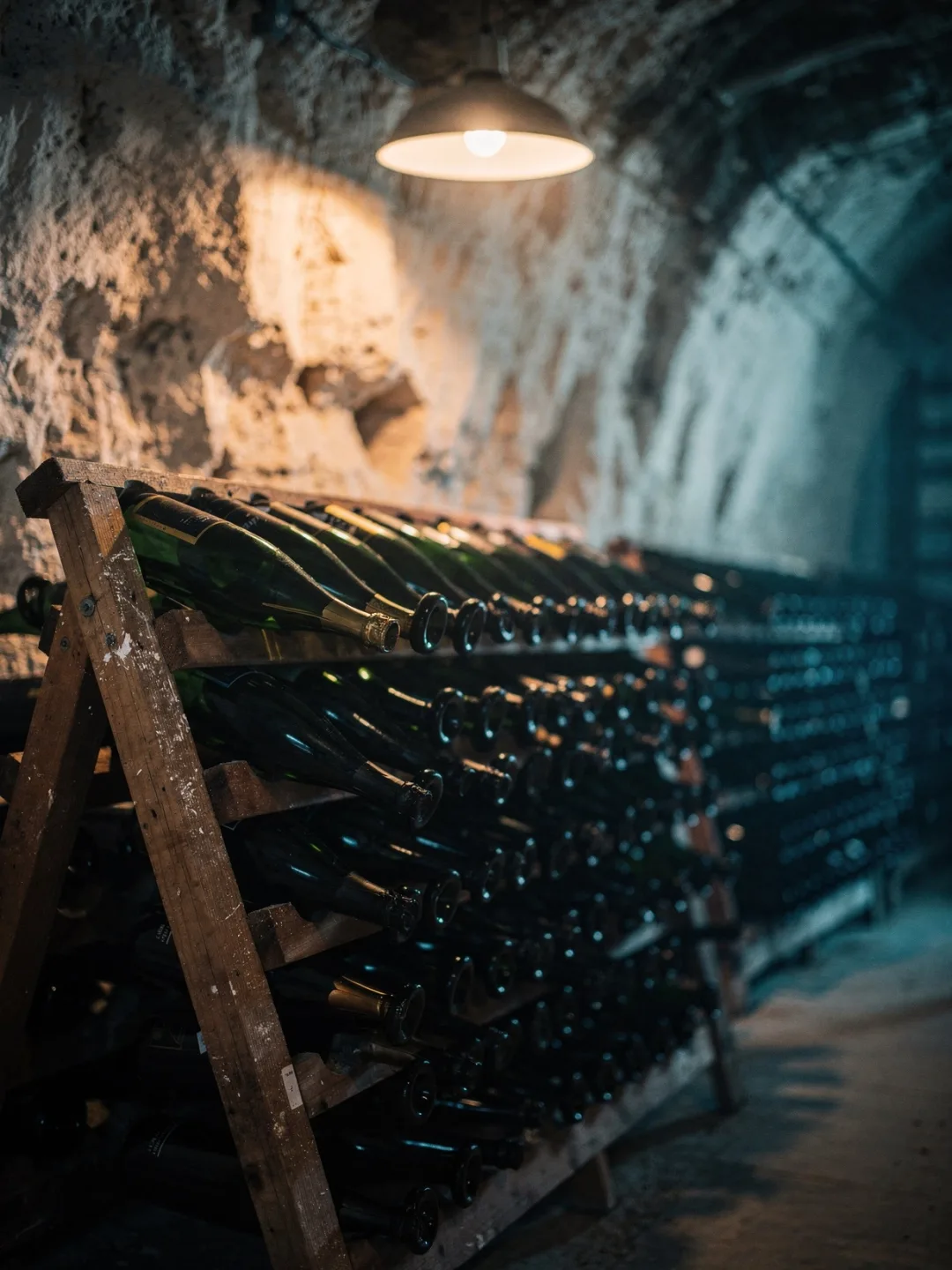
Only at the very end is the dead yeast removed. The bottles are moved neck-down into a rack and turned and shaken over the course of weeks until the sediment collects in the neck. That neck is then frozen, and the frozen plug is shot out under pressure.
After that, one final step determines the character of the wine: the dosage. A splash of wine with sugar tops up the small loss and decides whether the finished wine is a bone-dry Extra Brut or a somewhat softer Brut. Rathfinny built its own large winery in Alfriston for these final steps, because the old image of the small English hobby vineyard simply no longer applies here.