Whisky since 1983
Region & History
Anyone thinking of Breton spirits thinks first of cider and of Lambig, the apple brandy from the orchards between Rennes and Quimper. Whisky came along much later. The Bretons descend from Celtic settlers who crossed over from Britain more than 1,500 years ago. Their language, Breton, is related to Welsh and Cornish. This Celtic root links the region to Scotland and Ireland. Distilling has gone on there for centuries, but in Brittany only since the 1980s.
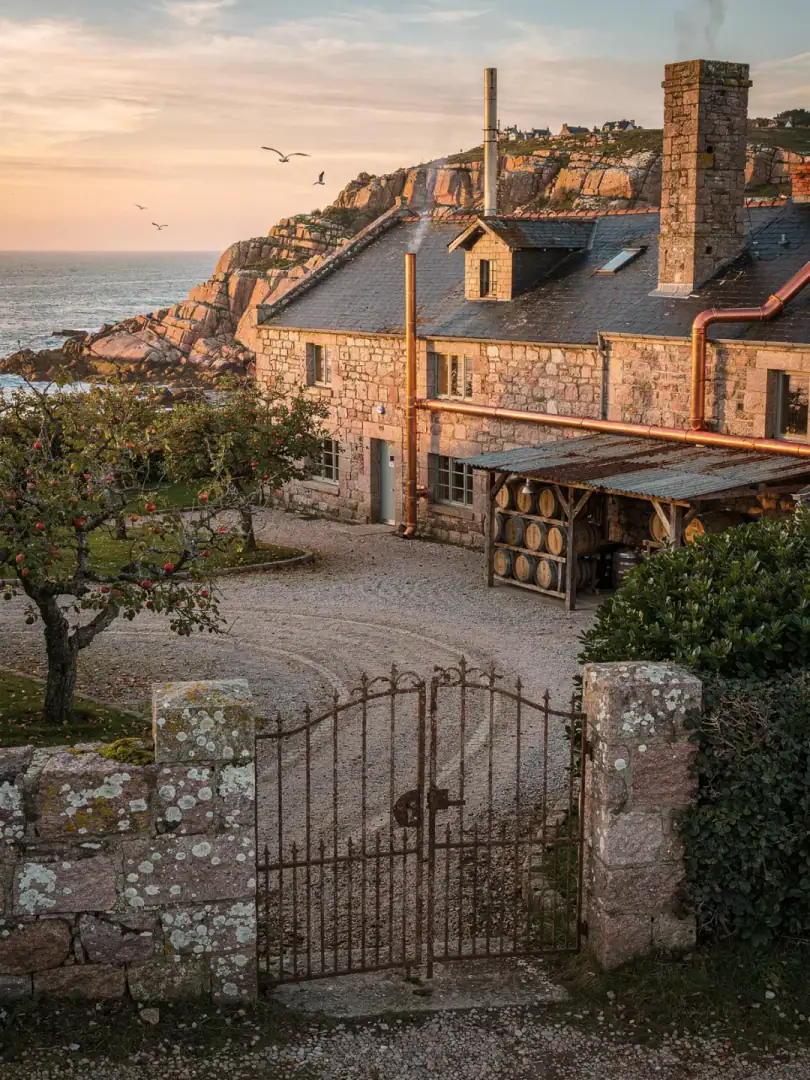
The oldest address in Breton whisky history is in Lannion, on the Pink Granite Coast in the Côtes-d'Armor département. There, Léon Warenghem founded a distillery for herbal liqueurs in 1900, above all the Élixir d'Armorik made from thirty-five plants. At that point, the business had nothing to do with whisky. For decades it ran as a family liqueur business, even winning prizes at international exhibitions.
The turning point came in 1983: Gilles Leizour began distilling malt whisky in Lannion, the first in all of France. The project took fifteen years to mature. In 1998, the Armorik brand was born, the first Breton and also the first French single malt.
Warenghem didn't stay alone for long. In 1986, Guy Le Lay founded the Distillerie des Menhirs in Plomelin, in Finistère. At first it produced only Pommeau, a blend of apple must and Lambig. Only in 1998 did it venture into whisky made from buckwheat, the same grain traditionally used in Brittany to bake the galette. In 2002, the first bottle came onto the market under the name Eddu, Breton for buckwheat. In 2005, the small Celtic Whisky Distillerie of Martine and Jean Donnay followed on the north coast, in Pleubian. Their brand is called Glann ar Mor.
Today, a Geographical Indication called Whisky de Bretagne, recognized since 2014, protects the origin: the whisky must age for at least three years in the region's oceanic climate. Even so, the scene remains small, just a handful of distilleries in total. Each follows its own path between barley, buckwheat, and a heritage built less on centuries than on determination.