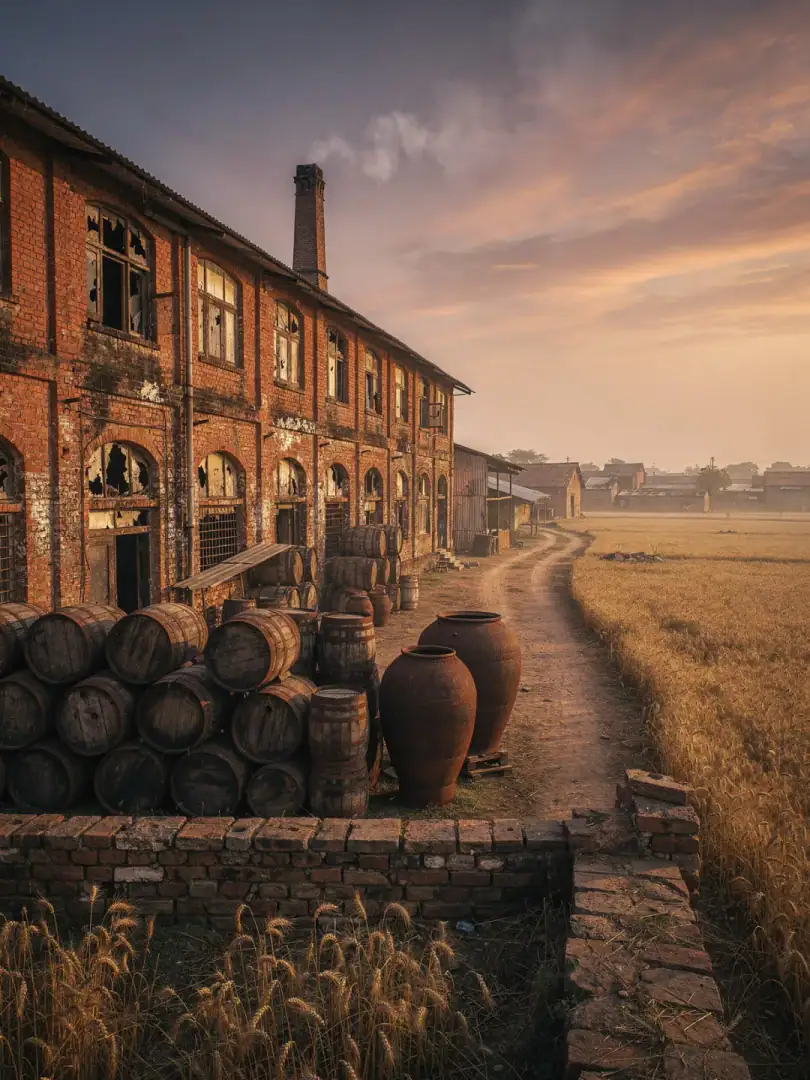
A sugar mill becomes a distillery
Region & History
In 1953, K. N. Sharma founded the company Kedar Nath and Sons in Doraha, Punjab, which later became the Piccadily brand. It wasn't until 1993 that the family switched from sugar to alcohol and bought a sugar mill in Patiala. A second mill followed a year later in the village of Indri, in the Karnal district of Haryana, and with it came Piccadily Agro Industries.
In Uttar Pradesh, the Rampur Distillery had already been running for ten years longer, since 1943. It slid into the red until G. N. Khaitan bought it in 1972 for the equivalent of 1.6 million rupees, founding Radico Khaitan in the process. From 1990 the distillery produced malt whisky, but at first only for blending into its own molasses-based whiskies.
What counts as whisky in India is governed by the Alcoholic Beverages Rules of 2018. They permit whisky made from malted grain, but also from pure neutral spirit based on molasses, with no minimum ageing period at all, whereas Scotch requires three years in cask. Most Indian whisky on the shelf is therefore technically a cane-based rum, and can't legally be sold as whisky in the EU. Rampur, Indri and Godawan take the more expensive route: real malt, real maturation.
Rampur made the leap abroad in 2016, with a showcase at the American spirits trade fair in Las Vegas. Piccadily followed in 2021, launching the Indri brand, named after the town where the distillery stands. In 2022 Diageo opened the third major address with Godawan, right in the middle of the desert near Alwar in Rajasthan.
Today all three are sweeping up awards. Indri's Diwali Collector's Edition won the title of best whisky in the world in Las Vegas in 2025, scoring 99.1 out of 100 points. In January 2026, Rampur landed fourth among the world's most talked-about whiskies, as ranked by Drinks International. Godawan has picked up over 65 international medals since launch, including the title of best single malt at the London Spirits Competition in 2024.