Coal and Cold
Region & History
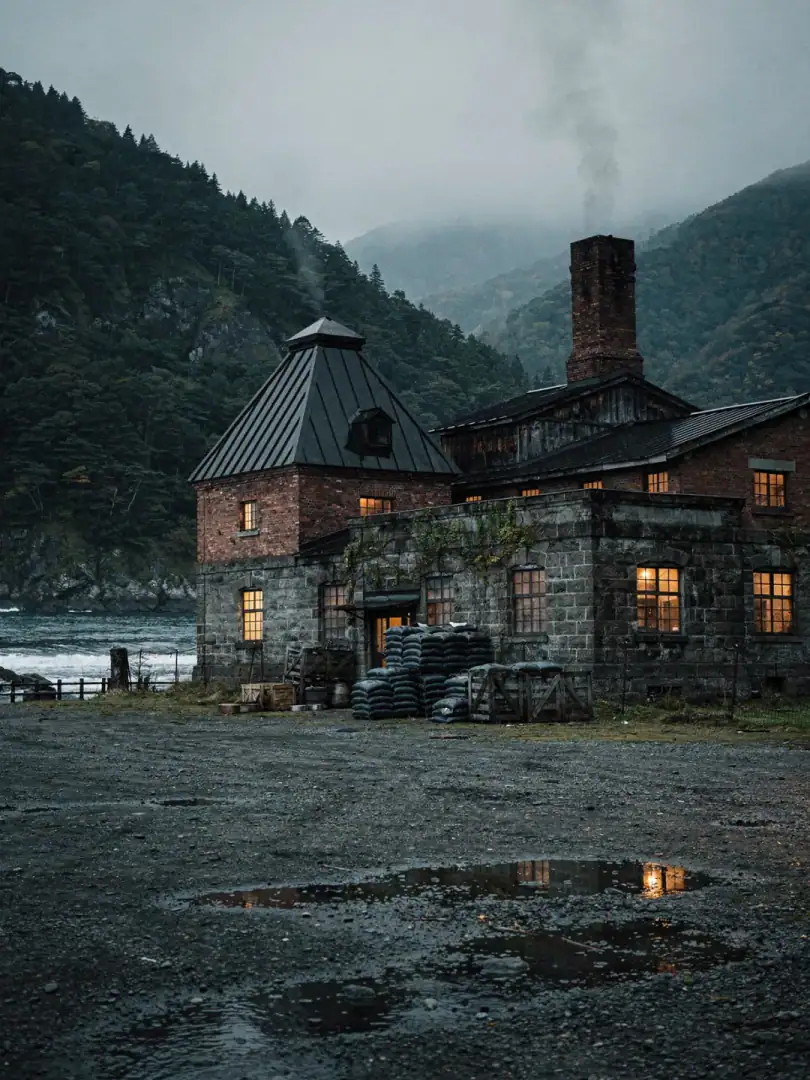
Masataka Taketsuru didn't want to copy Scotch whisky, he wanted to find a place that actually resembled Scotland. He had studied chemistry in Glasgow and worked at several distilleries, including Longmorn with its coal-fired stills. Back in Japan, he searched for years for a landscape with a similar climate: cool, damp, close to the sea.
In 1934 he found it in Yoichi, at the foot of the Shakotan Peninsula. Mountains enclose the town on three sides, open only toward the Sea of Japan. There he founded the company Dai Nippon Kaju, which later became Nikka. The whisky needed years to mature. During that time the young company sold apple juice and other fruit products just to get through the wait.
There was no dedicated law for "Japanese whisky" back then. Tax law regulated how whisky was taxed, not what had to go into it. For decades, producers were allowed to blend in whisky from Scotland or Canada. The bottle could still be labeled Japanese as long as it contained some portion of domestic spirit.
That only changed in 2021. The industry body JSLMA laid down what may be called "Japanese Whisky." Water, mashing, fermentation, and distillation must all take place in Japan. The distillate then has to mature for at least three years in wooden casks of no more than 700 liters, also in Japan. It's bottled there at a minimum of 40 percent ABV.
In 2020, a second voice joined the conversation on Hokkaido: the Akkeshi Distillery on the Pacific coast. It was built by the trading house Kenten Jitsugyo under Keiichi Toita. His goal was blunt: recreate Islay in Japanese form, complete with his own peat bog right beneath the distillery.
The island keeps growing today. In Niseko, the Niigata brewery Hakkaisan has been distilling since 2021, and in Higashikawa the young Tankyu Distillery works with spring water from Asahidake. But Yoichi and Akkeshi remain the two names everyone else is measured against.