Dashi instead of smoke
Whisky & Food
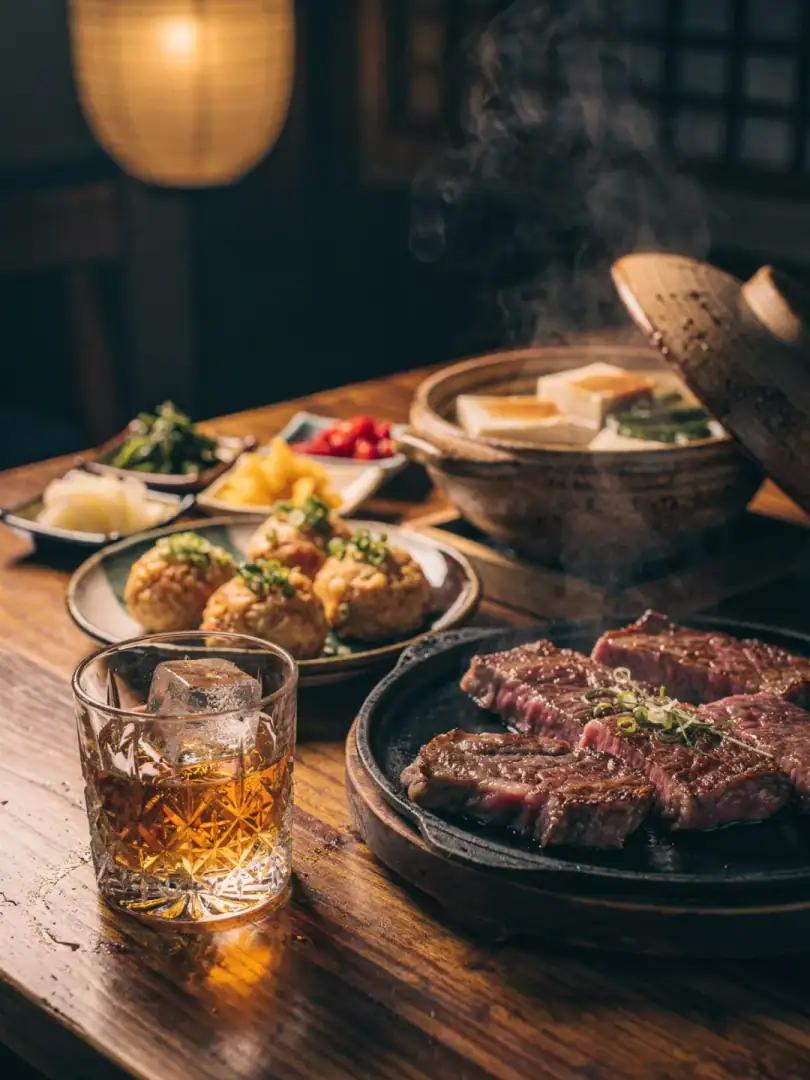
Osaka calls itself "Tenka no Daidokoro," the nation's kitchen, and serves alongside it a whisky that hails from the very same neighborhood. Takoyaki, the little dough balls with pieces of octopus, arrive at the table with sauce, mayonnaise and dried bonito flakes. A Yamazaki highball suits this better than drinking it neat.
The reason is the carbonation. It cuts through the fat of the sauce and lifts the salty, umami-rich notes of the katsuobushi. The whisky's honey and fruit notes stay in the background instead of overwhelming the dish.
The same logic applies to okonomiyaki, the hearty pancake with cabbage, bacon and the same sweetish sauce. Heavy umami and heavy fat call for a diluted or sparkling whisky as a counterbalance.
Kyoto, a train ride away, cooks more quietly. Kaiseki, the multi-course sequence of small, artfully composed dishes, calls for a restrained whisky. The same goes for yudofu, tofu simmered in hot water with a simple dipping sauce. A Yamazaki 12, diluted generously with still water as mizuwari, leaves the delicate dashi flavors untouched.
At the other end of the scale stands Kobe beef, one of Japan's most famous meats, usually served as sukiyaki, shabu-shabu or off the teppan grill. The fat marbling calls for weight. Here, the Yamazaki 18, with its sherry sweetness and dark fruit notes, suits better than the younger, lighter bottling.
The region thus delivers two whisky styles at once: a light one for Osaka's loud street food, a heavy one for Kyoto's formal feasts. Both come from the same distillery at the foot of Mount Tennozan.