Trade & Prohibition
Region & History
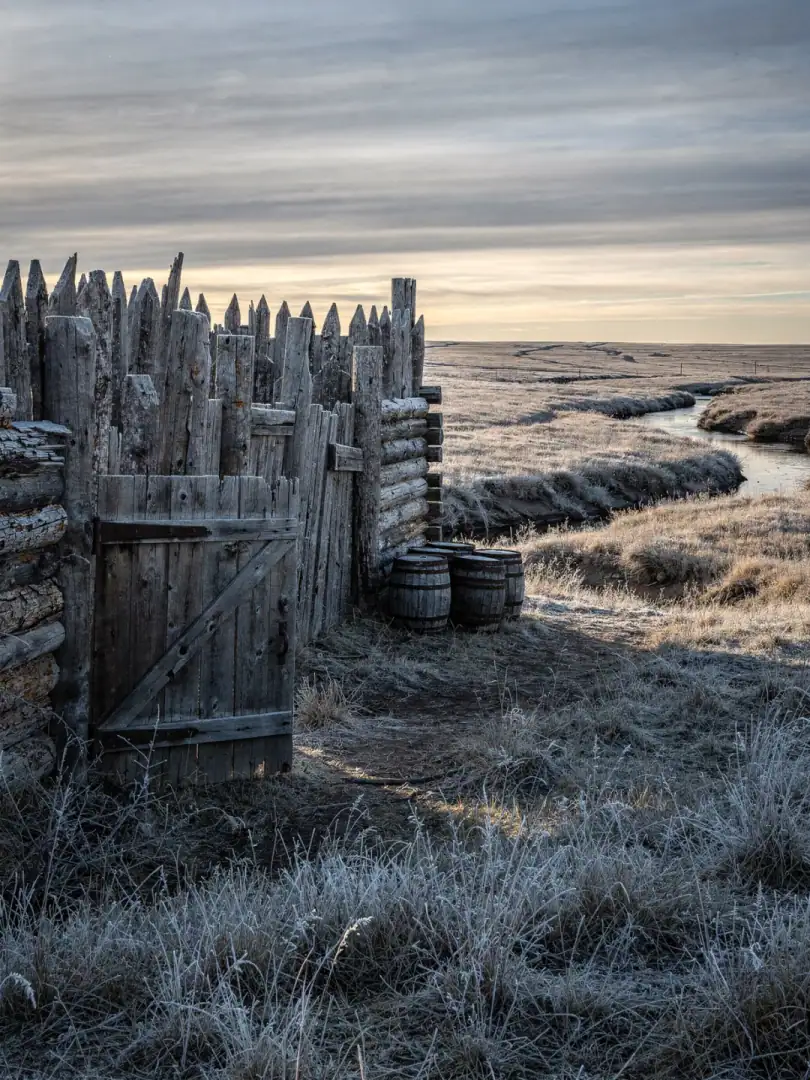
Long before legal distilling began in Alberta, another trade flourished there: whisky smuggling. In 1869, traders John Healy and Alfred Hamilton built a trading post that everyone soon simply called Fort Whoop-Up. More than fifty such posts sprang up in the south of what is now the province, with names like Slide Out or Robbers' Roost, but none became as notorious as this one.
With no police presence anywhere in the area, traders sold their rotgut at extortionate prices, often in exchange for Blackfoot buffalo hides. Complaints reached Ottawa, along with rumors that an American flag was even flying over one of the forts. Together, these two factors led to the founding of the North-West Mounted Police in 1873, a new mounted police force.
On October 9, 1874, the force finally reached Fort Whoop-Up. The disappointment was immense: the smugglers had long since fled across the border into Montana, leaving behind only a lone guard. Not a single shot was fired, yet the biggest whisky trade in the West was over nonetheless. The police maintained their own barracks in the old fort until 1890.
Legal distilling didn't begin in Alberta until much later. In 1946, rancher Max Bell, oilman Frank McMahon, and experienced distiller George Reifel joined forces in Calgary to found Alberta Distillers. Twelve years later, in 1958, Alberta Premium hit the market as one of the world's first genuine one-hundred-percent rye whiskies, at a time when Canadian blends almost always relied on corn.
About an hour's drive south, in High River, Calgary investors had a German master distiller design a new distillery in 1974. It was first called Sunnyvale, then renamed Highwood Distillers in 1984, after the river and the foothills of the Rocky Mountains surrounding the town. In 2005, the company acquired British Columbia's Potter's Distilleries, expanding its portfolio by more than a dozen new brands.
Today, Alberta Distillers belongs to the Japanese conglomerate Suntory Global Spirits, while Highwood Distillers continues to operate independently between Calgary and High River. Aged rye from Calgary even makes its way to other brands like Masterson's or WhistlePig, which simply bottle it. Both houses still source most of their grain from within the province itself.