Enzyme Instead of Peat
Malt & Peat
You'll search in vain for peat bogs like those in Scotland on the Canadian prairie. Alberta never had the damp moorlands that served as kiln fuel for centuries elsewhere. As a result, the very foundation for any smoky flavor in the malt is missing here, right from the start.
Even so, every distillery faces the same challenge as its counterparts in Scotland: raw grain alone barely yields fermentable sugar. Normally, malted barley takes on this job, since its enzymes break down the starch in the grain, just as is customary in neighboring Ontario. But for a whisky that's one hundred percent rye, this usual path simply isn't enough.
Alberta Distillers takes a different approach. Rather than kilning its own malt, the distillery cultivates an enzyme called glucoamylase in its own culture and adds it directly to the mash. This keeps the recipe at one hundred percent rye, with none of the barley malt content that almost every other rye whisky otherwise needs.
This small technical trick explains why Alberta Premium can even bear the name of a genuine one-hundred-percent rye. Many whiskies carrying "Rye" in their name actually still blend in some barley malt for the conversion, just in small amounts.
In the end, you can't taste this enzyme, but you can certainly taste its absence in the smoke: instead of peat and char, pepper, grain, and a floral sweetness define the character. Anyone searching for smoke here will find the full spiciness of the grain instead. The prairie, after all, doesn't burn, it only grows.
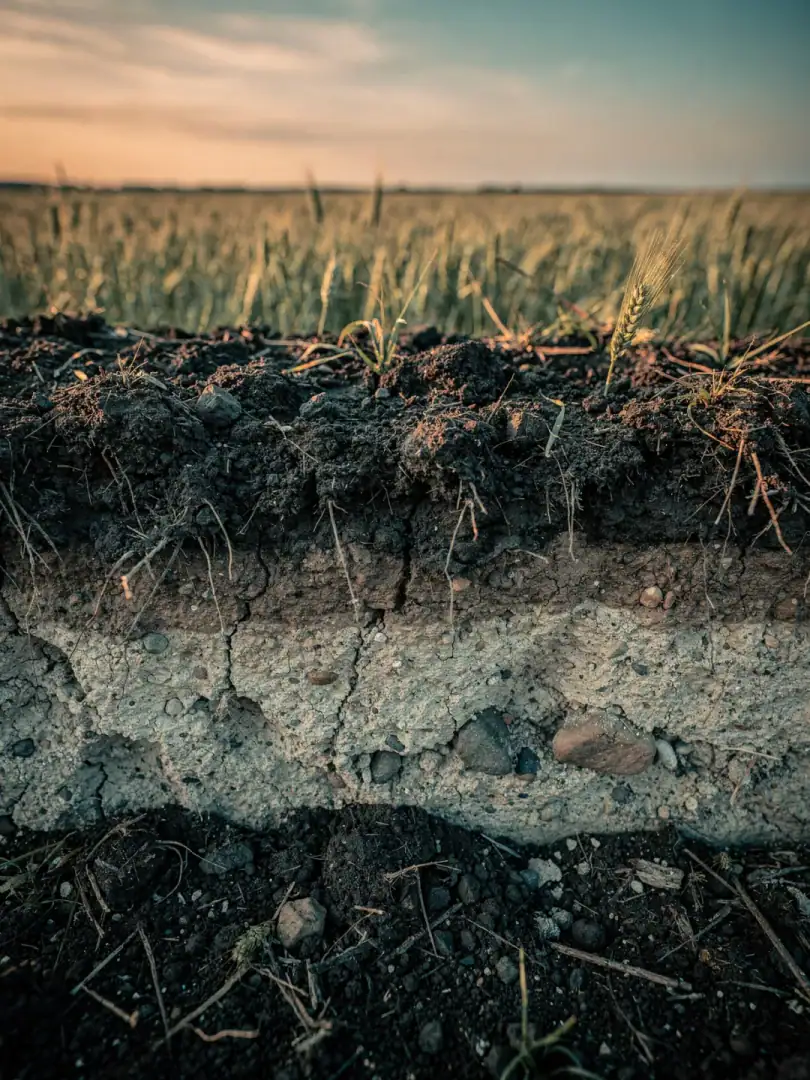
Dark, humus-rich prairie soil, built up over millennia from decaying grass roots.
The root: This nutrient-rich soil lets rye roots grow deep, supplying the starch that later turns to sugar in the kettle.