Smuggling & Licence
Region & History
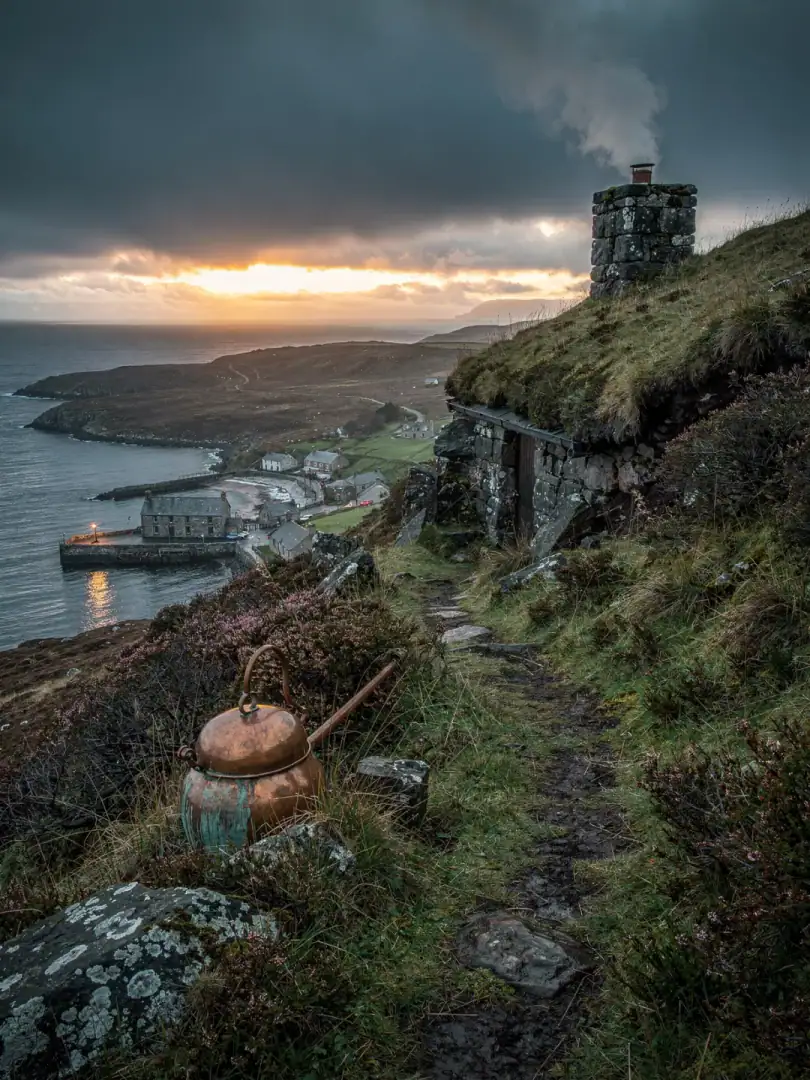
If you needed a cask of whisky on Islay in the 18th century, you didn't go to a shop. You went to a neighbour with a still in the peat shed. Smuggling was the main livelihood for many of the island's crofters and fishermen, especially in the winter months, when the fields yielded nothing. Whole families lived off it, and the whisky flowed beyond the island as far as Argyllshire, Inverness-shire, Mull, Lewis, Galloway, and even Ireland.
The few excise men sent to the island were hardly up to the task. When they tried to seize or smash an illegal still, they met open hostility, sometimes violence. The justices of the peace who decided on penalties usually knew the smugglers personally, as friends, tenants, or customers. So they set the fines low enough that they barely stung.
In 1823, a single law changed everything. The Excise Act allowed legal distilling for a licence fee of ten pounds plus a fixed duty of two shillings and three pence per gallon of pure alcohol. That same year, some 14,000 cases of illegal distilling were still uncovered; a decade later, it was down to 692; by 1874, just six. Smugglers became licence holders, and sheds became distilleries with names.
Bowmore had already been around for a long time by then: the village on Loch Indaal was founded as far back as 1779 and is considered the oldest still-working distillery on the island. Others came much later, Kilchoman only in 2005, the first new distillery on Islay in generations. Today, nine distilleries stand on the island, plus Port Ellen, whose distillery closed in 1983, while its maltings still supply most of Islay's malt to this day. The island of smugglers has become the island with the highest concentration of distilleries in Scotland.