Barley, and Nothing Else
Grain
No whisky grows from corn or rye on Islay, only from barley. That's not down to the island, but to the law. The Scotch Whisky Regulations of 2009 permit only malted barley and water for single malt, processed in a single distillery. Distilling happens exclusively in traditional pot stills, in what's called the batch process. Anyone wanting to carry that name has no other choice.
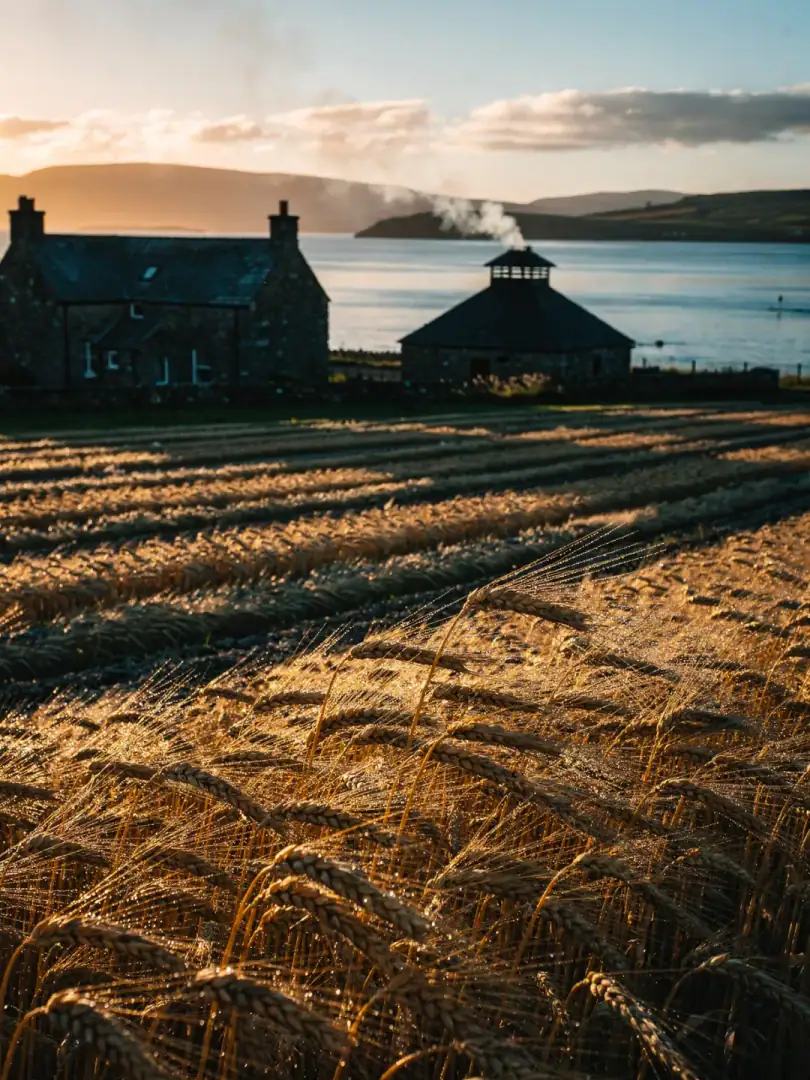
The barley itself mostly comes from mainland Scotland today. The island's thin, wind-battered soils simply don't yield enough for nine distilleries. Kilchoman is the exception, where part of its own harvest grows right next to the distillery. This barley is bottled as "100% Islay", with its own growing, malting, and distilling all under one roof. The rest of the island's barley usually goes to Port Ellen Maltings before it ever becomes whisky.
Almost everything made on Islay is single malt, the product of a single distillery from a single type of grain. Blended whisky mixes malt and grain whisky from corn or wheat, and that's not produced here. Islay malt still often ends up as an ingredient in other blends, usually uncredited on the label.
Before the barley yields alcohol, it first has to give up its sugar. Malted and milled barley, the grist, meets hot water in the mash tun. This releases its starch as a sweet liquid, the wort. On an island with such peaty water, even this wort tastes different from anywhere else in Scotland. That's true even before yeast or the still come into play at all.
Malted, fermented, distilled: that alone isn't enough to earn the name. The law also demands at least three years of maturation in oak casks of no more than 700 litres. All of this must also happen exclusively in Scotland. Only then may the bottle be called "Scotch", no matter how good the new spirit already tasted beforehand.