Smuggling & Licence
Region & History
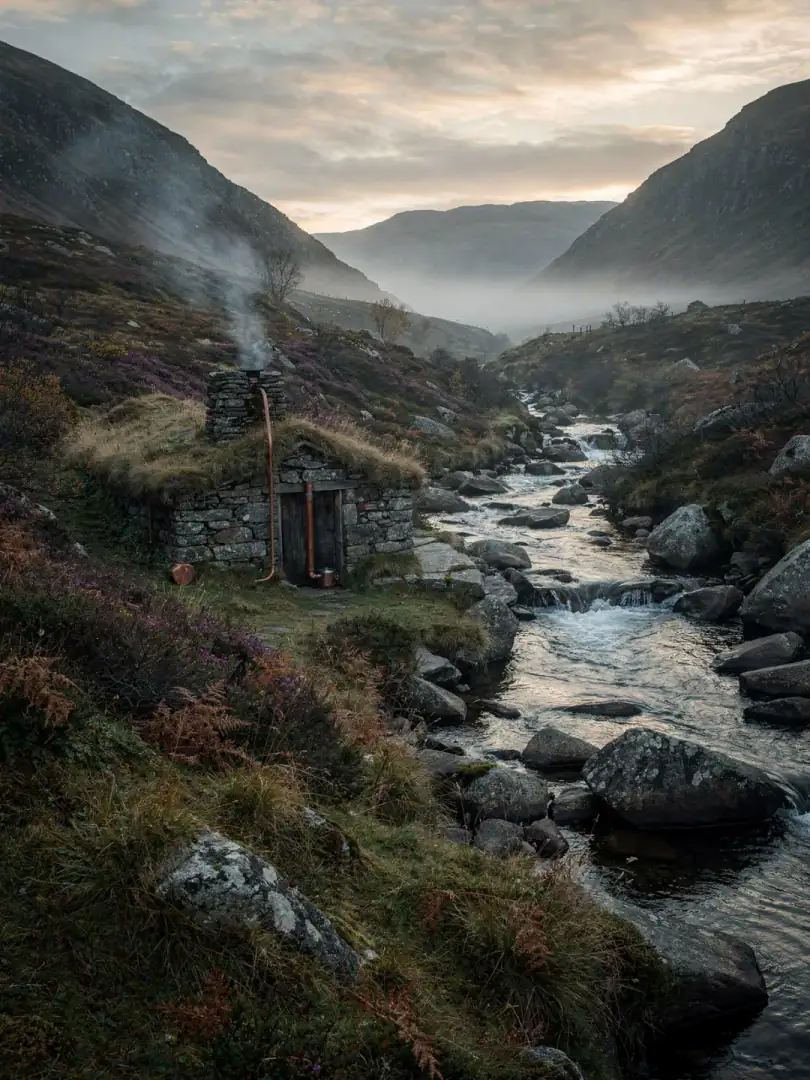
Hardly any corner of Scotland has as many distilleries as the valley of the River Spey between Elgin and the slopes of Ben Rinnes. As early as the eighteenth century, countless farmers here distilled their own whisky in secret, far from the eyes of the tax officials in the towns. The water from the mountains was soft, the barley grew in their own fields, and a cask was easier to hide in the moor than a cow.
In Glen Livet, a side valley of the Spey, the situation became especially tight. Around 1820, customs officers there confiscated roughly fourteen thousand illegal stills each year. Still, the trade carried on, because the official tax was so high that smuggled goods remained worthwhile even with the risk of punishment.
In 1823, a new tax law changed the equation. In exchange for a fixed annual fee and a levy per gallon, farmers were now allowed to distil legally, and the farmer George Smith from Glenlivet was the first in the valley to seize the chance. His former smuggling companions saw this as betrayal and repeatedly threatened him with death. From then on, Smith is said to have ridden to his own distillery with two pistols tucked into his belt.
The numbers speak for the new law. In 1834, officials found only 692 illegal stills; by 1874, there were just six. With the railway, which reached Dufftown and Craigellachie from the 1860s onward, a finished cask could for the first time be easily transported to the harbour and out into the world. Within a few decades, dozens of new distilleries sprang up along the Spey.
Today Speyside counts more than fifty active distilleries, over half of all those in Scotland. In Dufftown, where seven once stood, locals still say with a wink that the town was built on seven casks, just as Rome was built on seven hills. Since the Scotch Whisky Regulations of 2009, Speyside has also been legally recognised as its own region, alongside Highland, Lowland, Islay and Campbeltown.