Barley & Law
Grain
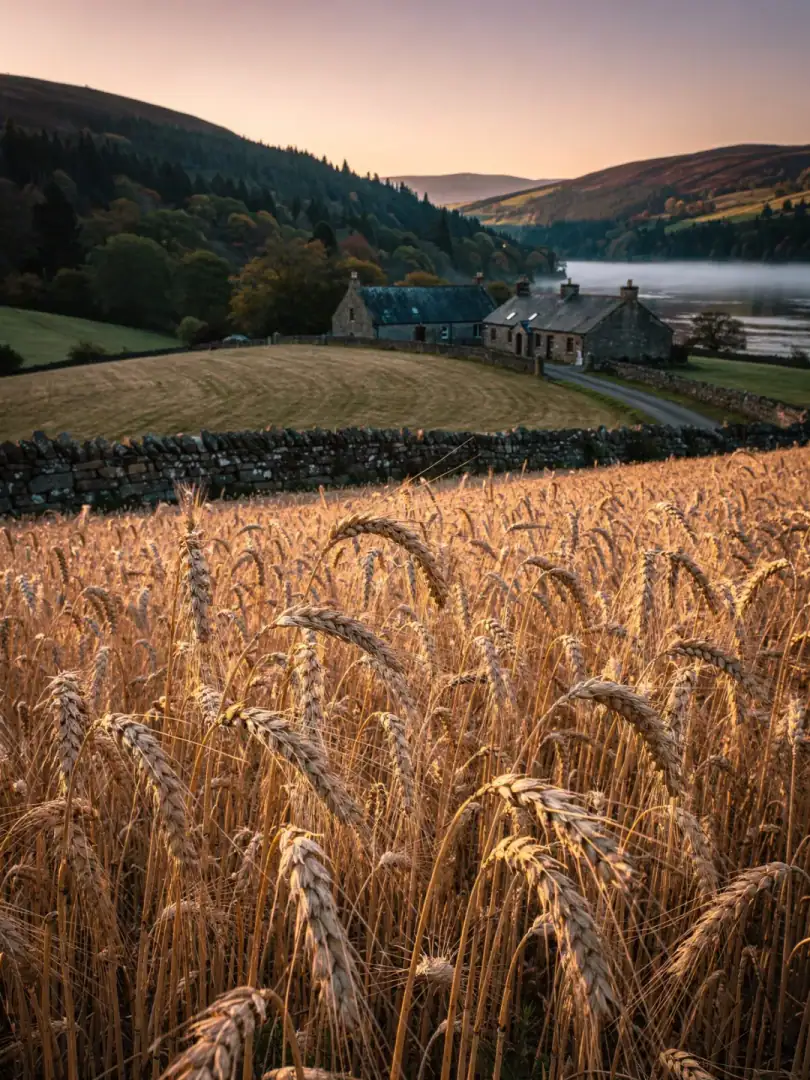
Anyone opening a bottle from Aberlour or Craigellachie today is, in the end, drinking nothing but fermented and distilled barley, water and yeast. By law, nothing more may go into the cask of a Speyside malt. Until the 1970s, many distilleries around Rothes and Elgin still grew the old variety Golden Promise in their own fields. It gave low yield, but plenty of flavour.
Golden Promise was a poor deal for farmers. Modern varieties such as Concerto or Laureate produce almost double the grain per hectare. Since the 1990s, the barley has therefore mostly come from large lowland farms. Specialised maltsters such as Simpsons or Crisp process it into malt before it rolls into Speyside by lorry.
At the distillery, the malt is milled and mixed with hot water from the distillery's own springs in the mash tun. The starch in the grain is converted into sugar. The sugar runs off together with the water as a sweet liquid known as wort. Yeast ferments this wort in open vessels into a kind of beer at around eight percent alcohol, called the wash.
The Scotch Whisky Regulations set out precisely what is allowed for single malt after this: only water, only malted barley, no additives, distilled in copper pot stills, and made at exactly one distillery. Bourbon from the United States follows different rules. There, a share of just fifty-one percent corn in the rest of the grain mix is enough. Speyside sticks to its one ingredient, year after year, cask after cask.