Monopoly & Opening
Region & History
In 1901 the Japanese colonial administration in Taiwan established a state monopoly bureau. It controlled tobacco, salt, and also alcohol — anyone wanting to distill legally needed state permission, and no private distillery was allowed to exist alongside it. After 1945, when Taiwan came under the administration of the Republic of China, the bureau remained in place as the Taiwan Provincial Monopoly Bureau. This structure barely changed for decades.
That only changed in 2002, when Taiwan joined the World Trade Organization and had to abandon the state alcohol monopoly. On July 1 of that same year, the bureau became the Taiwan Tobacco and Liquor Corporation, or TTL for short — a state-owned company, but now open to competition. For the first time, private distilleries in Taiwan were also allowed to legally produce whisky.
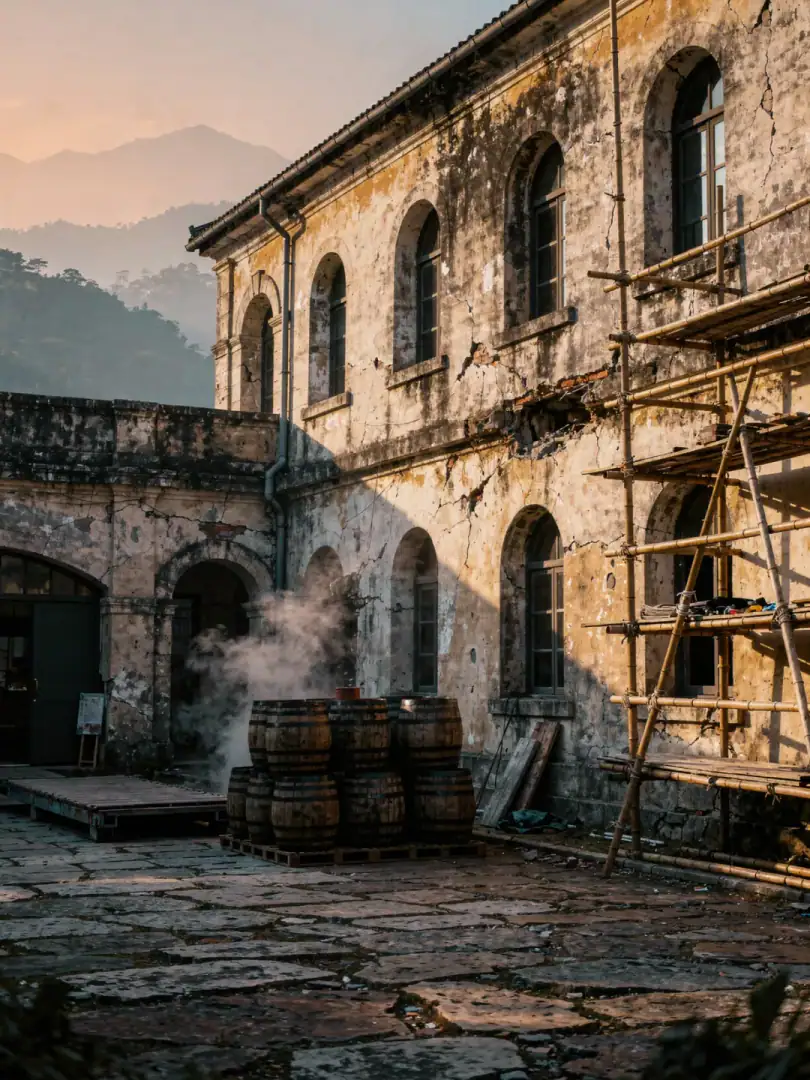
TTL already had a distillery in Nantou, right in the heart of central Taiwan's mountains: founded in 1977, it had until then produced wine, brandy, rum, and fruit spirits. In 2008 a malt whisky facility was added, and the first distillate rolled off the line the following year. The new whisky was named Omar, after a Scottish Gaelic word for amber — the color a good whisky takes on in the cask.
The first two releases came onto the market in 2013, one from bourbon casks and one from sherry casks, both at cask strength. In 2015 came something never seen anywhere in the world before: a single malt finished in casks that had previously held litchi liqueur. The first batch sold out on the day of release.
In 1999 the devastating Jiji earthquake had ravaged large parts of central Taiwan, including Nantou. Rebuilding the region took years, and new projects were meant to bring back jobs and income. The whisky from the old fruit distillery became part of that story — today Omar stands alongside other Taiwanese whisky brands, though far less known abroad.