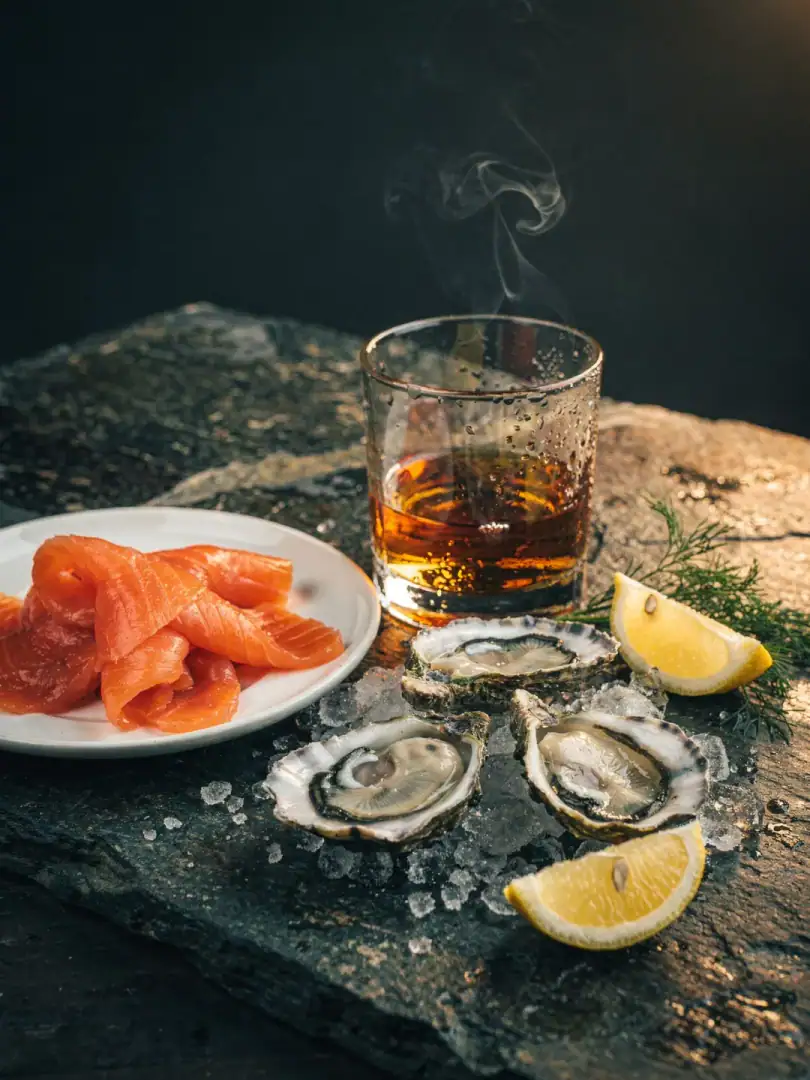
Smoky with fish
Which whisky pairs with fish and seafood?
Smoky whisky and fish are considered one of the most reliable pairings of all, for a simple reason: smoked fish and peaty whisky share the same world of aromas. Knowing which smoke level suits which fish helps avoid a common mistake: too much smoke on too delicate a fish.
Why smoke and sea go so well together
Islay whiskies often mature right by the coast, where salty sea air seeps through the cask staves for years and blends with the peat smoke from the malting. The result in the glass is an aroma of smoke, iodine and a faintly salty undertone reminiscent of fresh oysters or wet seaweed. This salty-smoky character meets fish and seafood almost naturally, since they carry similarly briny notes of their own.
Smoked salmon, grilled sardine or a fresh oyster with a few drops of lemon reinforce this effect even further. Smoke meets smoke, salt meets salt, and both sides come across more intense afterward without overpowering each other. This is exactly what makes this pairing so reliable, even for people who otherwise find it hard to match food and whisky.
One example shows the effect clearly. Smoked mackerel alongside a robust Islay whisky. Both bring the same smoky-salty base note. On the palate, the two smoky notes almost merge into one. This effect is exactly what makes the pairing so striking for many people. If you love smoke, you'll hardly find a better match.
Choosing the right smoke level for the fish
Not every smoky whisky suits every fish, since smoke levels vary greatly between individual bottlings. Mild smoky aromas in the range of roughly ten to twenty ppm phenol content in the malted grain suit delicate white fish like cod or plaice well, where too much smoke would simply overwhelm the fine texture.
More robust bottlings with a noticeably higher phenol content call for fattier, more flavor-intense fish: smoked eel, mackerel, or a spicy fish soup. As a rule of thumb: the fattier and more strongly flavored the fish, the more smoke the glass alongside it can handle without one side overwhelming the other.
The phenol value is rarely stated openly on the label. Usually only the distillery's own description helps. Islay whiskies are almost always considered strongly smoky. Speyside bottlings, by contrast, usually stay noticeably milder in smoke. If you're unsure, it's better to start with a milder bottle. You can always reach for more smoke later.
Seafood: from raw oysters to scallops
Raw oysters with a slightly iodine-tinged, smoky whisky are considered a classic among connoisseurs, since both sides share the same mineral base note. A splash of lemon on the oyster brings extra freshness, which makes the whisky taste softer afterward, almost like a natural diluent in the mouth.
Seared scallops with their natural sweetness, on the other hand, tend to suit a milder, slightly sweet whisky from a refill sherry cask better than a very dry, heavily smoked Islay. The sweetness of the scallop and the sweetness in the glass reinforce each other, while too much smoke would simply mask the delicate scallop.
Prawns and crab are also worth trying. Their delicate, slightly sweet natural flavor can only handle a little smoke. A mild, barely peated whisky usually works better here. Too much smoke would quickly overwhelm the subtle sweetness. If you're unsure, it's best to try small amounts first.
A common mistake: too much smoke on too little fish
The most common mistake happens when a very robust, heavily smoky whisky meets an especially mild, delicately cooked fish. The smoke immediately takes over, and barely anything of the fish's actual flavor remains. On the palate, the dish then feels almost like a pure whisky tasting rather than a meal.
A simple remedy is to follow a straightforward order when eating: first a bite of fish, then the sip of whisky, never the other way around. This way, the fish's delicate flavor briefly comes through before the smoke takes over the next moment, and both sides get their due, one after the other.
The amount in the glass also affects the impression. A generous sip automatically feels smokier than a small one. With very robust bottlings, it's therefore worth starting with a cautious, small sip. This way you can slowly find your own limit. Taking too much too fast means losing sight of the fish altogether.