Tax and Uprising
Region & History
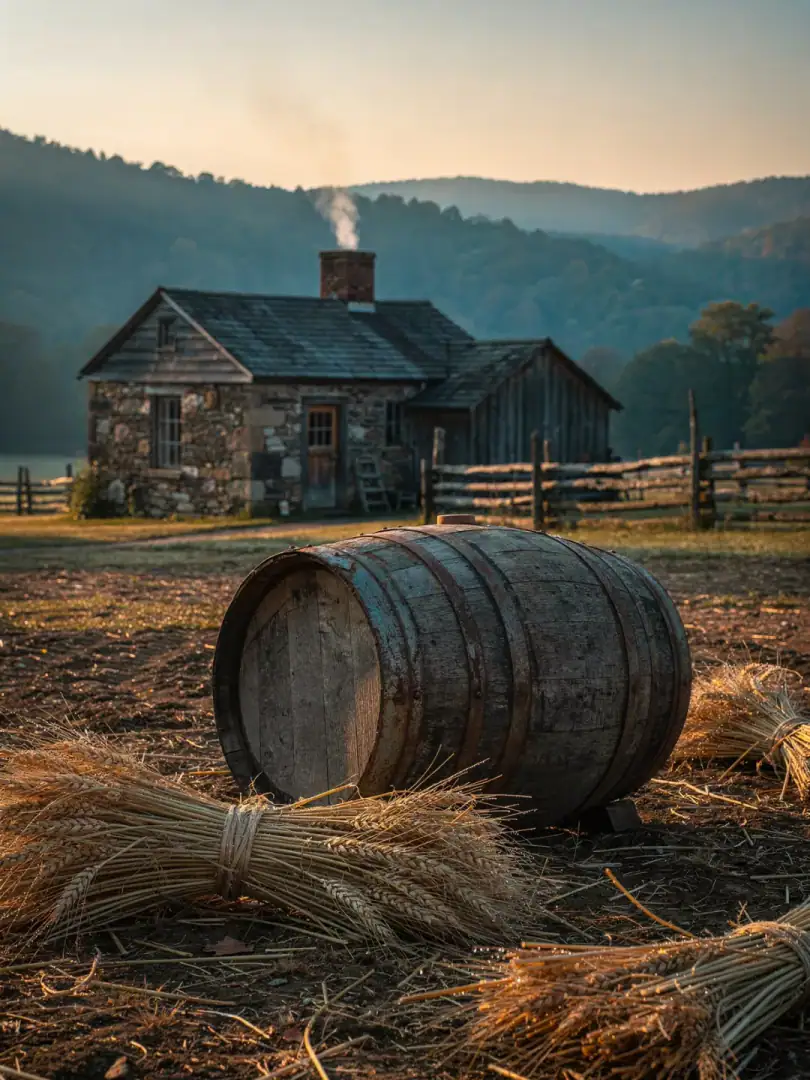
When German and Scots-Irish settlers cultivated the hills of western Pennsylvania and western Maryland in the 18th century, one crop in particular thrived: rye. The grain withstands frost, poor soil, and short summers better than corn or barley, and anyone who farmed it usually ended up with more grain than they could bake with.
Whiskey emerged almost naturally from this. A barrel of distilled grain was far easier to transport across the Appalachians than a wagonload of rye kernels, and at trading posts it could even be used to pay rent. This was exactly what the young federal government sought to tax in 1791.
In 1794, the mood turned. Around the Monongahela River, farmers refused to pay the new excise tax on whiskey, attacked tax collectors, and took up arms. In hindsight, this uprising is known as the Whiskey Rebellion. George Washington himself marched out with over 13,000 militia soldiers from Pennsylvania, Maryland, Virginia, and New Jersey to suppress it. Among those convicted was a young distiller named Philip Wigle, whose name two hundred years later would grace a distillery in Pittsburgh.
In the 19th century, this necessity became a distinct style: Old Monongahela Rye was considered one of the finest whiskeys in the country, famous enough that Herman Melville mentioned it in Moby-Dick. Then came Prohibition. Hundreds of distilleries in Pennsylvania and Maryland closed for good, and when legal distilling resumed in 1933, the whiskey industry shifted almost entirely to Kentucky. Old names like Rittenhouse or Old Overholt survived only as labels, distilled far from the Monongahela.
Only since 2011 has rye been making its comeback. That year, Wigle Whiskey in Pittsburgh and Dad's Hat in Bucks County opened as the first of their kind in decades, and shortly after, Sagamore Spirit brought Maryland back into the business. In New York, six distilleries joined forces in 2015 to create Empire Rye, a legally protected designation of origin. The Northeast is reclaiming its whiskey.