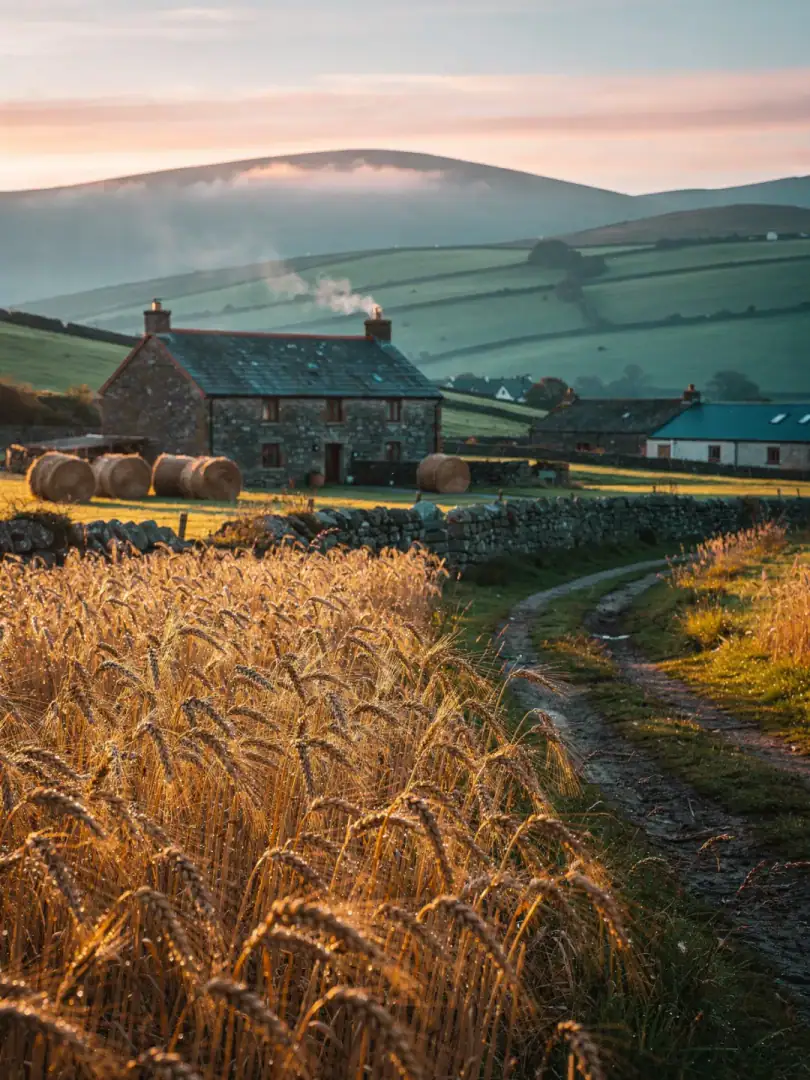
Barley, up close
Grain
In all four Welsh distilleries, it's almost exclusively barley that goes into the mash tun, no rye, no wheat, no corn as used in Kentucky or Ontario. The law plays a part in this too. Since July 2023, only whisky made from 100 percent malted Welsh barley and Welsh water may be called "Welsh Whisky." The entire process from mashing to bottling must also take place within the country.
The barley is malted so the starch in the grain converts into fermentable sugar. It germinates briefly, is then dried, and hot water is poured over it in the mash tun. What remains is a sweet liquid, the wort, which is then fermented with yeast into a kind of beer known as the wash.
Aber Falls in the north sources its barley from Welsh farms near the distillery. In the Welsh Wind on the Ceredigion coast keeps things even tighter. There, the grain comes from within roughly 16 kilometres, with some fields quite literally on the doorstep.
At Coles in Llanddarog, the chain starts even earlier. The distillery aims to be the first in Wales to genuinely make everything itself, from grain to finished bottle. For its single malt, it relies on pure, 100 percent malted barley.
Unlike Scotland or Ireland, Wales has no large grain distillery to date. Such a plant would use a column still to produce cheaper whisky from wheat or corn. All four Welsh distilleries instead take the pricier, slower route via malted barley, which is why they rightly call the result single malt. It may taste different, but it makes tracing the grain back to its home field much easier.