Snow, River, Gypsum
Water & Soil
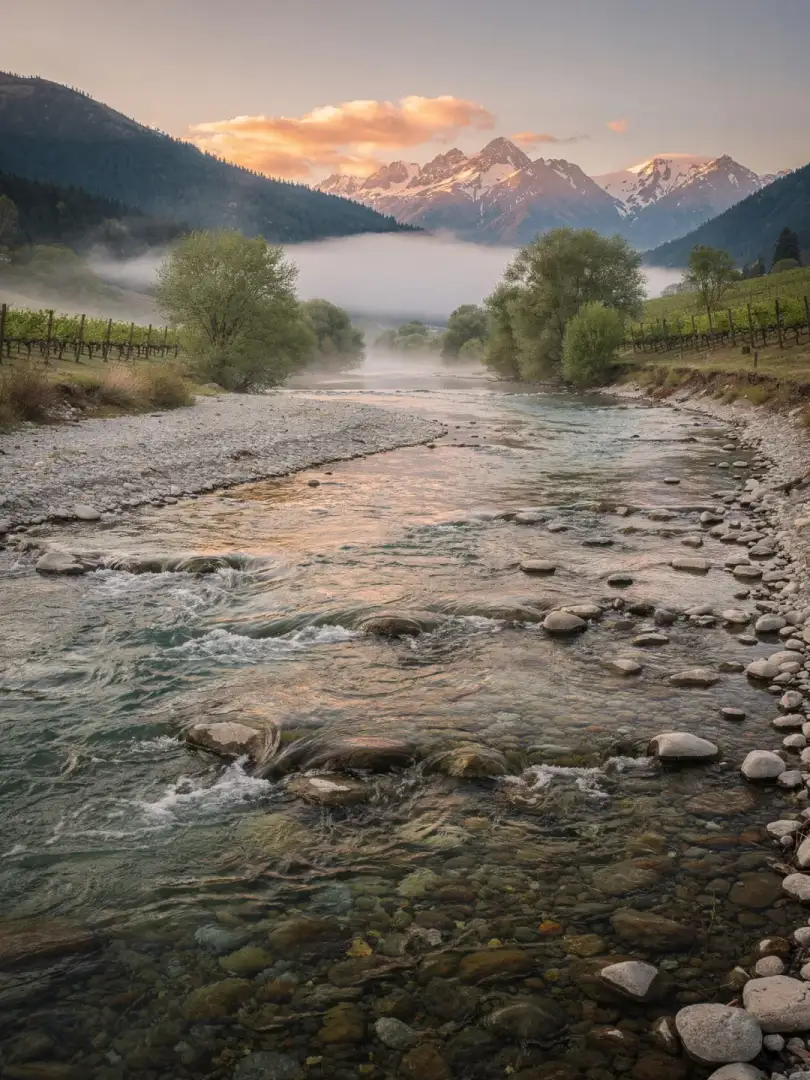
The brewing water for a West Coast IPA starts out as snow. The Sierra Nevada mountains, which lend the Chico brewery its name, collect snow through the winter and feed the rivers of the Sacramento Valley come spring. The valley itself is flat, fertile, and scorching hot in summer.
Further west, the Russian River gives its name to one of the country's most celebrated breweries. The river winds through the wine country of Mendocino and Sonoma, passing by Hopland, before emptying into the Pacific at the coast. Brew here, and you're surrounded by vineyard slopes and orchards—the nearest winery is often closer than the nearest industrial brewery.
The climate is Mediterranean, with dry summers and winter rains. Along the Humboldt County coast, things look different: fog, redwood forests, and heavy rainfall define the stretch between Eureka and the inland areas.
What ends up in the glass, though, is hardly spring water anymore. Nearly every brewery today treats its water, stripping out or adding minerals according to a specific recipe. For heavily hopped beers, many brewers add gypsum, a technique borrowed from the English town of Burton. The sulfate it contains makes the bitterness taste drier and sharper.
Fermentation and conditioning happen in temperature-controlled stainless steel tanks, not stone cellars. That's one key difference from old brewing cities: no ice cellar or natural spring shapes the style here—technique and recipe do. Russian River goes a step further, aging some of its beers in wine barrels sourced from neighboring vineyards.