Granite and Maple Sap
Water & Soil
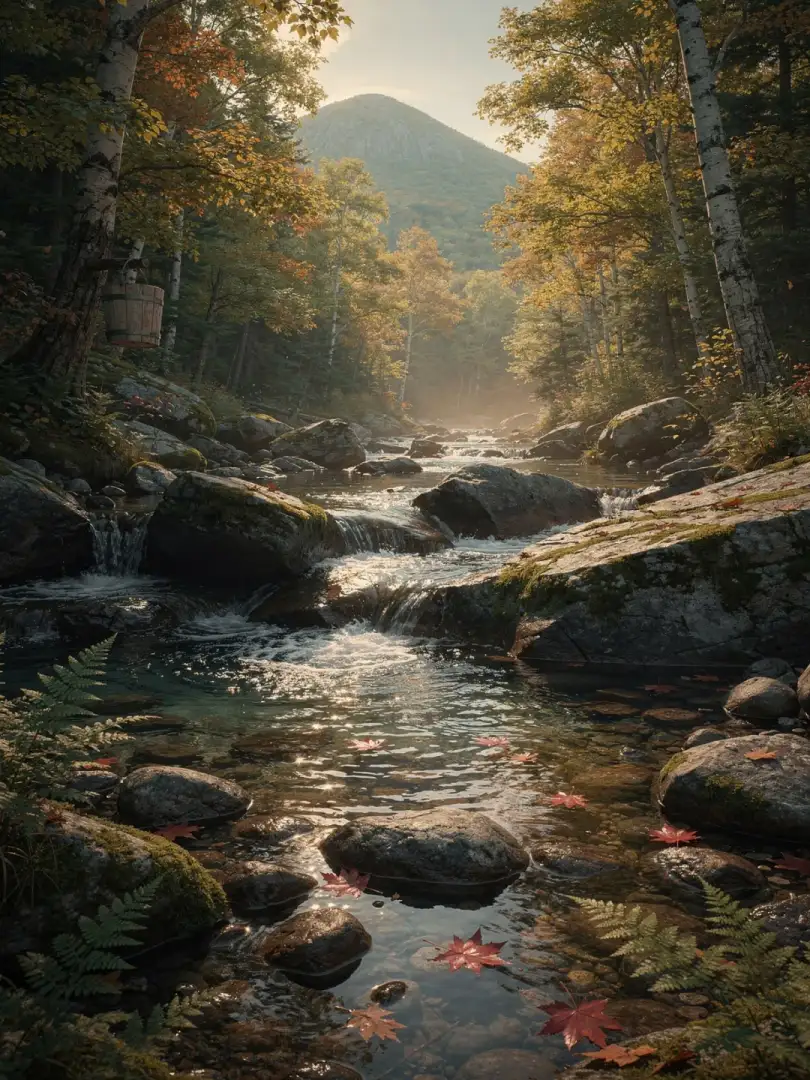
Where does Vermont's brewing water come from? Mostly from mountain springs and wells. The Green Mountains consist of old, hard rock such as schist and gneiss, with granite surfacing in the northeast, and this rock leaves the water with very few minerals. The water runs soft from the tap, similar to Pilsner water, only colder and sharper in feel.
That's an advantage for a hazy IPA. Brewers build up the water profile according to recipe by adding salts. Plenty of chloride makes the beer full and round on the palate, while plenty of sulfate makes it seem drier and more bitter. Unfiltered hazy beer usually leans on chloride, so the hops don't taste harsh. Soft source water makes this work easier, since nothing unwanted gets carried along.
Vermont also has an ingredient that few other states take so much for granted in the cellar. In spring, farmers draw sap from sugar maple trees. It takes about 40 liters of sap to make one liter of syrup, with the rest boiled off in long pans. Lawson's brews its Maple Tripple, a strong beer at 12% ABV, once a year using maple sap instead of water. The sap supplies sugar for the alcohol and a subtle caramel note.
Climate shapes the storage. Winters are long and cold, summers short and mild, and the hoppy beers are kept cold almost without exception. Warmth causes the delicate aroma compounds to fade within weeks. The flooding from Irene in 2011 showed that the valleys have their own dangers too: rivers run fast and rise faster than towns ever expected.