Plum, Oak, Juniper
Tasting
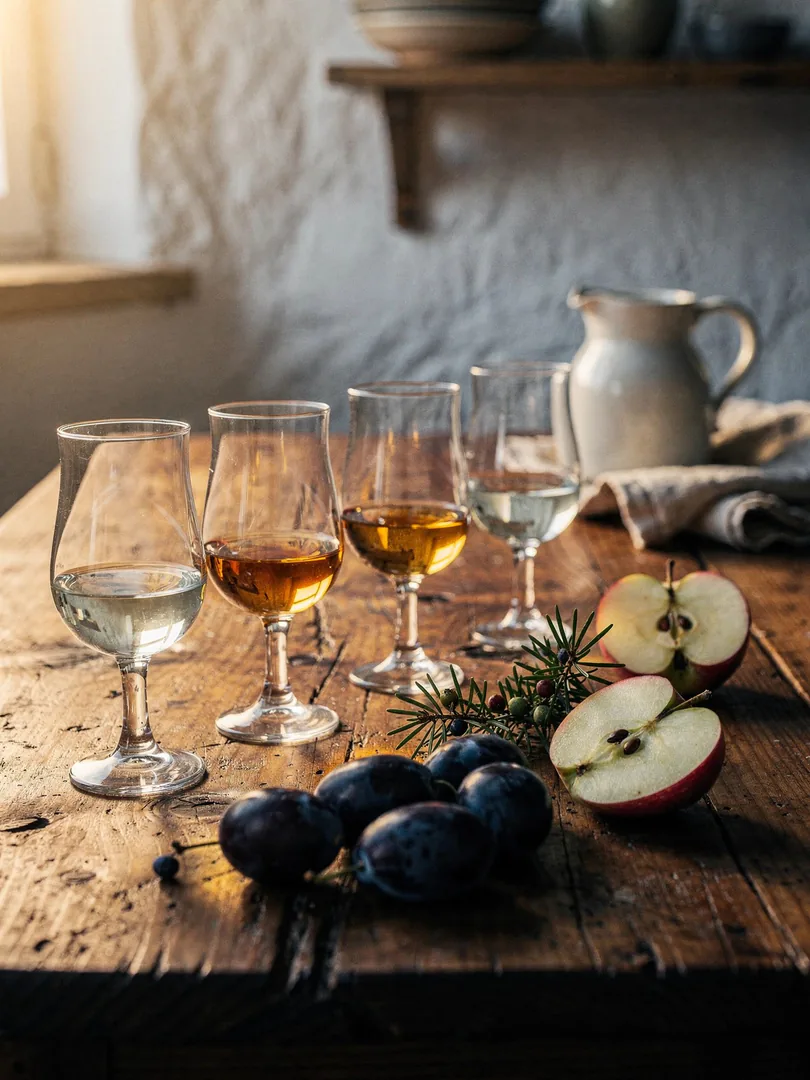
What does Croatian plum brandy taste like? A matured Šljivovica such as Stara Badel šljivovica from Zagreb smells of plum, joined by the woody, tannin-rich note from the oak, and feels full and round on the palate. Brandies like this belong in a nosing glass or a small tulip glass, which concentrates the aroma and carries it to the nose.
With Brinjevec, everything is different. Pleterski brinjevec from the Pleterje Charterhouse and Kraški brinjevec from the Karst plateau are clear, dry and bitter, with juniper aroma right up front. Anyone smelling it for the first time quickly notices: this isn't gin, but a brandy that evokes juniper, resin and pine forest.
Maraska from Zadar stands for Zadarski maraschino, a liqueur. It opens sweet and fruity with cherry, which is why it doesn't belong in a comparison with the brandies, but rather in the small liqueur glass typically filled at the end of a meal.
Temperature makes a real difference. Matured Šljivovica shows off its wood and fruit best at room temperature, while clear brandies like Brinjevec feel fresher served a touch cooler. Too cold, and the aroma falls silent; too warm, and the alcohol takes over.
Experienced tasters smell the empty glass first, then the filled one. If the alcohol overwhelms the nose, a drop of water helps release it. Between samples, they rinse the mouth with water and move from mild to bold: Sadjevec and Šljivovica first, then the dry Brinjevec.
Hrvatska travarica smells of the herbs used to flavor it, which vary from house to house. On the palate, it's spicy and slightly bitter, not fruity like a fruit brandy, and is better compared to a herbal liqueur than to Šljivovica.