The short answer
A spirits app keeps track of your home bar: which bottles you have, which are open and how you liked each one. It is good if it knows the quirks of every spirit: for rum the base and origin, for tequila the aging category, for sake the quality grade. Whisky and gin have their own guides; this one is about the rest of the bar.
What a spirits app does for your home bar
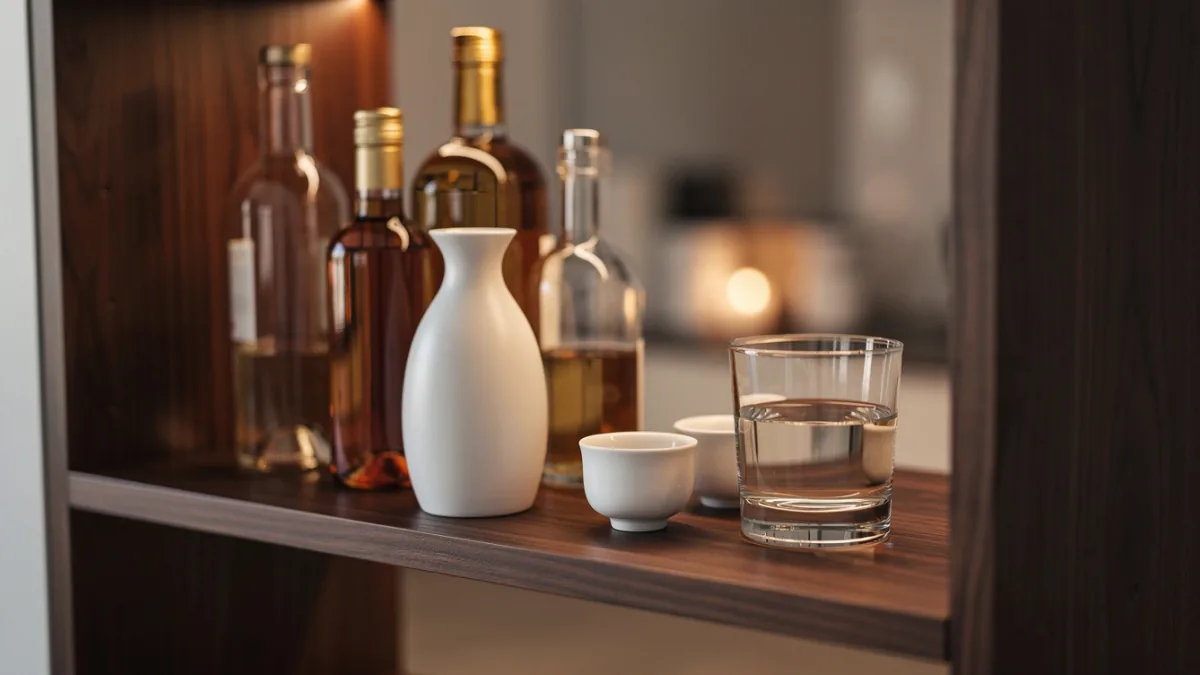
A home bar grows differently from a wine cellar. There are fewer bottles, but very different ones: a rum from a holiday, a mezcal as a gift, two liqueurs for cocktails, a sake that has been waiting in the fridge for months. Many of them are open, and some are down to a last drop.
A spirits app therefore records three things: what you have, how much is left and how you liked it. Over time it shows you which direction you prefer, for example rum with lots of fruit rather than sweet vanilla.
Rum app: base, distillation, origin
With rum, the color says little. Three questions matter more. Was it distilled from molasses or from fresh sugarcane juice? Did it come from a column or a pot still? And where is it from? A rhum agricole from Martinique tastes grassy and fresh, a rum from Jamaica often powerful and fruity.
A good rum app knows these details and notes whether sugar was added, as far as that is known. That is exactly what separates two bottles that look the same on the shelf.
Tequila and mezcal: agave and aging categories
Tequila is distilled from blue agave and carries an aging category on the label. Blanco is unaged or rested only very briefly. Reposado rests in wood for at least two months, añejo for at least one year and extra añejo for at least three years. Also look for 100 % agave; without it, part of the sugar may come from other sources.
Mezcal may be made from many agave species, and the agave hearts are often cooked in earthen pits. That is where its smoky note comes from. A spirits app should therefore not lump tequila and mezcal together.
Sake: reading the quality grades
With sake, the label tells you how much the rice was polished and whether alcohol was added. Junmai means only rice, water, koji and yeast, without added alcohol. Ginjo stands for rice polished to at most 60 percent of its weight, daiginjo to at most 50 percent. The more it is polished, the finer and more fragrant the sake usually becomes.
Opened sake belongs in the fridge and tastes best in the first few days. A spirits app that shows you open bottles is therefore especially useful for sake.
Vodka, brandy and liqueur
Vodka differs mainly in its base, whether grain, potato or something else, and in how smooth it feels. With brandy, whether cognac, armagnac, calvados or fruit brandy, fruit, region and age count.
Liqueurs are sweet, and that is intentional: in the EU a liqueur needs at least 15 percent alcohol and as a rule at least 100 grams of sugar per liter. A spirits app should still take them seriously, because an amaro or a herbal liqueur is for many people the bottle that is open most often.
Keeping an eye on open bottles
High-proof spirits keep a long time once opened, as long as the bottle is well closed, upright and dark. Aromas still fade, especially when only a little is left, because then there is a lot of air above it.
Sake, vermouth and many liqueurs with cream or egg keep for less time. Vermouth is essentially a wine and belongs in the fridge once opened. A spirits app that shows you what is open helps you finish leftovers in time.
Cocktails from your own bar
If you keep a home bar, sooner or later you mix. An app that knows what you have and shows matching recipes is practical, instead of writing you a shopping list for ingredients you will never need again.
The encyclopedia has more than a hundred cocktail recipes with exact measures in centiliters, from the daiquiri to the negroni.
Checklist: the best spirits app for you
These questions show whether an app carries your whole bar, not just the whisky.
- Does it know rum, tequila, mezcal, vodka, brandy, liqueur and sake as separate types?
- Does it recognize bottles from a photo of the label?
- Can you record which bottles are open?
- Can you rate every spirit and note aromas?
- Does it learn your taste across all drinks?
- Does it show recipes for what you have?
- Can you export your collection?
- Does your bar stay private until you share something?
How Gustofolio works as a spirits app
Gustofolio knows ten drink types, all on equal footing: wine, beer, whisky, gin, rum, tequila and mezcal, vodka, brandy, liqueur and sake. You photograph a bottle, Gustofolio recognizes the type and reads the label. For every bottle you record stock, location and your rating.
All ratings build a single taste profile. If you like rum with lots of fruit, you will then be offered bottles in that direction, with the reason. In a bar you photograph the menu and get a short assessment of every drink.
In the Kontor, Gustofolio shows matching bottles from retailers, labeled as ads. The encyclopedia has its own journeys through rum, tequila, vodka and brandy regions, plus the cocktail recipes. Your collection stays private and can be exported as CSV, Excel or PDF.
Frequently asked questions about spirits apps
These questions come up when the home bar grows beyond a few bottles.
Is there a good rum app?
There are rum apps for collectors that mainly list bottlings and ratings. If you drink other spirits besides rum, you are better off with a spirits app that treats rum as its own type with base, origin and age.
Is there a tequila app?
Dedicated tequila apps are rare. What matters is that an app distinguishes blanco, reposado and añejo and keeps mezcal separate, because the two taste very different.
Is there a sake app?
Sake apps are rare too, and many exist only in English or Japanese. A spirits app that handles sake with its quality grades is enough for most collections.
Can I keep whisky and gin in the same app?
Yes, if the app knows several types. In Gustofolio, whisky and gin sit next to rum, sake and all the others in one collection, with a shared taste profile.