The short answer
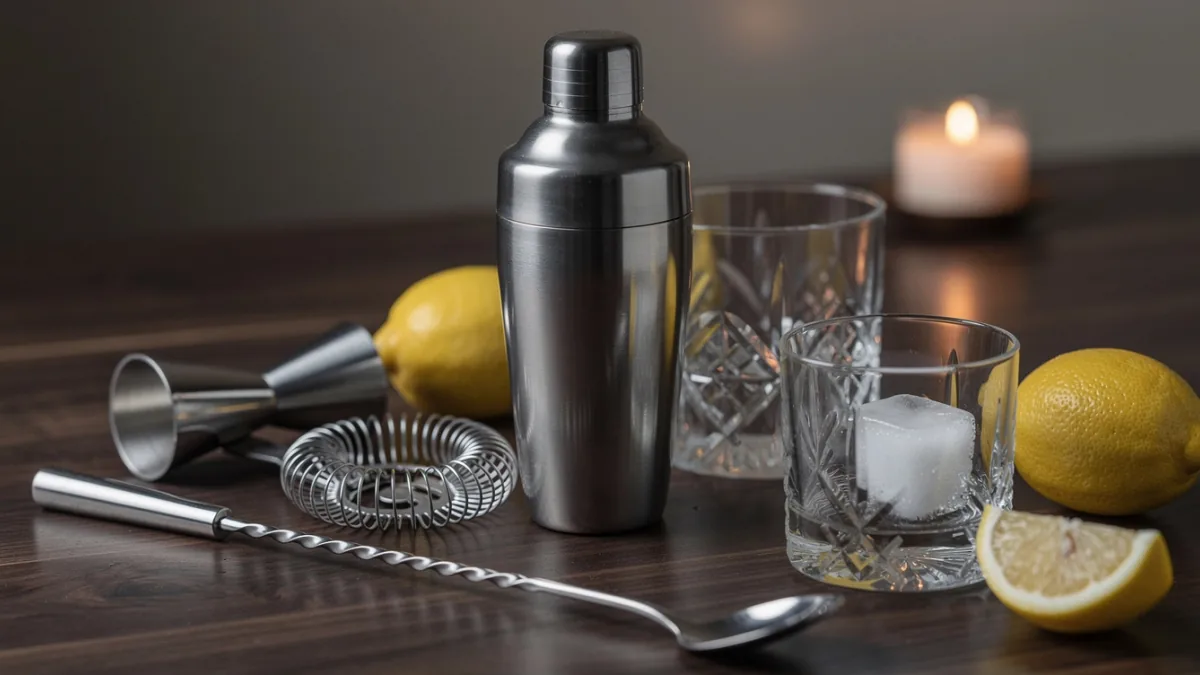
For the basic setup of your home bar, a jigger with a fine centiliter scale, a shaker, a strainer, a small knife with a cutting board, and a citrus juicer are enough. A mixing glass, long bar spoon, and fine strainer come in once you want to mix stirred drinks. At least as important as any piece of equipment is a generous supply of solid, dry ice from the freezer.
Home Bar Basics: What You Need First
You don't need a full wall of tools to get started. We counted the cocktail recipes in our encyclopedia: about half are shaken, and only about one in seven is stirred. The rest are built directly in the glass or made in a blender. Only a few recipes call for a stand blender, so that one can wait.
This gives you a sensible order for buying equipment. A jigger, shaker, and strainer cover the majority of recipes. A mixing glass and bar spoon become worthwhile once you want to mix classics like the Manhattan or the Dry Martini. The table below shows what each tool is for.
| Tool | What It's For | When to Get It |
|---|---|---|
| Jigger (Bar Measure) | Measuring ingredients precisely | from the start |
| Shaker | shaking with ice | from the start |
| Strainer | holding back ice and fruit pieces | from the start |
| Knife, Cutting Board, Peeler | garnishes and zests | from the start |
| Citrus Juicer | fresh juice | from the start |
| Mixing Glass and Bar Spoon | stirred drinks | once you want to stir |
| Fine Strainer | ice shards and herb bits | for drinks without ice in the glass |
| Muddler or Rolling Pin Handle | muddling mint or limes | for drinks like the Mojito |
Jigger: Which Markings You Need
The jigger is your most important tool, because a cocktail only tastes balanced when its ingredients are in the right proportion. Three measures appear far more often in our recipes than any others: 1.5 cl, 3 cl, and 4.5 cl. A jigger with just two sides measuring 2 and 4 cl won't hit these amounts precisely.
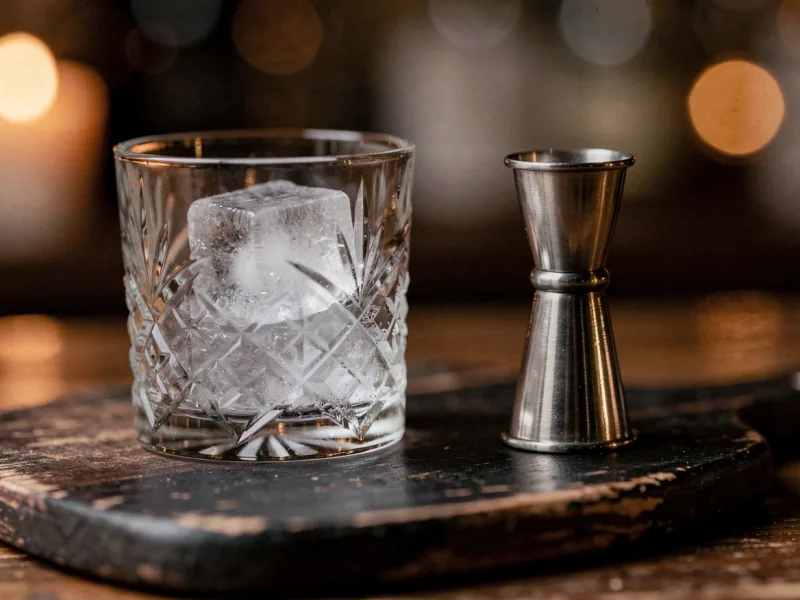
So choose a jigger with an inner scale that also shows half-centiliter increments. Tall, slim jiggers measure more accurately than short, wide ones, because small differences in fill height are more clearly visible. The liquid's curved surface meets the rim exactly when the jigger is full, and meets the line at a marked measure.
You can check whether your jigger is accurate using a kitchen scale. One milliliter of water weighs one gram, so 3 cl of water, that is 30 ml, should show 30 g. Weigh the amounts you use most often and compare them to the markings. If a line is off, note the correction or use a different jigger.
Shaker Types: Boston, Two-Piece Metal, or Cobbler
The Boston shaker consists of a large metal tin and a smaller glass. In the two-piece metal shaker, the smaller part is also metal. Both need a separate strainer. The Cobbler shaker has three parts: a tin, a top with a built-in strainer, and a cap on top.
A well-known reference work for bartenders recommends the two-piece metal version over the glass-and-metal combination. The Cobbler is convenient for beginners since the strainer is already built in. Vigorous shaking is enough. According to the reference work, thermal equilibrium is reached after about twelve seconds, and shaking longer barely changes anything after that.
Soda and other carbonated ingredients never go into the shaker. They're added to the glass at the very end, as with the Gin Fizz. Pressure would build up inside a closed shaker, and the carbonation is meant to end up in the finished drink, not get lost during shaking.
Mixing Glass and Bar Spoon for Stirred Drinks
Drinks made only from spirits, vermouth, or liqueur are typically stirred. They should go into the glass cold and clear, without air bubbles. A mixing glass is a sturdy, wide glass with a pouring spout. Chill it beforehand in the freezer or with ice water, so it draws as little cold from the drink as possible.
The bar spoon should be at least 30 cm (about 12 inches) long, so it reaches the bottom and can turn easily through the ice. Some recipes call for small amounts, like sugar, measured in bar spoons, which is another use for it. To get started, any sturdy glass with enough room for ice and ingredients will do.
Strainer: Hawthorne, Julep, and Fine Strainer
For shaken drinks, you'll usually use a Hawthorne strainer. Its coiled spring holds back ice pieces and bits of fruit. For the mixing glass, the traditional choice is the Julep strainer, a perforated metal spoon that you press into the glass. Hold a small fine strainer underneath the first one if you don't want ice shards floating in the finished drink. This is called double straining. It makes the biggest difference in recipes with herbs or fruit pulp, such as the Gin Basil Smash.
Knife, Peeler, and Citrus Juicer
For garnishes, a small, sharp knife with a blade of about 13 cm (5 inches) and a cutting board reserved just for the bar are enough. Cut zests into thin strips from the peel using a peeler. A dedicated zester is nice to have but rarely necessary.
Juice lemons and limes fresh, right before you mix. A lever press is considered the best tool for this in the reference guide, though a simple handheld press is enough for a few drinks in the evening. You don't need a dedicated muddler for pressing mint. A round handle, like that of a rolling pin, serves the same purpose.
Ice for the home bar: quantity, size, and clear ice
Ice cools the drink and dilutes it—both are part of the recipe. Take it straight from the freezer. Ice like this is dry, whereas partially melted ice brings a layer of water with it and dilutes the drink more. Cubes with edges of about 1 inch are considered a good standard.
Fill the glass completely with ice, not just a few cubes. This keeps the drink cold longer and slows down dilution. Never reuse ice from the shaker—use fresh ice in the glass. A large block or sphere in a tumbler has less surface area than many small cubes and therefore melts more slowly.
Clear ice forms when water freezes slowly from top to bottom. Air and dissolved substances are pushed downward, and the cloudiness collects in the lower part. At home, this works with a small insulated cooler without a lid, placed in the freezer. Afterward, you cut off the cloudy remainder. If your tap water tastes of chlorine, use filtered water instead.
Basic glassware: three shapes are enough to start
You don't need a dedicated glass for every recipe. A good seven out of ten of our cocktail recipes call for one of three shapes: coupe, tumbler, or highball glass. It's better to buy a few matching glasses of each shape than many single pieces—that way, a round for guests always fits together.
Put the coupe in the freezer before mixing, since drinks served without ice go into a pre-chilled glass. If you also enjoy whisky or rum neat, add a narrow-mouthed nosing glass later on. When buying, check the capacity: the drink plus ice needs to fit inside, while a small portion looks lost in an oversized glass.
| Glass | What it's for | Examples |
|---|---|---|
| Coupe | strained drinks without ice | Daiquiri, Manhattan, Gin Basil Smash |
| Tumbler | short drinks on ice | Negroni, Old Fashioned |
| Highball glass | long drinks with soda or a filler | Gin Fizz, Mojito |
Base spirits and stock for the home bar
Buy bottles based on the drinks you love, not from some long checklist. In our recipes, gin and rum are most often the base, followed by vodka and whisky. With one of these spirits and the equipment above, you're already well set up.
Then come the ingredients that many recipes share: lemons and limes, simple syrup, soda or tonic, and a bitters for dashes. Our simple syrup is made from equal parts sugar and water by weight. Vermouth is a wine and belongs sealed in the fridge after opening. Buy fresh items like mint to match the evening.
Recipes for your setup in Gustofolio
In the Gustofolio encyclopedia you'll find cocktail recipes with measurements in cl, including Gin Fizz, Negroni, and Gin Basil Smash. You can measure the quantities directly with your jigger. If you're also collecting wine or whisky, manage those bottles in Gustofolio with inventory and storage location, right down to the shelf.
Frequently asked questions about home bar equipment
These questions come up often before someone buys their first bit of bar equipment.
Which shaker is best for beginners?
Both types work well. The cobbler has a built-in strainer and needs no extra equipment. The two-piece metal tin version is recommended in the specialist literature, but it requires a separate bar strainer.
Do I need a mixing glass right away?
Not necessarily. Only about one in seven of our recipes is stirred. A sturdy, large glass and a long spoon are enough to get started.
Can I make clear ice from tap water?
Yes. The cloudiness comes from trapped air and dissolved substances that end up inside as the water freezes from all sides. If the water freezes slowly from top to bottom, the cloudiness collects at the bottom—even with ordinary tap water.
Why does my drink get watery so quickly?
Usually the ice has already started melting, or there's too little of it in the glass. Use dry ice straight from the freezer and fill the glass completely. Ice from the shaker doesn't belong in the glass.