Slava and the Table
Food & Tradition
What is Slava, and why does Rakija appear on the table? Every Serbian family celebrates the feast day of their patron saint once a year. According to tradition, this celebration passes down from father to son, and relatives, neighbors, and friends all come together for it; UNESCO has also listed Slava since 2014.
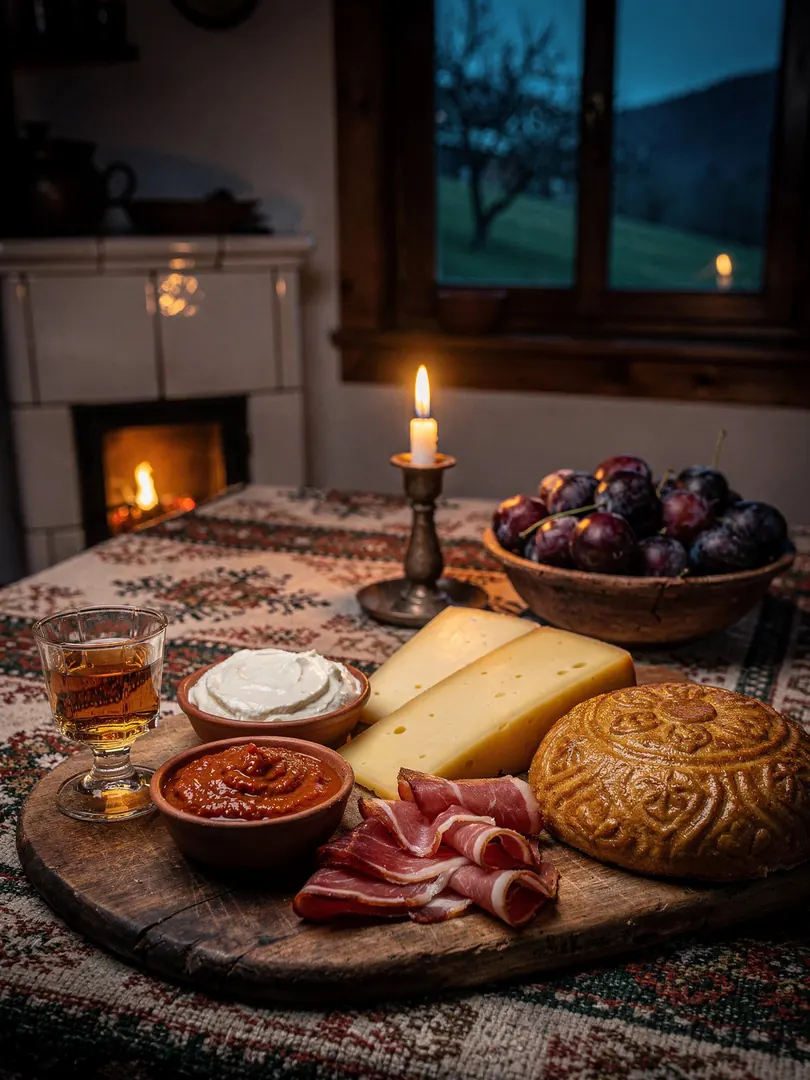
A specially made candle burns in the home, wine is poured over the Slavski kolač, a round festive bread, and during the meal, a toast is raised to the health and well-being of the family. Hosts serve juice, wine, or small glasses of Šljivovica.
Rakija is also a common gift to bring. Traditionally, guests bring wine, coffee, and chocolate to a Slava, though a set of Rakija glasses or a bottle bearing an image of the family's patron saint or the greeting "Srećna slava" (roughly, "Happy Slava") is also popular.
Hearty food pairs well with the brandy. The classic starter includes Ajvar, a roasted red pepper spread, Kajmak, a creamy dairy product, along with cheese and smoked ham. The saltiness and richness of the food balance the brandy's sharpness, while the plum itself offers a fruity counterpoint.
In winter, Rakija is also enjoyed warm. UNESCO notes that herbs or fruits are sometimes added to the brandy as a home remedy for colds and aches. This is tradition, not a medical claim; health matters are best left to doctors. Alcohol remains secondary here: the focus is on food, conversation, and the toast, and anyone who prefers not to drink can have juice or water instead. The fruit the brandy comes from also makes its way to the table, whether fresh or as compote and preserves.