Reading the Glass
Tasting
A good Țuică smells of ripe plum, without the alcohol overwhelming the nose. On the palate it's clear, lightly sweet from the fruit, with a warm, short finish. After the sip, the taste of stewed plums briefly lingers on the palate. The stone-fruit note, a hint of bitter almond, is part of the character, as long as it stays subtle.
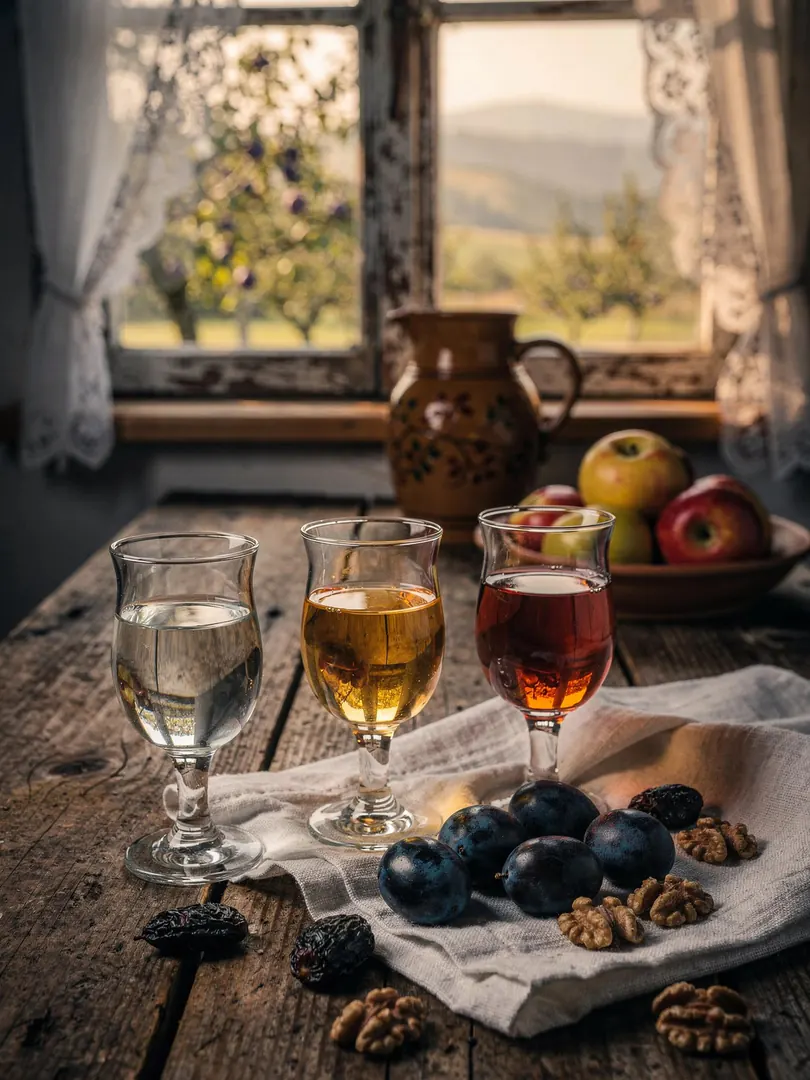
Horincă de Cămârzana brings extra power. According to its description, it shows a warm plum character with a fine bitter note from the stones, with the oak barrel laying down spice beneath. An aged Țuică bătrână, by contrast, shows gold in the glass and wood spice alongside the plum.
With Vinars, the nose heads in a different direction. The house of Jidvei describes its long-aged Vinars bottlings as showing dried fruit, vanilla and a note reminiscent of rum. For comparison, the Vinars Segarcea from the Domeniul Coroanei Segarcea estate in Dolj County offers a wine distillate from the south of the country.
For all of these, a tulip glass or nosing glass with a narrow opening helps hold the aromas together. A small glass is customary in Romania, but for smelling and comparing, the tulip shape works better, as it channels the aroma toward the nose.
Temperature plays a role too. At cool room temperature, Țuică and Pălincă reveal their fruit character, while spirits served too cold stay muted. A matured Vinars can be warmed briefly in the hand. When comparing several spirits side by side, start with the lightest and drink water in between to keep the nose fresh.
Strength matters as well. A double-distilled spirit like Horincă can reach over fifty percent ABV, feeling sharp at first and opening up with a drop of water.