Piscola and Papaya
Food & Tradition
What is a Piscola? In Chile, it's a widely popular mixed drink of pisco and cola. The Pisco Sour is also a Chilean classic, and the decree even sets a minimum of 12 proof for bottled sours made in Atacama and Coquimbo. Visitors are often surprised that a country mixes its national spirit with cola, but in Chile it's simply part of everyday life.
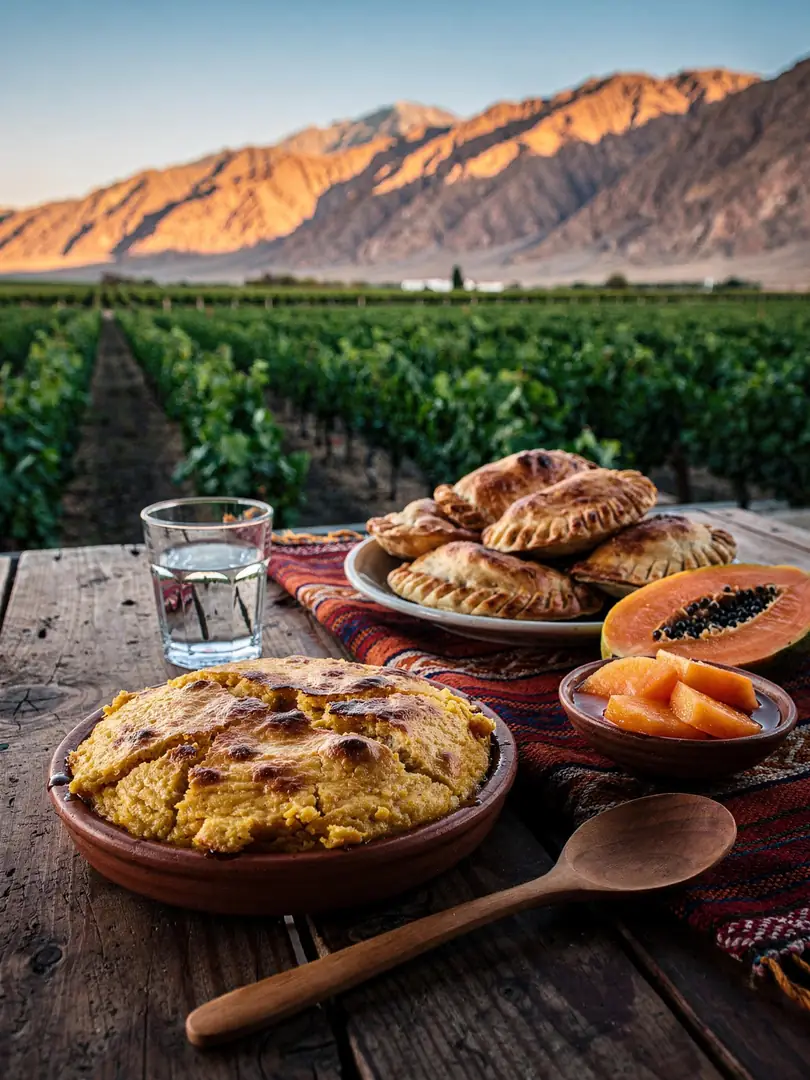
Food from northern Chile pairs naturally with the spirit of the region. The Elqui Valley is known for papayas, which are either cooked in syrup there or eaten as dessert. Along the coast in Coquimbo, fresh fish and seafood come to the table.
The pairing makes sense for a simple reason. A sweet papaya echoes the fruity aroma of a Muscat pisco, while a spirit with citrus notes complements fish served with lemon.
The town of Pisco Elqui in the Elqui Valley was formerly called La Unión. It was renamed in 1936 under Law No. 5,798, at the urging of several deputies, including Gabriel González Videla, who later became president. The renaming remains controversial, as it ties into Chile's claim to the name Pisco. The decree also grants eligible parties the right to object to the use of place names from Atacama and Coquimbo as trademarks for other grape spirits.
Classic Chilean dishes include Pastel de choclo, a bake of corn, ground meat, and chicken, and Empanada de pino, filled with ground beef, onions, egg, and olive. Rich, savory fillings need a clear, bold counterpart, and the Muscat aroma cuts right through the fat.
For a Piscola, a lower-tier pisco is sufficient, as the cola masks the finer nuances a Reservado would show when sipped neat. A good rule of thumb, then: a simple tier for mixing, a high tier for the nosing glass.