The short answer
A cocktail lives on the ratio of its ingredients, not on any single one of them. So measure carefully. If you change only one quantity on the second attempt, you'll immediately notice what caused the difference. That's how you find out why a drink tastes better or worse.
Starting with a clear recipe
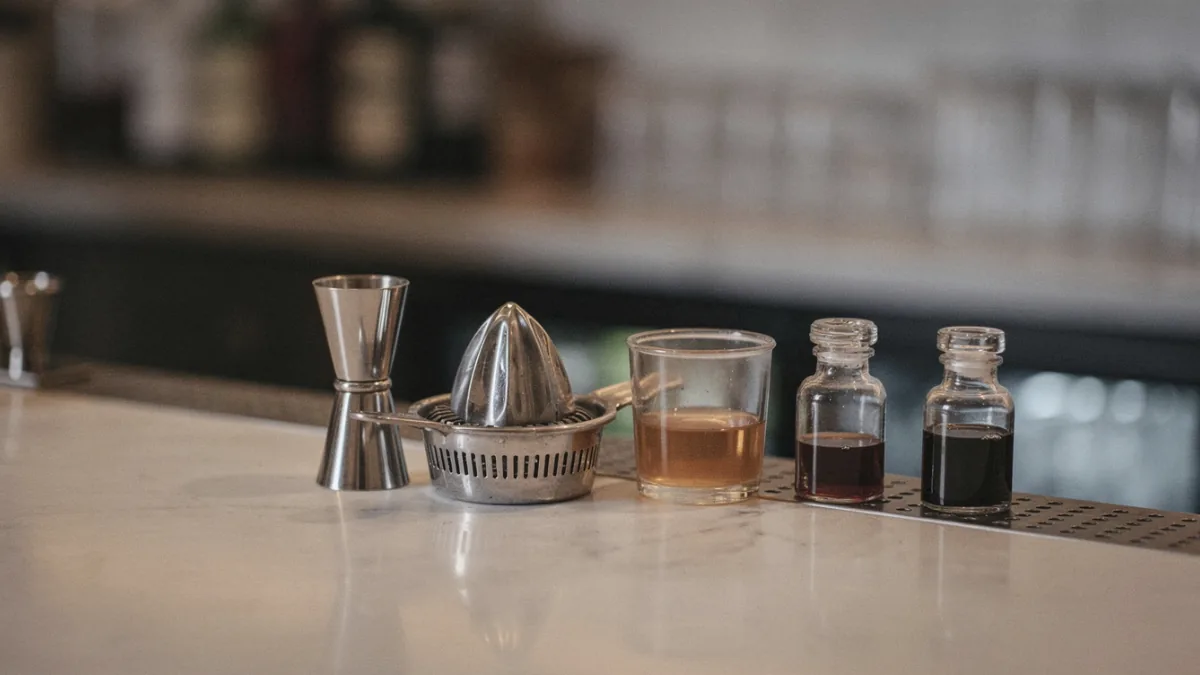
Start with a simple recipe. The Daiquiri consists of rum, lime, and sugar. This shows you the basic principle behind many cocktails: something sour and something sweet are added to the spirit.
These two work against each other. The lime makes the drink fresh and sharp, the sugar takes the edge off the acidity. When the ratio is right, the result tastes neither sour nor sweet, but balanced. That's exactly what mixing is about.
Don't swap out everything at once when starting out. Lemonade instead of lime, a flavored product instead of rum, plus more syrup: that turns into a different drink. It might taste good. But you won't learn anything more about the original recipe that way.
Adjusting sour and sweet separately
If your drink tastes too sour, carefully add a bit of sweetness to a small sample. If it's too sweet, prepare a new small sample and add more acidity. Always change only one of the two variables at a time.
Write down the amounts, every time. A free-pour straight from the bottle can hardly be repeated later. Otherwise, by the third attempt you won't remember which one was the good one.
Even ingredients of the same type aren't identical. A particularly sweet mixer shifts the balance, even though you haven't changed the recipe at all. A fixed ratio is therefore a starting point. It doesn't replace the actual taste of the bottles in your cabinet.
Bitterness is its own decision
A classic Negroni combines gin, a bitter aperitif, and red sweet vermouth in equal parts. Bitterness belongs to the intended profile here. It's not a flaw in the recipe.
Some people simply don't like bitter flavors. That's not a lack of practice. You don't have to train yourself into liking this style as if it were the more sophisticated choice, because there are plenty of good drinks without bitterness.
If you still want to rework the Negroni, swap out just one ingredient first. Even a different vermouth noticeably changes the impression. Then call the result your own variation. The classic recipe isn't made wrong by that.
Ice brings water with it
Shaking and stirring do two things at once. They chill the drink, and they introduce melted water. This water is part of the recipe, even though it appears on no ingredient list.
A freshly stirred drink without ice is therefore not a fair comparison to the chilled version. When repeating a recipe, use similar ice and the same preparation method. Otherwise, you're comparing two different drinks.
If a drink turns thin after a while, that says something about the whole process. Next time, pre-chill the glass, ingredients, and mixing tin. Then less ice will melt. More spirit is not the only possible answer, and rarely the most pleasant one.
One change per attempt
Write down the original recipe. Next to it comes exactly one change: less syrup, a different mixer, a bit more lime. Mix small amounts under comparable conditions.
Then describe the effect in simple words. Fresher. Too bitter. Less aroma. Notes like these look unremarkable but pay off. After a few rounds, you'll have your own recipe that you can hit reliably every time.
The garnish comes last. It's meant to complement a good drink. Even the most beautiful garnish won't cover up an off-balance base recipe.
Non-alcoholic needs its own approach
A non-alcoholic alternative doesn't automatically deliver the same result in the same quantity. Alcohol carries aroma and gives a drink body. Without it, producers have to solve aroma, texture, and shelf life in other ways.
First, follow the serving recommendation for the specific product. It's on the bottle for a reason, and it saves you two failed attempts.
Judge the finished drink on its own merits. Does it taste balanced, pleasant, and right for the occasion? A good non-alcoholic cocktail doesn't have to be a copy of a spirit. It can remain its own drink with its own balance.