Nose Before Tongue
Tasting
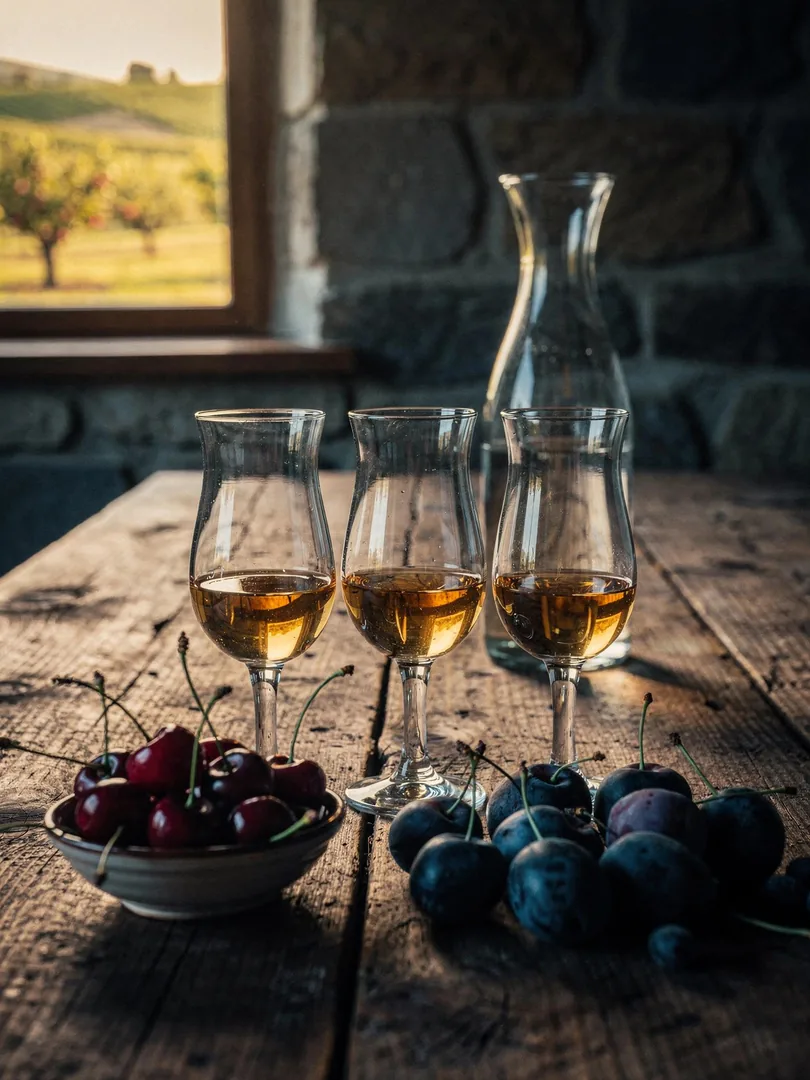
A Fränkisches Kirschwasser in a nosing glass smells of cherry first, not alcohol. The tulip-shaped glass is designed exactly for this: the bowl collects the aroma, the rim concentrates it, and the nose picks up the notes before the tongue tastes anything. A standard shot glass, by contrast, mostly sends the sharpness straight upward.
Start by nosing gently, with small breaths rather than deep ones. Too much alcohol in the aroma suggests the spirit is either too cold or too warm in the glass for the nose to read properly. Cool, as if from a cellar, but not ice-cold, is where the aroma unfolds best. Too low a temperature mutes the fruit notes.
Then comes a small sip. Pay attention to the fruit, the almond-like pit note, the dryness, and the length of the finish. A solvent-like smell points to too much heads in the cut; a heavy, harsh feeling suggests tails. A clean spirit stays crisp and dry.
Three spirits with protected designation serve as good examples: Fränkisches Kirschwasser as the signature spirit, Fränkisches Zwetschgenwasser as its darker counterpart, and Fränkischer Obstler as a softer blended brandy. Anyone wanting to taste in the region can find distilleries like Edelbrennerei Haas in the growing area near Pretzfeld. This serves as an example of the village distilleries typical of the region, not a specific recommendation.
Tasting is best done in small amounts. A spirit at 40 percent alcohol, taken in large gulps, tastes of little more than heat—adding water helps the nose recover between sips.