Distilling Rights Since 1726
Region & History
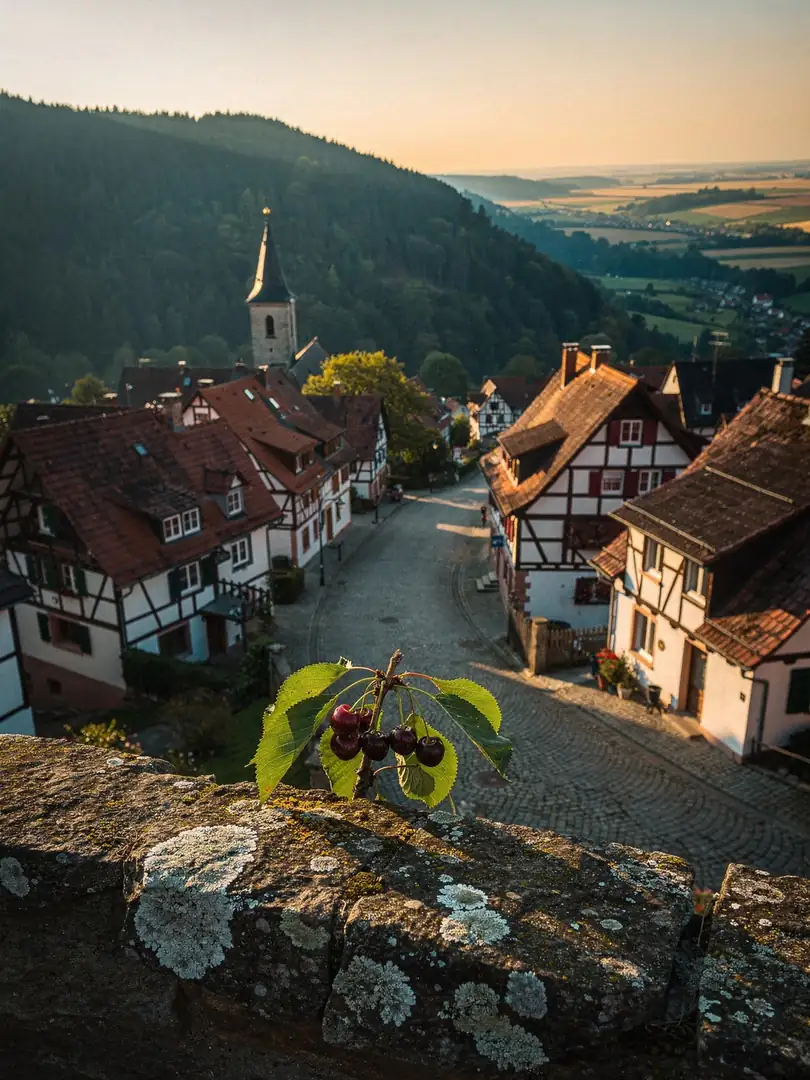
Anyone wanting to know how Kirschwasser from the Black Forest earned its reputation ends up in Oberkirch, a town of around 21,000 people at the edge of the Rhine Rift Valley. Here in 1726, the Bishop of Strasbourg, Armand Gaston de Rohan, granted farmers the right to distill: they were allowed to turn surplus fruit into brandy. For the farms this meant a new source of income; for the bishop, it meant tax revenue.
It's said that the bishop himself enjoyed a drink or two. That's folklore, not documented fact. What is certain is that distilling became embedded in the farms over generations and still shapes the character of the region today.
The original right no longer exists in that form. Until 2017 the distilling right was tied to the farm; since 2018 the main customs office grants a permit to an individual. Those working as Abfindungsbrenner (flat-rate distillers) may produce no more than 300 liters of pure alcohol per year; the amount isn't measured but calculated as a flat rate from the fruit. Those who own trees but no still of their own are considered material owners and have their fruit distilled at such a distillery, up to 50 liters of pure alcohol per year. Distilling on one's own remains forbidden.
According to tourism promotion figures, Oberkirch is home to around 700 home and farm distilleries, the highest density of small distilleries in Europe. In 2026, the town's distilling right marked its 300th anniversary. For the occasion, the distillers jointly bottled a cuvée, the "Heimatkirsch 1726," finished at the Brennerei Fies in Ringelbach.
The name "Schwarzwälder Kirschwasser" has been protected as an EU geographical indication since 1989, as has "Schwarzwälder Zwetschgenwasser." Only brandies that meet the conditions of the designation may bear the name.