The short answer
Calvados is a brandy from Normandy. It's made from fermented apples, and depending on origin, from pears too. It's not a grape brandy.
Not just one apple variety in the bottle
It always starts with a cidre, a fermented apple wine. Only this cidre is then distilled. Anyone who calls Calvados an apple schnapps skips this step. That also removes the reason why Calvados can taste of apple and wine at the same time.
Distilled means: the cidre is heated, the alcohol vapor is captured and then cooled again. What ends up in the bottle is significantly stronger than the cidre. The fruit still carries through nonetheless.
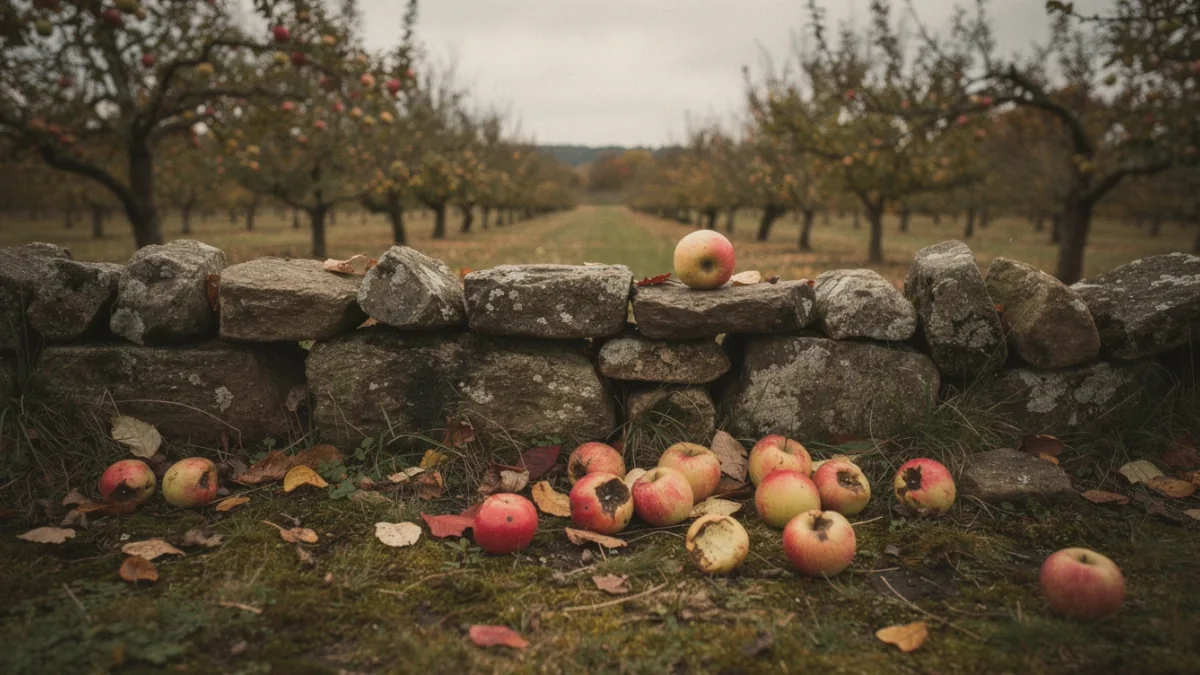
Behind a Calvados there are often dozens of apple varieties. They're grown specifically for this purpose: sweet, sour, and bitter ones in a deliberate blend. Table apples from the supermarket are barely suitable. They lack the tannin structure that gives the brandy its backbone.
Tannins are the compounds that make your mouth feel slightly furry. You know this from strongly brewed black tea. In the brandy, they give the apple something to lean on.
Different rules apply within the Calvados origins. In Calvados Domfrontais, pears are explicitly included. Cask aging and the starting fruit shape the style together, which is why two bottles from the same region don't automatically taste alike.
What you can ask before choosing
Two questions will get you further before picking a bottle. Do you want a fresh fruit impression or more cask influence? Should the bottle be sipped neat or used in a drink?
These two questions help you more than assuming every apple brandy tastes the same. In the shop, you can ask them directly like this.
For your own comparison, take two small samples with different age descriptions. Focus at first only on fruit and wood. Everything else will follow on its own later.
The age statements follow a tiered system. The longer the aging, the more pronounced the wood, spice, and dried fruit become. To the same degree, the fresh apple recedes. Both directions are fine, they just suit different preferences.
For getting started, a younger bottling is often the more honest choice. There, you can still taste what the drink was made from. An older bottling, by contrast, tells you mainly about the cask.
When and how to drink it
In Normandy, Calvados traditionally belongs right in the middle of a meal: a small sip between courses. Whether this actually aids digestion is debated. Still, the custom is a good reason not to think of it only as a digestif. Digestif here means the glass after the meal.
For your first sip, pour only a little into the glass. A large amount at once numbs the nose, and that's exactly what you need for a fruit brandy.
Neat at room temperature, Calvados shows the most. Chilled, it feels tighter and less sweet. For younger bottlings, that can be exactly the right effect.
In cocktails, it replaces brandy or whisky. It then brings a fruit note that no other spirit delivers. Expect the drink to shift noticeably, and feel free to give it its own name.