Nose Before Tongue
Tasting
Schwarzwälder Kirschwasser first smells of fresh cherries, then marzipan and bitter almond. On the palate it's dry and warm, with a slightly bitter finish. First-time tasters often expect sweetness and instead find fruit without sugar.
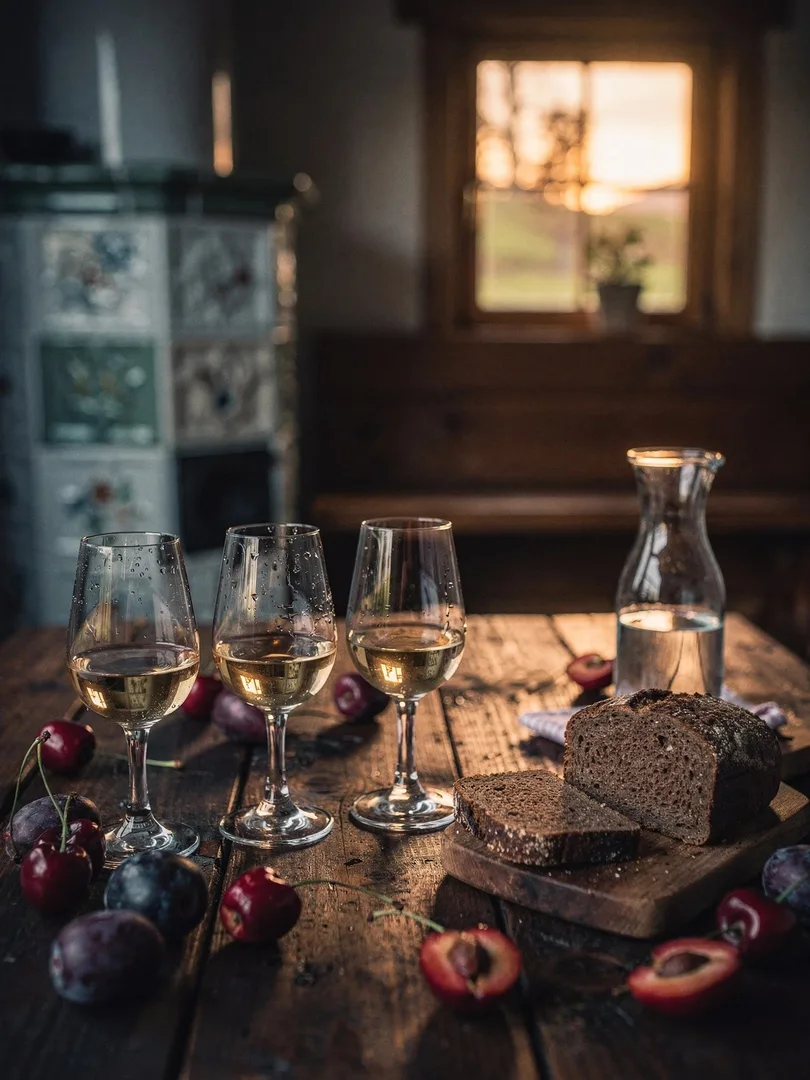
This comes across best in a nosing glass or a small tulip glass, which concentrates the aroma at the opening. In a water glass it dissipates; in a shot glass the nose stays too far away. Pour just a small amount, a finger's width is enough.
It's not served chilled. Room temperature, leaning cool rather than warm, lets the aroma unfold; cold hides it. A few drops of water in the glass can open it up.
Good regional examples include the Kirschwasser from Brennerei Fies in Ringelbach, the Kirschwasser from Brennerei Scheibel in Kappelrodeck, and, as an anniversary bottling marking 300 years of distilling rights, the Heimatkirsch 1726, a cuvée made from brandies of the Oberkirch distillers. Comparing them shows how variety, fruit ripeness, and the distiller's signature each shift the character.
The finish deserves attention in tasting. Does the cherry linger on the palate, does the almond note join in, does the impression hold for a while? A good Kirschwasser doesn't end abruptly, it trails off. With Zwetschgenwasser, pay attention to the spice and the rounder, softer fruit character.
Water and a piece of bread reset the nose between tastings. The whole exercise is meant as a small tasting, not a drinking session. Taking notes helps, since impressions blur quickly after the third glass.