Uralt and Cognac
Brandy Style
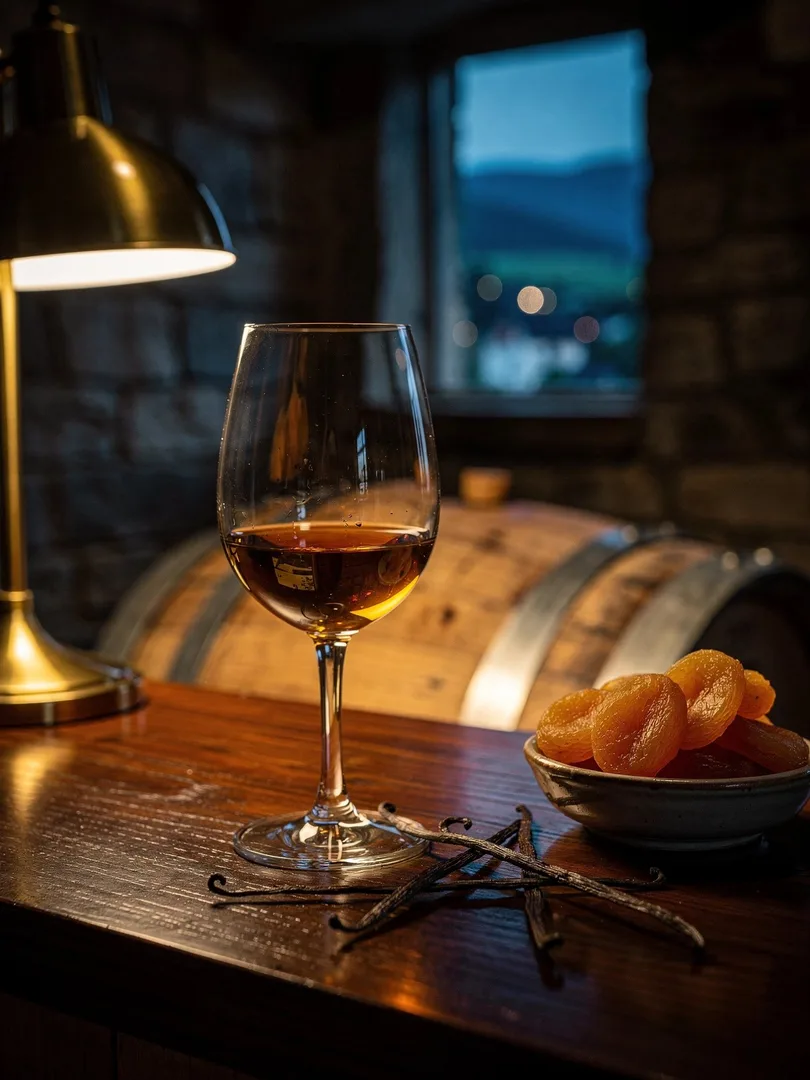
Asbach Uralt is the brand most associated with Rüdesheim, and the classic example of a German Weinbrand. It's amber in color, soft on the palate, and carries notes of vanilla, raisins, and oak. According to trade sources, it's now typically bottled at 36 percent ABV, down from 38 percent in earlier years.
Today, the Underberg Group stands behind the brand, having acquired Asbach in 2002. The style has remained that of a mild, woody blend: a consistent flavor is assembled from many casks, meant to taste the same in every bottle. This differs from a vintage brandy, whose character depends on a single harvest.
Anyone expecting a fruit brandy will be surprised. Weinbrand is not a crystal-clear fruit distillate but a wood-aged spirit, shaped by cask and blend. Its sweetness comes from the cask, and the permitted sugar content is capped at 35 grams per liter.
The difference between Cognac and Weinbrand lies mainly in the regulations. Every Cognac meets the minimum requirements for Weinbrand, but not every Weinbrand is Cognac. Cognac comes exclusively from the Charentes region, is distilled only twice in a Charentais pot still, ages at least two years in oak, and has a minimum of 40 percent ABV. Weinbrand, under EU law, must be at least 36 percent ABV and may also be produced in a column still.
Regarding protected origin: "Deutscher Weinbrand" has been protected since 1989 and falls under the EU category of Brandy or Weinbrand. The same minimum rules apply there as for any Weinbrand in Europe: 36 percent ABV and aging in oak.
Asbach UraltWine and grape brandy · White wine grapes (wine distillate)
- Alcohol
- 36–38 % vol
- Maturity
- 1–3 Years
Amber-colored, soft, with vanilla, raisins, and oak; mild on the finish.