The short answer
Cognac and Armagnac are two French brandies. Each comes from its own protected region and follows its own production rules. Cognac isn't a catch-all term for every brown spirit.
Origin over brand name
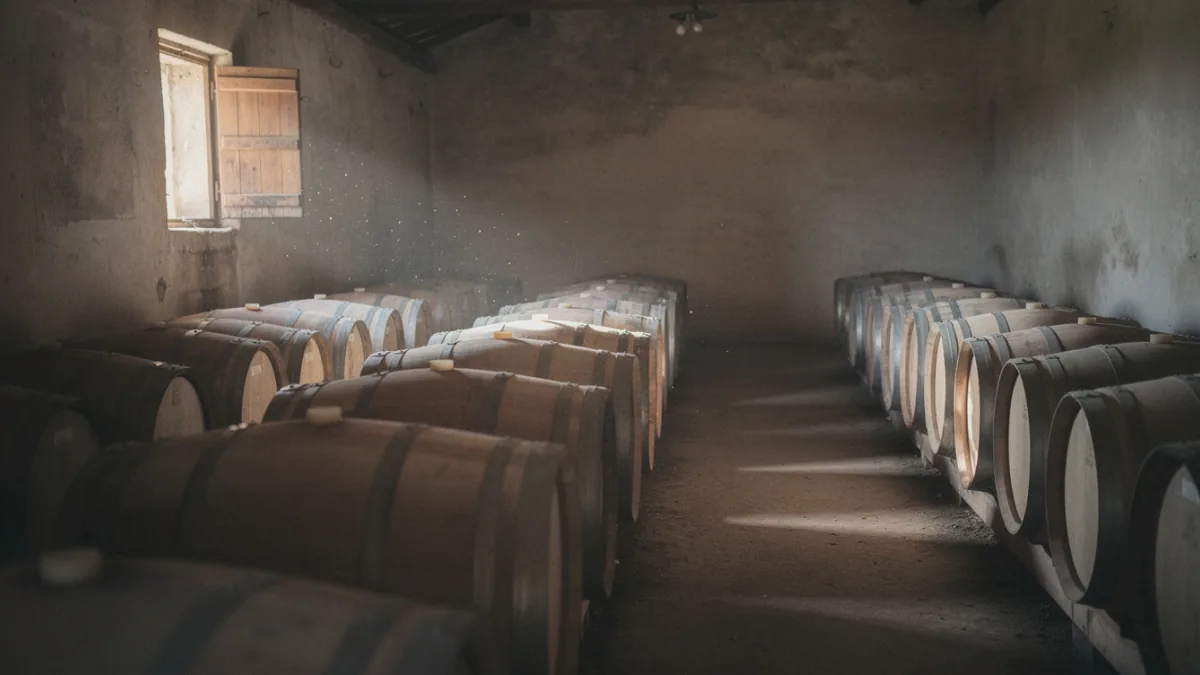
Both start out as wine, but come from different regions. The wine is distilled and then aged in wooden barrels. This aging shapes the eventual style, and Armagnac has its own distinct tradition alongside Cognac.
The most important difference in craftsmanship lies in the distillation. Cognac is traditionally distilled twice in pot stills. Armagnac is usually run once through a column still.
A pot still is a large kettle that you fill, empty, and fill again. A column still, by contrast, runs continuously without interruption. Both are distillation devices, they just work in different ways.
Distilling twice yields a finer, smoother spirit. Distilling once lets more of the original wine come through and often produces bolder, more rustic brandies. Neither is better — they're simply two different styles.
Armagnac is also the older of the two traditions and is produced in much smaller quantities. The Cognac market is dominated by major brands. With Armagnac, you're more likely to encounter individual producers and vintage bottlings. A vintage bottling comes from a single harvest year.
Finding the right starting point
Ask first for a small sample and an understandable style description. Rather fruity, distinctly woody, or bold? An age statement alone doesn't answer that question.
Compare similarly proofed spirits where possible and read the exact name of the bottling. A tradition-rich origin is interesting information. It's not a reason to judge a sample against your own taste.
A brandy has its place in a cocktail too. So decide first how you want to use it, and only then about the bottle. This order saves money and disappointment.
Don't buy a large bottle the first time. Small bottlings or a sample at a specialist shop cost less and answer the same question.

Brandy, Weinbrand and Cognac
Brandy and Weinbrand are the broader terms. Cognac is tied to a specific French origin and its own production rules. Armagnac in turn has a different origin and tradition. A Spanish brandy doesn't become a Cognac just because it looks similar. What matters is the category on the label, not the color in the glass.
Calvados doesn't even belong in this group. It starts with fermented apples or pears, not with wine.
When shopping, look first at the category. Age, cask, and style come after. For a cocktail, a different brandy can work, but it may change aroma and balance. Then call it a deliberate variation.
The letter abbreviations help with classification. VS stands for the shortest required aging, VSOP for a longer one, XO for a significantly longer one. They refer to the youngest component in the blend. The rest can be older. A high tier tells you the minimum aging time.
Two bottles from the same category can thus be usefully compared. Between two houses, the abbreviation isn't much use for that, because each house blends differently.