Base Wine and Pineau
Mash & Fermentation
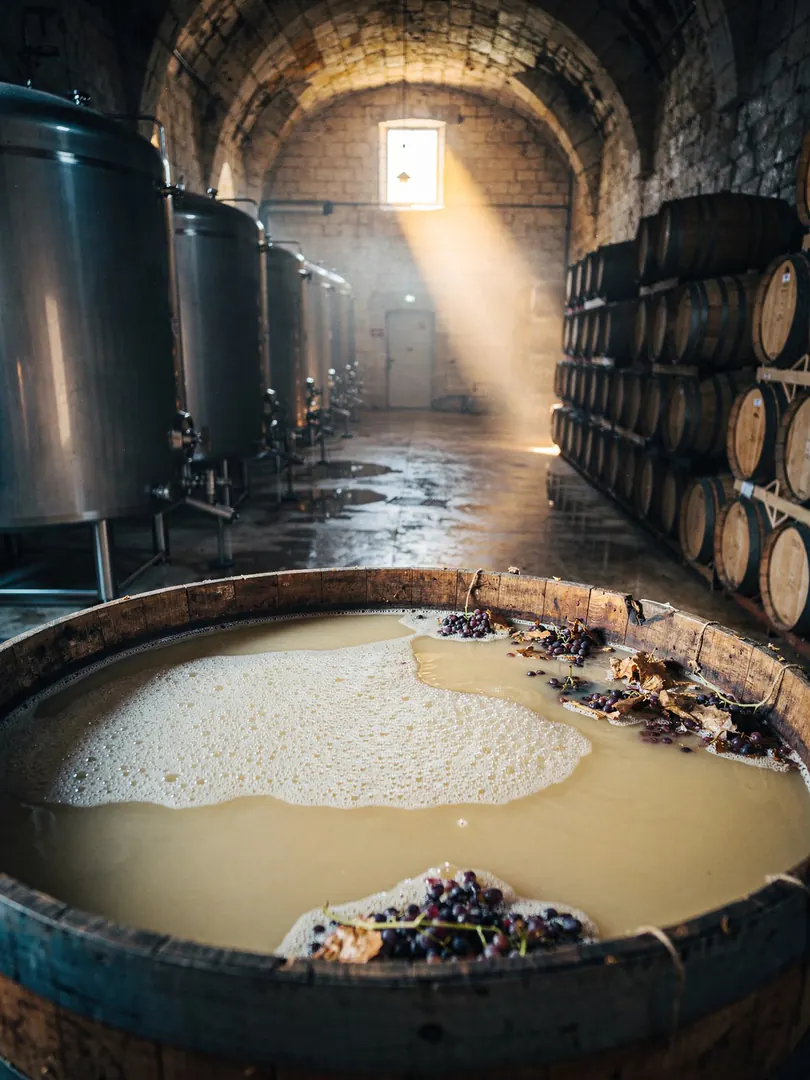
With Cognac there is no mash in the sense of a fruit pulp, since the raw material is already finished wine. The grapes are pressed, the juice ferments, and yeast converts the sugar into alcohol. After a few weeks, a dry, tart white wine sits in the tank — one that hardly anyone would drink by choice. For Cognac, that is exactly right.
This base wine is usually left without added sulphur, since it is only an intermediate stage. It has low alcohol and high acidity, and that is just how it should be: many liters of wine later become just one liter of brandy. Fermentation takes place in large tanks. Clean fermentation matters, because distillation concentrates everything, flaws included. That is why winegrowers insist on healthy fruit and short distances from press to tank.
The schedule is tight: by March 31 following the harvest, all the wine must be distilled. Which cru the wine comes from is recorded, since only those who keep their lots separate can later put a cru name on the label. If it says Borderies, the grapes really must come from there. Growers without their own still send the wine to a professional distiller.
A related drink shows what Cognac is not. With Pineau des Charentes, fermentation is never allowed to finish: Cognac eau-de-vie is added to the grape must, halting the yeast and leaving the sugar in the juice. This mixture is called a mistelle and remains a sweet fortified wine, its alcohol coming from the brandy. Since the appellation was established in 1945, the must and the brandy must come from the same estate. White Pineau must age at least 18 months, twelve of them in wood; rosé and red Pineau need twelve months, eight of them in cask.