Glass and Nose
Tasting
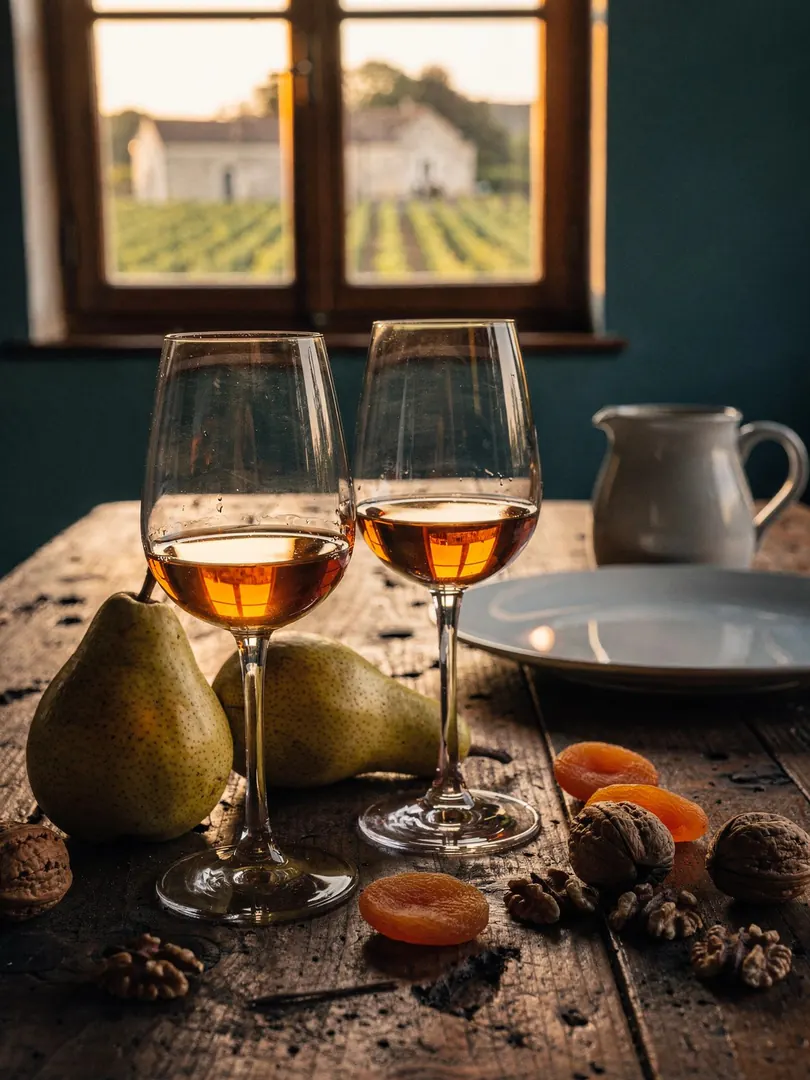
How should you drink Cognac? A tulip glass or nosing glass is the best choice for Cognac, since it narrows toward the top and concentrates the aromas at the rim. Ideally the spirit should be at room temperature, since cold mutes the aroma. Only a small measure is usually poured. A wide swirl of the glass draws out more alcohol vapour.
It starts with the nose. If you bury your nose too deep in the glass, you'll mostly smell alcohol, which masks the finer aromas. It's better to hold the glass at a distance at first and bring it closer gradually. Only then take a small sip, letting it sit in the mouth for a few seconds.
What do you taste in Cognac? The BNIC lists more than 60 aromas identified in it. Young spirits come across as fresh and fruity, with vanilla from the wood. Older ones show dried fruit and spice, along with a depth that only fully opens up after a few minutes in the glass. The length of the finish is also worth paying attention to: an XO often holds its flavour in the mouth noticeably longer than a VS.
For comparison, bottles from both towns are worth trying: Hennessy Very Special and Martell VSOP from Cognac, Hine Rare VSOP and Delamain Pale & Dry XO from Jarnac. Tasted side by side, it becomes clear how differently the same category can present itself.
Those who like can add a drop of water. With some spirits this releases additional aromas, while with others it simply dilutes them. Feel free to let the glass sit for half an hour, since Cognac changes as it breathes.
Cognac is sold at a minimum of 40 percent alcohol. That's why it's tasted in small measures, with water drunk between samples to keep the nose fresh.